
SC seeks Centre, NCERT's responses on pleas against CBSE's 3-language rule for Class 9 students
Press Trust of India | July 14, 2026 | 05:31 PM IST | 3 mins read
One of the senior advocates Anand Grover said that the CBSE and the Centre is implementing unlawful circulars which are against the RTE (Right to Education) Act and are imposing languages without alternatives.
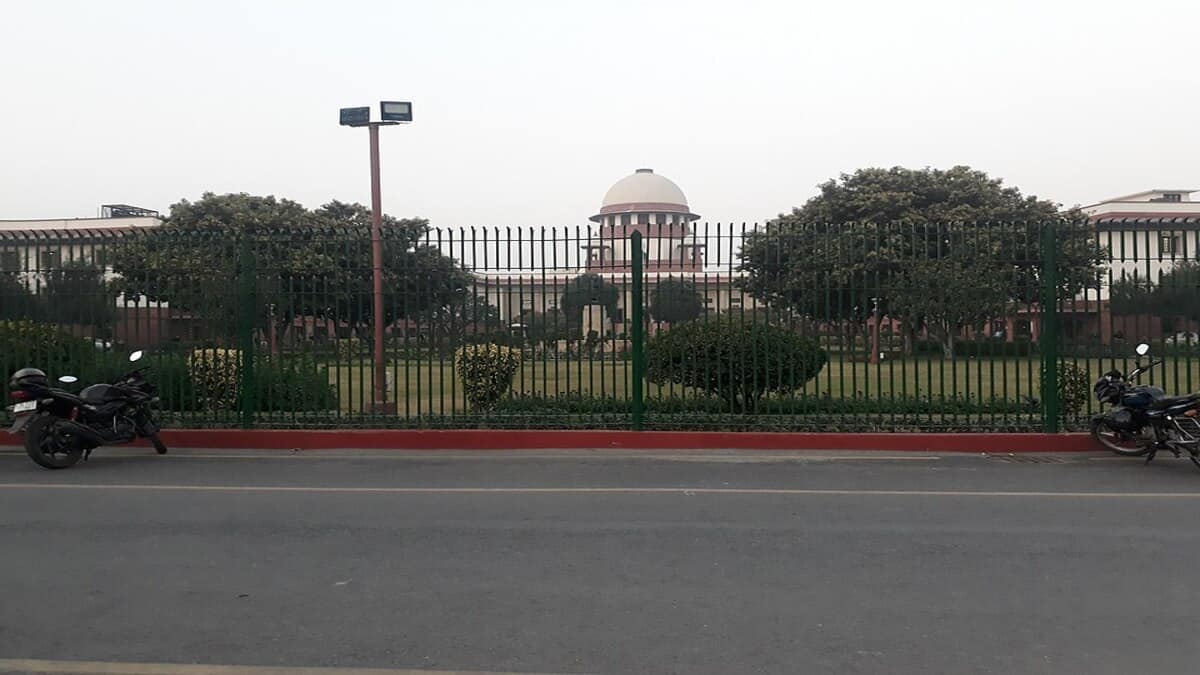
NEW DELHI: The Supreme Court on Tuesday sought responses from the Centre, NCERT and the CBSE on two fresh pleas challenging the education board's policy mandating the study of three languages, including two native Indian languages, for Class 9 students.
A bench comprising Chief Justice Surya Kant and Justices Joymalya Bagchi and V Mohana took note of the submissions of senior advocates Anand Grover and Gopal Sankaranarayanan, appearing for the petitioners, and issued notices to the Centre and others and sought their replies within 10 days.
"We will hear (the petitions) on July 29," the CJI said. The fresh pleas were filed by Amandeep Kaur and Arpan Roy Choudhury. They have made the Centre, the Central Board of Secondary Education (CBSE) and the National Council for Educational Research and Training (NCERT) as parties. One of the lawyers said that parents and schools have cited severe textbook shortages and sudden implementation burden.
"They are implementing unlawful circulars which are against the RTE (Right to Education) Act. They are imposing languages without alternatives. If Punjabi is taught without Sanskrit, where will teachers come?" Grover submitted.
Also read Maharashtra hostels for SC, ST students run without wardens, overcrowded; some ‘bogus’: CAG report
CBSE Three-Language Policy mandatory for Class 9 students
"We are here for class 6 and 9 students. First, the most practical problem is that one state has said that by July one, all books have to be available. Now only books of three out of 22 languages are available. This creates a manpower issue also because of no teachers.
"They say non-native languages are different from native languages... now they are treating English as a non-native language," Sankaranarayanan said. "A child is studying English and French and suddenly a 14-year-old, a class 9 student, is told to learn Tamil now. From where will we get the teachers, the infrastructure, etc," senior advocate Mukul Rohatgi asked.
"We are issuing notices. Meanwhile, file replies," the CJI said. Earlier, the top court had asked Additional Solicitor General Aishwarya Bhati to submit a report on the logistical preparedness of the CBSE to implement the decision.
Rohatgi, appearing for the petitioner Yashica Bhandari Jain and others, submitted that a nationwide circular has been issued by the CBSE, which states that the students have to study three languages from the next academic year.
Also read Has DST scrapped INSPIRE-SHE scholarship? No notice, list, or clarity leaves students wondering
CBSE directs Class 9 students to use Class 6 R3 textbooks
According to a circular issued by the CBSE, the study of three languages, including at least two native Indian languages, has been made compulsory for Class 9 students beginning July 1.
The move is part of the CBSE's alignment of its scheme of studies with the National Education Policy (NEP) 2020 and the National Curriculum Framework for School Education (NCF-SE) 2023.
"In order to adequately address the competencies envisaged at the Secondary Stage, these textbooks will be supplemented with one appropriate local or state literary material, selected by schools, such as short stories, poems, or nonfiction works," the board said.
It added that detailed guidelines regarding the selection and pedagogical use of supplementary literary material would be issued by June 15. According to the circular issued on May 15, students opting for a foreign language may do so only as the third language after studying two native Indian languages, or as an additional fourth language.
"With effect from July 1, 2026, for Class IX, the study of three languages (R1, R2, R3) shall be compulsory, with at least two languages being native Indian languages," the circular said.
The board said till the dedicated R3 textbooks are available, Class 9 students shall use the Class 6 R3 textbooks (2026-27 edition) of the chosen language. The CBSE said to keep the focus on learning and reduce any undue pressure on students, no board examination shall be conducted for R3 at the Class 10 level.
 Add as a preferred source on google
Follow us for the latest education news on colleges and universities, admission, courses, exams, research, education policies, study abroad and more..
To get in touch, write to us at news@careers360.com.
Next Story
]Latest Education News
]Related News
]Board Exam Time Table 2027: TN 10th, 12th, AP Inter date sheets out; TS, CBSE, RBSE, JKBOSE schedule soon
CBSE Board Exam Dates 2027 LIVE: Class 10th, 12th subject-wise timetable soon at cbse.gov.in, LOC submission
Andaman schools shut on October 27; Odisha districts on October 28, 29 amid ‘Cyclone Arnab’


