
Centre approves over 1.76 lakh smart classrooms; UP tops the list with 35,533: Govt tells Lok Sabha
Suviral Shukla | December 1, 2025 | 04:04 PM IST | 2 mins read
Meghalaya has only 25 approved smart classrooms, and Ladkshadweep has none, according to the Prabandh portal data.
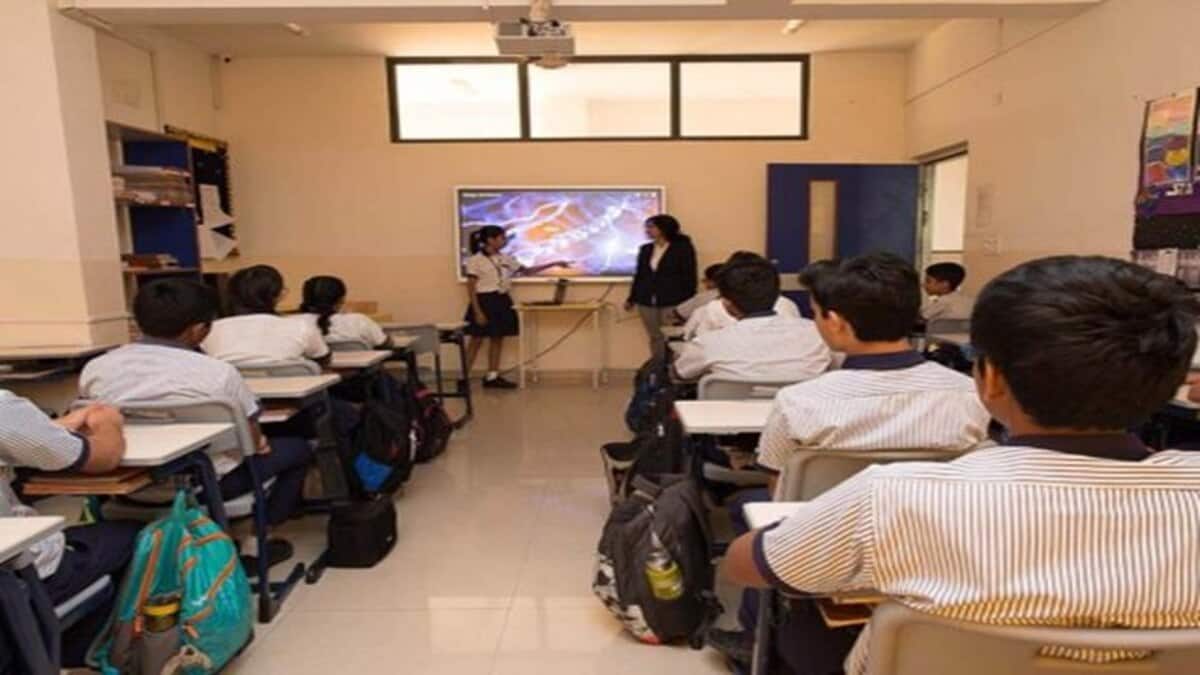
A total of 1,76,728 smart classrooms have been approved by the Ministry of Education in rural and urban areas across the states and union territories under the Samagra Shiksha scheme. The centre has also identified more than 16,000 rural secondary schools for high-speed internet under BharatNet to accelerate digital learning infrastructure nationwide.
The data shared by Jayant Chaudhary, minister of state in the Ministry of Education, in a Lok Sabha reply, showed that Uttar Pradesh has the highest number of approved smart classrooms by the government with a total of 34,533 across the state, while Meghalaya has the least number at 25. Lakshadweep has zero approved smart classrooms, as per the data by Prabandh portal (as on November 10, 2025).
Other states with big numbers of approved smart classrooms include Madhya Pradesh with 12,573, Odisha- 11,776, and Bihar 11,586, the official press release stated.
Also read Bihar: Online attendance via e-Shikshakosh a ‘burden on teachers’ but has curbed absenteeism
Samagra Shiksha Scheme for School Education
The Samagra Shiksha is an integrated scheme for school education and it was implemented by the Department of School Education and Literacy. The objective of the scheme is to ensure inclusive and equitable quality education in accordance with the National Education Policy (NEP 2020).
The non-recurring grant for smart classrooms (2 per school) is Rs 2.40 lakh, whereas the recurring grant is Rs 38,000, which includes e-content and digital resources, charges for electricity.
“Smart Classroom component of Samagra Shiksha covers Government and Aided schools having classes VI to XII. Under this component financial assistance is provided to States/UTs, including in rural and semi-urban areas for establishing Smart Classrooms in schools which includes interactive Digital Board/display unit, Operating System (OS), LCD/LED/plasma screen, printer, scanner, laptops/tablets/desktops etc,” according to the official press release of the parliament response.
Also read Zero Samagra Shiksha funds to Kerala, West Bengal, Tamil Nadu: Government
UDISE+ data and funds
Moreover, as per the UDISE+ data and funds approved in Project Approval Board’s (PAB) meetings to states, UTs for the year 2025-26, there were gaps identified in filling classrooms and other components in secondary and senior secondary schools in States, UTs.
“To address this gap, a supplementary PAB was conducted for the saturation of these facilities in 32 States/UTs, including Andhra Pradesh, Bihar, Madhya Pradesh and Uttar Pradesh,” the press release said. The Government of India, in the Budget 2025, has also announced provision of broadband connectivity to all government secondary schools in rural areas, under the ‘BharatNet’ project to enhance digital infrastructure in remote areas by BSNL in a phased manner.
“Under Samagra Shiksha, teacher capacity building for digital education is being supported through the Digital Infrastructure for Knowledge Sharing (DIKSHA), which provides e-content and digital learning resources,” the official document reads.
On the basis of feasibility, BSNL has identified 16,071 schools that are less than 500m from Optical Line Terminal (OLT) which has identified 16,071 schools in that range. Those schools are eligible in phase 1 for high speed internet connectivity.
 Add as a preferred source on google
Follow us for the latest education news on colleges and universities, admission, courses, exams, research, education policies, study abroad and more..
To get in touch, write to us at news@careers360.com.
Next Story
]Latest Education News
]Related News
]Maharashtra MBBS interns demand Rs 30,000 monthly stipend, warn of strike from November 2
J-K doubles MBBS, BDS interns' and FMGs' monthly stipend amid agitation
Medical interns in J-K restart agitation over stipend hike; allege government failed to honour assurance


