
NALSAR Row: Student Bar Council condemns BCI’s withdrawn letter on 2026 batch
Ruchika Kumari | August 15, 2026 | 12:09 PM IST | 2 mins read
NALSAR Student Bar Council condemned BCI’s rescinded letter on 2026 batch enrollment and inquiry, questioning the council’s statutory powers.
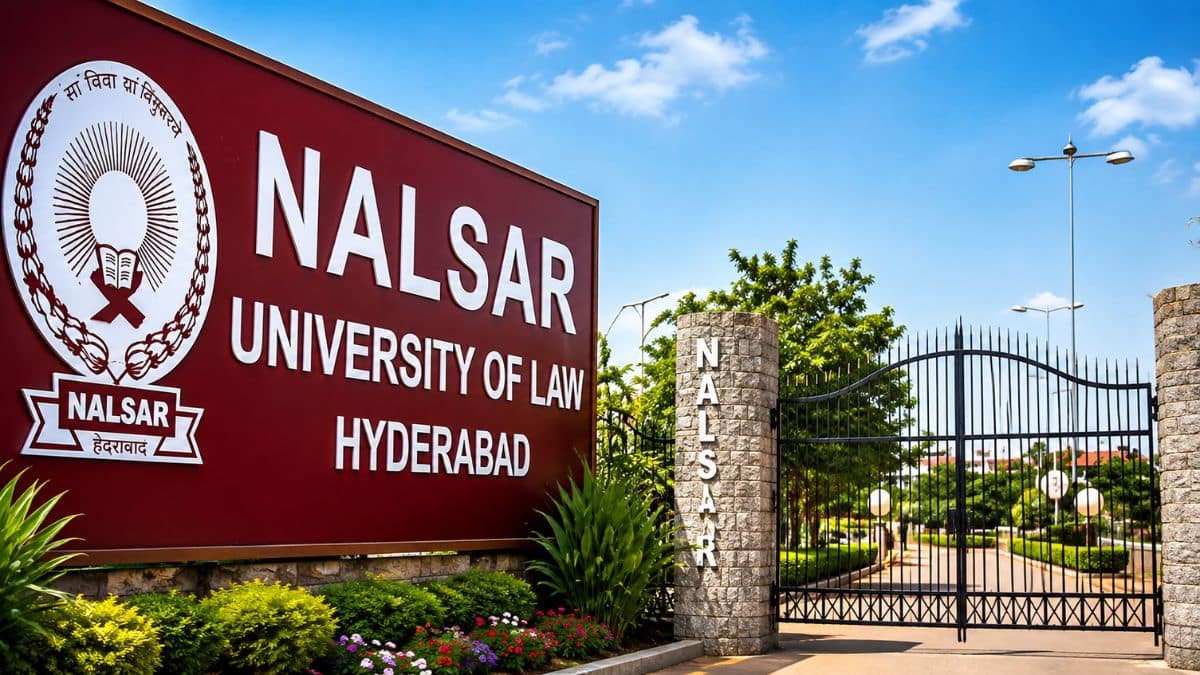
The Student Bar Council of NALSAR University of Law has condemned the Bar Council of India’s (BCI) now-rescinded letter concerning enrollment of the university’s 2026 batch and an inquiry into students and faculty who expressed dissent over proposed participation of the Chief Justice of India (CJI) at convocation.
Issuing statement of condemnation, the student bar council said the events of August 13 should be recorded despite the subsequent rescission of BCI’s letter and the “extinguishment of the cause of action”.
According to the statement, BCI chairperson Manan Kumar Mishra, in a letter dated August 13, issued what the student bar council described as a “blanket ban” on the outgoing NALSAR batch of 2026, preventing students from enrolling in any state bar council of their choice.
In the statement, the BCI also sought an inquiry and factual report from NALSAR vice chancellor on those who participated in expressing dissent over CJI’s participation at convocation, the student bar council said.
Later that day, a second BCI letter was modified to allow 2026 batch to enroll with the bar councils of their choice. However, according to the statement, the BCI continued to seek an inquiry and claimed that “a handful of teachers and outsiders were instrumental in instigating innocent students”.
The Student Bar Council further said that Mishra later communicated on X that all proceedings against NALSAR had been cancelled.
“We acknowledge the rescission of the letter and the extinguishment of the cause of action,” the council said. However, it said the episode should still be condemned at four levels — statutory, constitutional, first principles, and “in light of the wider social realities of repression and unfreedom”.
NALSAR questions BCI’s statutory powers
On the statutory aspect, the Student Bar Council questioned the BCI’s reliance on provisions of the Advocates Act, 1961.
The council said the BCI chairperson had invoked Sections 7(1)(b), 7(1)(g), 7(1)(h) and 7(1)(i) of the Advocates Act, which establish the functions of the BCI. It said the provisions applicable to the university relate to the BCI’s functions concerning standards of professional conduct and promotion of legal education.
The statement also referred to Section 24A of the Advocates Act, 1961, concerning disqualifications from enrollment. The council said the provision restricts disqualification from enrollment to specified grounds, including convictions for criminal offences, and noted that no such circumstance had occurred in the present case.
“To then direct State Bar Councils to restrict the enrolment of students from the Batch of 2026 does not align with the BCI’s statutory functions,” the student bar council said.
The statement comes after some NALSAR students expressed dissent over the proposed invitation of the CJI as chief guest at the university’s convocation. The BCI subsequently rescinded its letters concerning the enrolment restriction and inquiry.
Apart from these, over 400 alumni of the NALSAR criticised BCI over its now-withdrawn order to conduct an inquiry and submit a report naming faculty and students who expressed their views on inviting the Chief Justice of India to this year's convocation.
 Add as a preferred source on google
Follow us for the latest education news on colleges and universities, admission, courses, exams, research, education policies, study abroad and more..
To get in touch, write to us at news@careers360.com.
Next Story
]MUHS plans virtual classrooms, remote lectures to tackle faculty crunch at new Maharashtra medical colleges
New VC of Maharashtra University of Health Sciences also proposes 24x7 helpline to address ragging, mental health issues of students; annual PhD exams; blockchain tech to avoid paper leaks
Musab QaziLatest Education News
]Related News
]ABVP holds protest at DU against ‘anarchy’, backs democratic institutions
JNU VC acknowledged hunger strike for first time, but refused to speak to rusticated students: JNUSU
DU VC urges newly elected DUSU office-bearers to lead drug-free campus campaign


