
West Bengal govt bars employees from 'unauthorised' media interaction; Jadavpur teachers oppose move
Ruchika Kumari | May 21, 2026 | 01:36 PM IST | 2 mins read
What does the West Bengal government’s new circular actually say? Here’s a detailed breakdown of the rules, criticism, and the free speech debate around it.
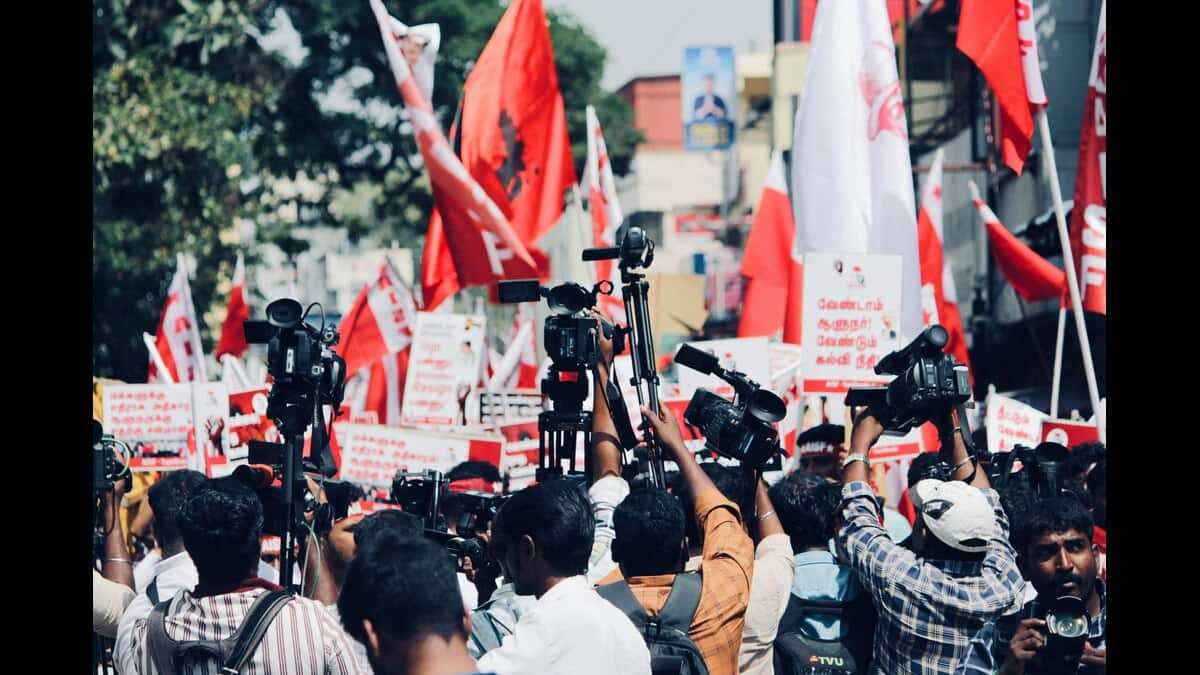
The West Bengal government’s latest circular restricting government employees from interacting with media has triggered a sharp political and academic debate. The circular, issued by Chief Secretary Manoj Agarwal reiterates existing conduct rules applicable to members of the All India Services (AIS), West Bengal Civil Service, West Bengal Police Service, and other state government employees, including staff of state-funded autonomous bodies and educational institutions.
The controversy intensified after the Jadavpur University Teachers’ Association (JUTA) issued a counter statement calling the move 'a threat to democracy, freedom of expression, and academic independence'.
The main controversy is over a rule that bars government employees from openly speaking against policies or decisions of the state or central government in interviews, articles, broadcasts, or other media platforms. The latest circular has drawn attention because the political context in the state has changed and that the circular explicitly reiterates restrictions on criticism through media.
Also read PM Modi's Jadavpur University Remark: Dharmendra Pradhan, Mamata Banerjee, JUTA trade barbs
Key restrictions mentioned in circular
The circular cites provisions under the All India Services Conduct Rules, 1968, and West Bengal government conduct rules. As per the document, employees are barred from several forms of media engagement without prior government approval.
- No participation in sponsored or privately produced media programmes without prior sanction
- No direct or indirect communication of official documents or information to the press without government permission
- No editing or managing newspapers, periodicals, or publications without prior approval
- No writing articles, letters, or participating in radio broadcasts without sanction
- No “adverse criticism” of policies or decisions of the state or central government through publications, interviews, broadcasts, or media contributions
- No public statements that could strain relations between the state government and Centre, between states, or with foreign governments
The rules apply to all educational institutions substantially funded by the state government.
JUTA demands immediate withdrawal
The Jadavpur University Teachers’ Association described the circular as a form of “control politics” and stated that it has the potential to curb independent thinking and free academic discourse.
The statement (originally in Bengali) reads, "The restrictions are not limited only to statements or comments; restrictions have also been imposed on writing in newspapers and magazines. No anti-government comments can be made. Even the space that should exist within academic writing is being affected. Will writing in academic journals also now require permission or become regulated? In disciplines such as social sciences and humanities, discussion about individuals, society, and government is natural."
It further reads, "Therefore, this circular is an obstacle to free thought and intellectual practice. In a democracy, the right to differing opinions is extremely important. Constructive criticism of the government enriches the government itself. We demand that such a circular be withdrawn immediately.”
The teachers’ body has demanded immediate withdrawal of the circular.
 Add as a preferred source on google
Follow us for the latest education news on colleges and universities, admission, courses, exams, research, education policies, study abroad and more..
To get in touch, write to us at news@careers360.com.
Next Story
]Latest Education News
]Related News
]CJP Protest: Delhi Police detain students, party leaders; IYC announces legal helpline
Chandigarh University launches ‘Campus Tank Season 2’, offers 15 million US dollars for student startups
Patna: JD Women’s College teachers oppose Mata Sita University affiliation, demand repeal of Bihar Act


