
As ABVP expands footprint in post-TMC West Bengal, SFI, Chhatra Parishad brace for new campus power struggle
Pritha Roy Choudhury | June 9, 2026 | 11:02 AM IST | 5 mins read
Student unions in West Bengal colleges – ABVP, Chhatra Parishad, and SFI – are restrategising expansion as Surendranath College, South City Law College scandals draw scrutiny
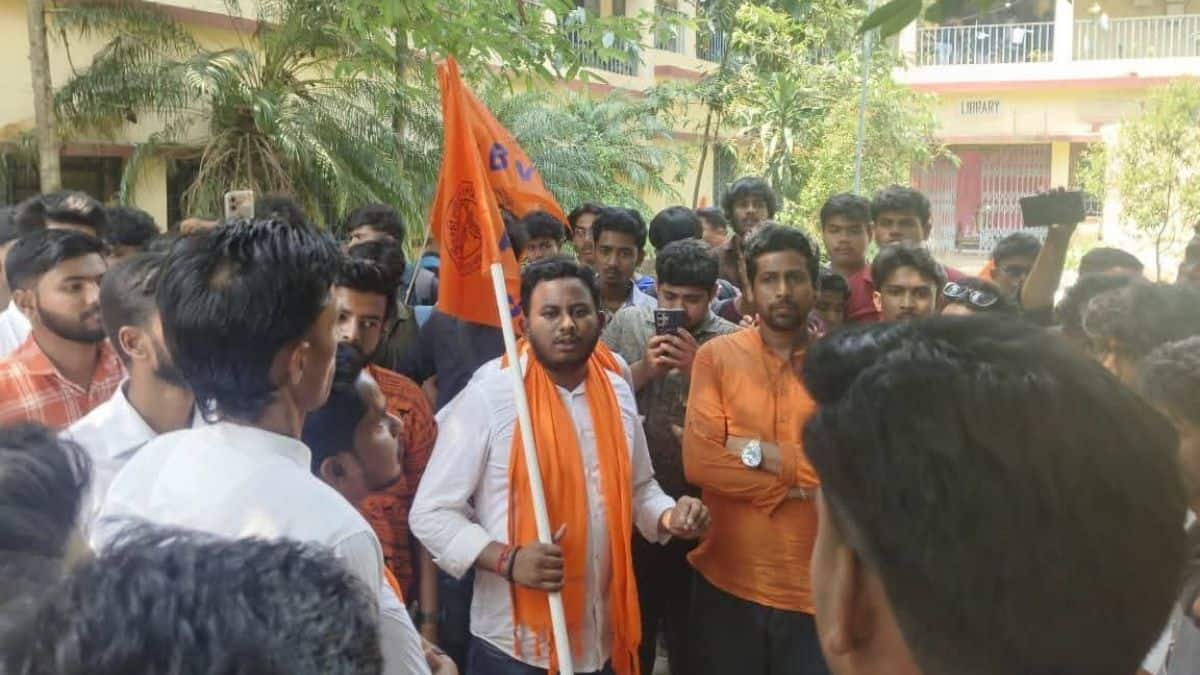
KOLKATA: “What is being exposed in some colleges today has been happening elsewhere for years.” Akhil Bharatiya Vidyarthi Parishad (ABVP) leader Dipanjan Paul was not talking about one college, or even a handful. He was describing what he alleges is a systemic failure affecting 90-95% colleges in West Bengal. With the Trinamool Congress (TMC) out of power in the state after more than a decade, Bengal’s campus politics is entering its most volatile period in years – and student unions are moving fast to define what comes next.
The strategies being adopted by rival student groups – ABVP and Chhatra Parishad, Indian National Congress’ student wing in West Bengal affiliated to National Students Union of India (NSUI) – come at a time when campus governance has become impossible to ignore. Allegations of financial mismanagement, intimidation and institutional neglect have surfaced across the state thrusting student unions under scrutiny.
Members of the student wing of TMC, the Trinamool Chhatra Parishad (TMCP) declined to even comment on the matter. TMC was in power until two months ago.
ABVP leaders claim the organisation has added around 30,000 new members over the past year, taking its total membership in West Bengal to nearly 90,000 from around 50,000 last year. The organisation is launching a fresh membership drive from today, June 9.
According to ABVP leaders, visits to colleges across the state have revealed widespread concerns over inadequate infrastructure and poor student facilities. “Students do not have gymnasiums, proper spaces for sports activities or adequate infrastructure for extracurricular programmes in most colleges,” Paul said.
ABVP, Chhatra Parishad: Fund mismanagement
The ABVP alleged that many institutions suffer from mismanagement of funds, inadequate canteens, missing sports equipment and a lack of facilities for organising student festivals. It further claimed that the same infrastructure is often used for morning, day and evening classes, placing pressure on already limited resources.
Regarding the government’s direction to colleges and universities to submit audit reports, Paul said, “This was necessary. There has been widespread misuse of funds over the past several years, during the TMC rule. Therefore, conducting an audit was essential.”
Referring to the recent controversy at Surendranath College, where termite damaged cash was recovered from a room in the campus, Paul alleged that shortages of sports equipment and infrastructure are not isolated problems but symptoms of different issues affecting colleges across the state.
Paul also alleged that some college principals who spoke out against irregularities or attempted to raise concerns faced administrative action.
While ABVP is focusing on expansion, the Congress-affiliated Chhatra Parishad says it is prioritising the quality of its membership over numbers.
“Right now, we have around 3,800 members. We are checking the background of every new applicant before adding them to the organisation,” said Priyanka Choudhury, president of the West Bengal Chhatra Parishad.
According to Choudhury, around 500 new members have joined the organisation across West Bengal in recent months, including nearly 200 from Murshidabad district.
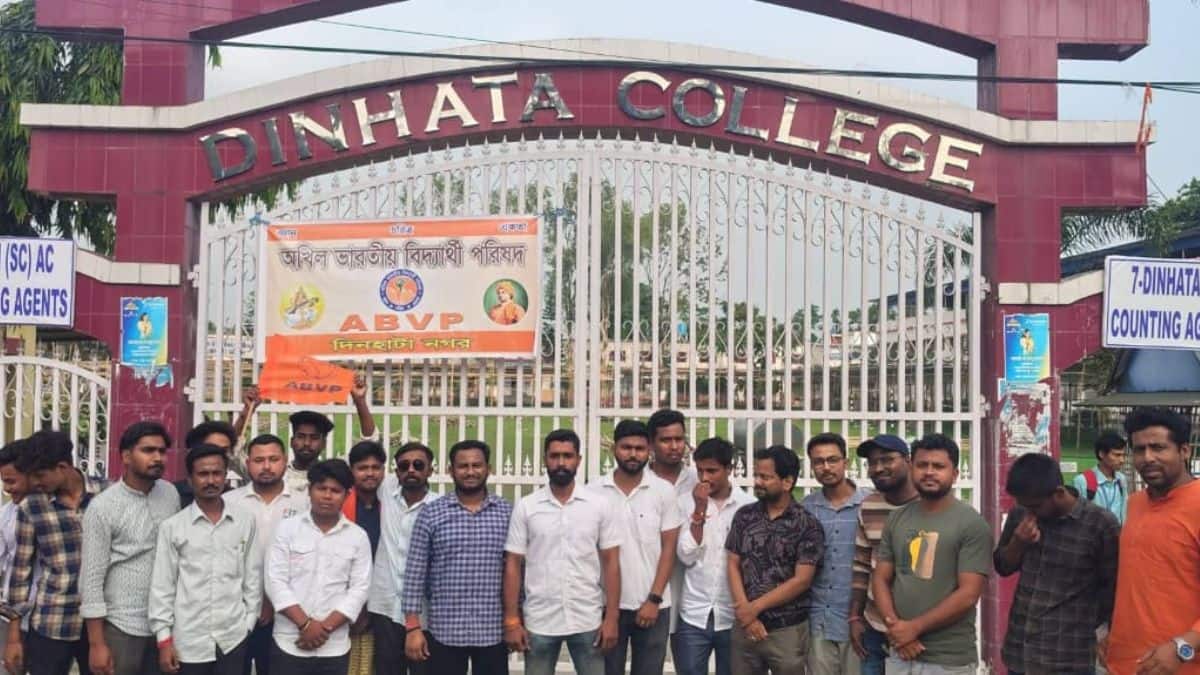 ABVP members have been visiting college and university campuses across West Bengal; a membership drive starts today (Image: ABVP)
Colleges in West Bengal: Intimidation, manipulation
Choudhury alleged that student leaders had repeatedly alerted college authorities to activities taking place inside union rooms and common rooms but that little action was taken. She claimed that students had approached her over the years with complaints of intimidation and manipulation by politically connected individuals on campuses, but were unwilling to come forward publicly because of concerns about their safety and families' reputations.
“The South Calcutta Law College incident is only one case. The student feel such issues of sexual violence in campuses require more attention.There are many other incidents that have never been reported because students are afraid to speak out,” she said.
Choudhury was referring to an incident which involved an alleged gangrape of a student within the South Kolkata Law College campus.
According to Choudhury, Chhatra Parishad leaders had repeatedly written to principals and college authorities about their concerns. She alleged that after restrictions were imposed on union rooms, some institutions simply renamed the spaces as common rooms while allowing the same activities to continue.
“The principals were informed. We emailed them, even spoke to them. It is difficult to believe that the heads of institutions did not know what was happening inside their own colleges,” she said.
Choudhury also alleged that Chhatra Parishad activists had recently faced resistance while attempting to put up flags at some colleges. According to her, the opposition stemmed from fears that students might reveal information about activities taking place on campuses.
She further claimed that allegations relating to harassment, drug-related activities and financial irregularities had surfaced from multiple colleges over the years, though many students remained reluctant to speak publicly.
At the same time, Choudhury sought to distinguish Chhatra Parishad from the ruling party's student wing, saying the accused in the South Calcutta Law College case was associated with TMCP and not Chhatra Parishad.
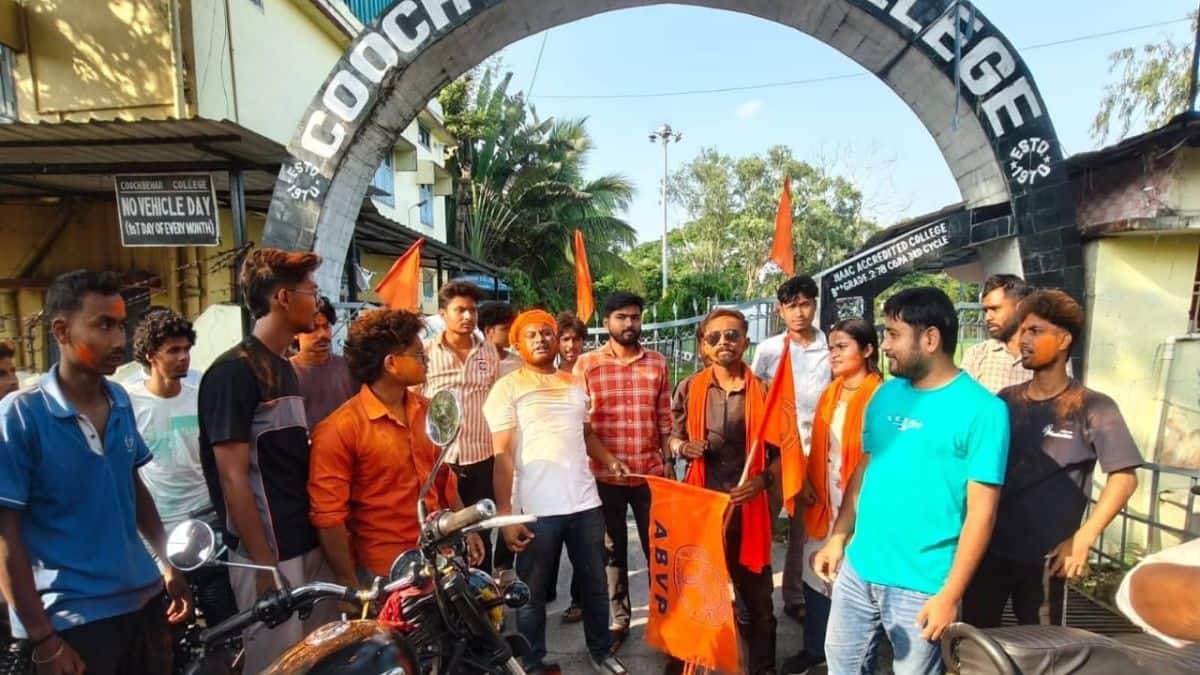 ABVP members visit Cooch Behar College in the north of West Bengal; new membership drive starts today (Image: ABVP)
SFI: Move towards ‘advantageous’ outfits
A leader from Student Federation of India (SFI), the student wing of Communist Party of India [CPI(M)], who did not wish to be named, said the changing political environment and because of the ‘double-engine government’ had created uncertainty among students, prompting some to move towards organisations they believe may be politically advantageous in the current climate.
"People are scared because of the change that has taken place. Naturally, some organisations may see a rise in membership at this moment. But political trends on campuses keep changing," the student leader said.
The SFI member further said that the current surge in membership claimed by some organisations should not be viewed as a permanent shift in student politics. According to him, students ultimately judge organisations based on their work on campuses rather than broader political developments.
Also read From next year, CBSE Class 12 answer sheets on Digilocker: Education ministry
"At this moment, some students may be joining other organisations because they feel uncertain about the future. But we are positive that students will return to organisations that consistently work on issues affecting education, student welfare and democratic rights," he said.
The leader added that student politics in West Bengal has historically witnessed periods of rapid change and that organisational strength cannot be measured solely by membership figures. "Campus politics is not decided in a few weeks or months. It is built through long-term engagement with students and their concerns," he said.
 Add as a preferred source on google
Follow us for the latest education news on colleges and universities, admission, courses, exams, research, education policies, study abroad and more..
To get in touch, write to us at news@careers360.com.
Next Story
]CMC Vellore MBBS admissions handpicked doctors who’d serve in India; NEET paper leak renews debate
CMC Vellore’s unique process gauged both merit and aptitude, producing doctors willing to serve India’s hinterland, says former director. CMC Vellore MBBS admissions 2026 will be based on NEET exam
Musab Qazi


