
No more ‘half-baked doctors’: NMC scraps 2-year PG medical diplomas; seats will go to MD, MS
Musab Qazi | June 23, 2026 | 02:13 PM IST | 3 mins read
National Medical Commission is allowing one last round of admission in 2026-27, after which these seats will go to MD, MS across medical colleges
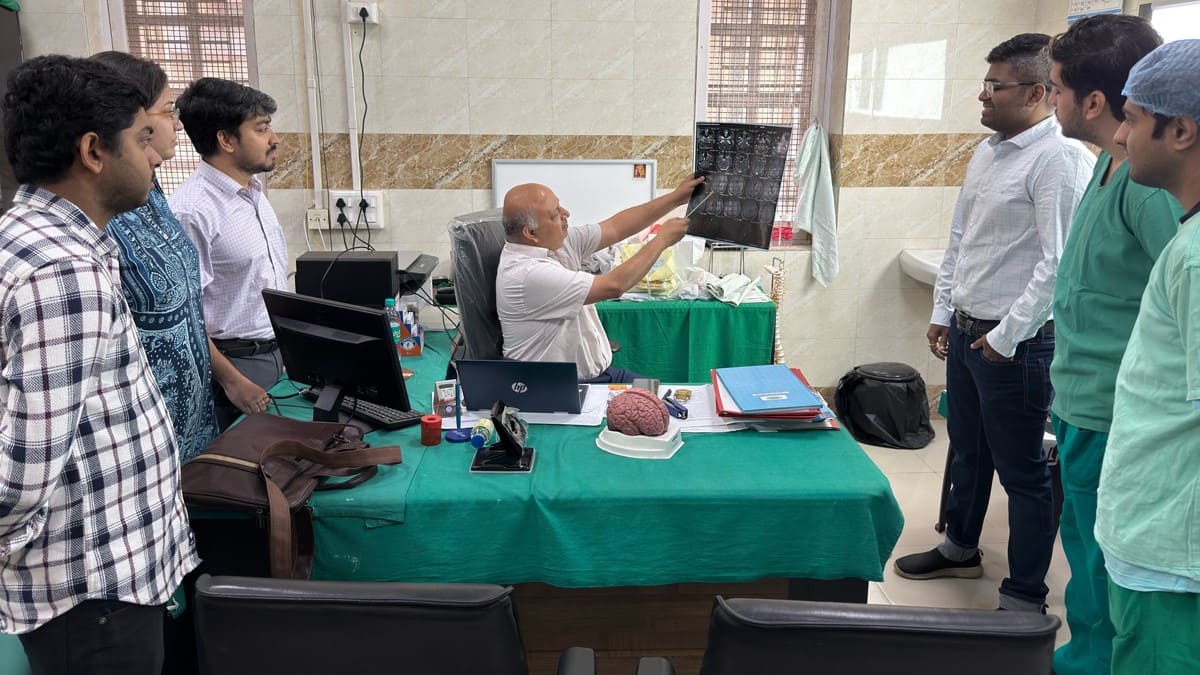
The National Medical Commission (NMC) has announced that the post graduate (PG) medical diploma programmes will be shut across the country after a final batch is admitted in the upcoming academic year, 2026-27. No new student will be admitted to the two-year course from 2027-28, announced the commission, in a public notice issued on Monday.
With this announcement, the medical education regulator has put a hard deadline on ending the diploma programmes, which were already being phased out over the last eight years. The colleges and hospitals still running these courses have been reminded of the provision to convert their diploma seats to broad specialty degree seats, namely MD and MS.
The NMC communique said that the conversion is aimed at standardising PG medical education, enhancing the quality and recognition of specialist training and aligning PG qualifications with contemporary educational standards. It pointed out that while many of the institutions are running both diploma and degree programmes, others are exclusively offering the latter.
“In many such cases, the institutions may already possess the requisite infrastructure, faculty, clinical material and other resources that may facilitate conversion of diploma courses to degree courses, subject to fulfillment of applicable regulatory requirements,” reads the notice.
PG Diplomas have ‘outlived their purpose’
The decision to scrap the diploma programmes and change them to MD/MS was originally made by NMC’s predecessor, the Medical Council of India (MCI) in 2018.
Many of the medical colleges and hospitals have already discontinued these courses. As many as 50 government and private institutes still have a cumulative of 110 diploma courses with 391 seats spanning various specialisations listed below:
Anaesthesia
Child health
Clinical pathology
Community medicine
Dermatology, Venereology and Leprosy
Diabetology
ENT
Forensic medicine
Health education
Health administration
Ophthalmology
Obstetrics and Gynaecology
Paediatrics
Psychological Medicine
Public health
Radio diagnosis
Tuberculosis and chest diseases
Experts have welcomed the move, underscoring that the diploma courses have outlived their purpose of providing adequate specialists in rural and remote parts of the country. With PG training opportunities being expanded at a breakneck speed – 8,416 new seats were added for the last academic year alone – the country no longer faces a shortage of PG doctors.
Also read NEET UG 2026 Re-Exam: 20 Goa candidates denied extra 15 minutes at centre, demand inquiry
“Many of the doctors weren’t ready to go to rural healthcare facilities, resulting in high child and mother mortalities. The diploma was envisaged as a half-way between MBBS and MD/MS, where the students are trained in the basics of various specialisations. While there were restrictions on the diploma holders serving in the urban areas, they were encouraged to go to rural areas,” said Pravin Shingare, a former director of medical education in Maharashtra.
Avinash Supe, another former medical director from the state, said that the diploma programmes were hollowed out by the delay in the admission process. “The students would hardly get one and a half years of training. So why have these half-baked doctors?” he said.
NMC has already been preparing the ground for the conversion of diploma programmes to degree courses by relaxing some of the faculty and infrastructure norms.
Also read CMC Vellore MBBS admissions handpicked doctors who’d serve in India; NEET paper leak renews debate
The Medical Institutions (Qualifications of Faculty) Regulations, notified last year, allow non-teaching government hospitals with 220 or more beds to be designated as teaching institutions. It also provided a pathway for diploma holders to teach PG courses, while allowing non-teaching specialists to become faculty members.
The experts, however, cautioned that the regulator must ensure that the institutes meet these requirements before they are allowed to upgrade their programmes. “It won’t be easy to convert all the seats in one go. The institutes should move gradually,” said Shingare.
Note and Correction: An earlier version of the story said the NBEMS Diploma programmes, run by the National Board of Examination and Medical Sciences, instead of PG diplomas, overseen by NMC, were being discontinued. NBEMS later clarified the decision doesn’t impact its course, which will continue to be offered. The two are distinct programmes, despite having the same course duration and eligibility criteria. The error is regretted.
 Add as a preferred source on google
Follow us for the latest education news on colleges and universities, admission, courses, exams, research, education policies, study abroad and more..
To get in touch, write to us at news@careers360.com.
Next Story
]Three years on, BUHS has left 2 lakh paramedical students with no exams or results and a bleak future
Exam and result delays, steep fee hikes, no permanent VC and no proper academic calendar add to woes of understaffed Bihar University of Health Sciences managing 126 exams for 56 health science courses
Musab QaziLatest Education News
]Related News
]Education ministry approves setting up five centres of excellence in classical languages
IIT Bombay Student Suicide Case: Mumbai police question IITB professor Doolla for 10 hours
Delhi Police detains over 1,000 SFI, DYFI protesters, students demanding Gyanesh Kumar’s resignation


