
'Feedback ignored completely', VBSA Bill 2025 must go for standing committee review: Teacher, student groups
Vikas Kumar Pandit | December 15, 2025 | 05:40 PM IST | 3 mins read
Viksit Bharat Shiksha Adhishthan Bill 2025 same as the HECI Bill brought seven years ago, to which there were 1 lakh unfavourable responses, says group.
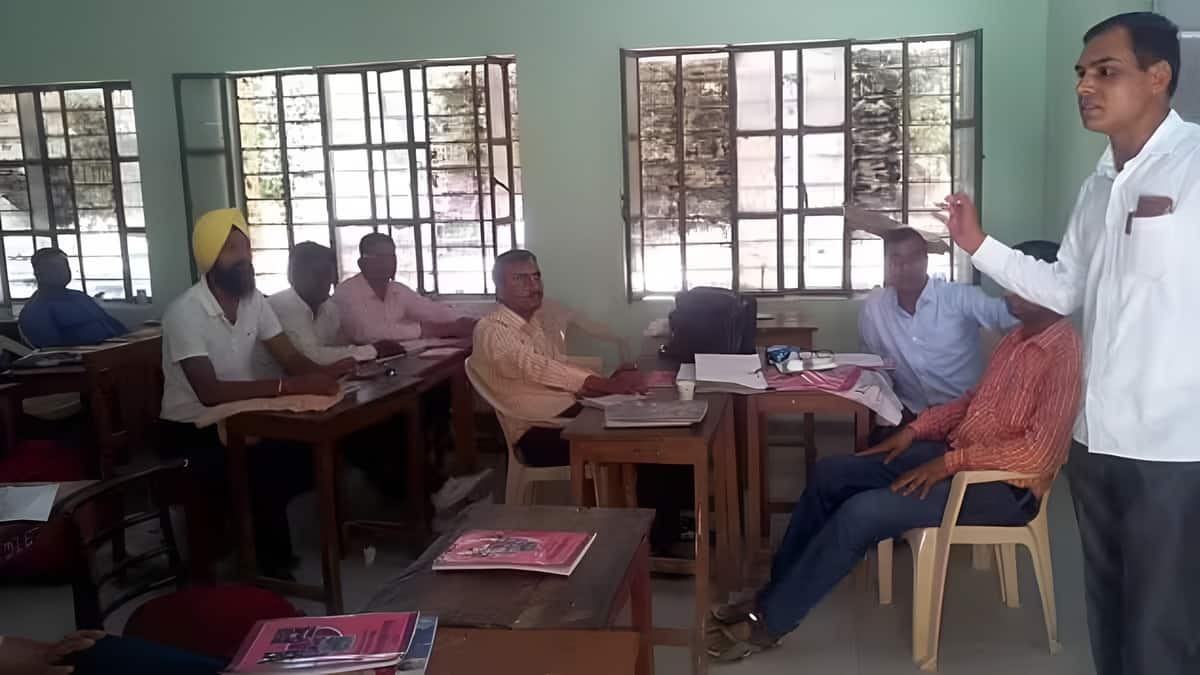
A group of national teacher and student organisations issued a joint statement opposing the Viksit Bharat Shiksha Adhishthan (VBSA Bill 2025), describing it as a structural shift in the regulation and funding of higher education.
The group highlighted that the VBSA Bill 2025, cleared by the cabinet on December 12 and scheduled for introduction in the winter session of Parliament, will repeal the University Grants Commission (UGC) Act 1956, the All India Council for Technical Education (AICTE) Act 1987, and the National Council for Teacher Education (NCTE) Act 1993.
They noted that the draft, uploaded on the Members of Parliament portal on December 14, largely mirrors the earlier Higher Education Commission of India (HECI Bill 2018) with revised nomenclature of the commission and its councils. The earlier draft had received over a lakh responses opposing it.
“The VBSA Bill 2025 is a revived version of a similar HECI Bill 2018, a draft of which was released in June 2018. The revision is largely around renaming the Commission and Councils under it. The Draft HECI Bill 2018 had received more than a lakh unfavourable responses from concerned citizens, students’ and teachers’ associations, parliamentarians and other stakeholders,” the official statement said.
VBSA Bill 2025: Teacher representation reduced
Key concerns listed by the teacher and student organisations include the delinking of funding and regulation, with grants to be administered by the education ministry, potentially increasing bureaucracy and political influence. The composition of the commission is another point of concern, with 10 out of 12 members nominated by the Central government, reducing teacher representation and leaving no clear inclusion for marginalised groups.
“The composition of the commission does not reflect the diversity of the country and gives no representation to marginalised groups like SCs, STs, OBCs, women, transpersons, persons with disabilities, and minorities,” the official statement said.
Viksit Bharat Shiksha Adhishthan Bill 2025: Impact on teacher security
The bill’s regulatory provisions, including graded autonomy, authorisation, and institutional closure, are cited as steps toward a centralised regime, which the group says could impact job security for teachers, increase fees, and push institutions toward self-reliance. The group also flagged the disregard for institutional diversity and equity, and the potential threat to the autonomy of state-run and aided institutions.
The group linked the Viksit Bharat Shiksha Adhishthan Bill to the ongoing implementation of the National Education Policy (NEP 2020), stating that higher education institutions are already facing operational challenges under the policy. They said the bill could exacerbate issues related to curriculum design, admissions, public funding, and research capacity.
The statement concluded with an appeal to refer the Bill to the parliamentary standing committee to allow students, teachers, and educationists to provide input. “As stakeholders, we appeal that the Bill to be referred to the Standing Committee so that teachers, students, and educationists are given enough opportunity to present their case,” the statement further noted.
INTEC raises concerns over VBSA Bill 2025
Following the joint statement, the Indian National Teachers’ Congress (INTEC) issued its own note expressing concerns over the VBSA Bill 2025. INTEC highlighted that the Bill proposes centralisation of regulatory authority, removal of public grant funding, and a shift to loan-based financing through HEFA.
The organisation warned that these changes could undermine institutional autonomy, increase financial burdens on students, and affect access to higher education for marginalised communities. INTEC also called for nationwide consultation and urged that the Bill be referred to the parliamentary standing committee to allow teachers, students, and educationists to provide input.
"Indian higher education belongs neither to the market, nor to private corporations, nor to a centralised executive—it belongs to the people of India. INTEC urges teachers, students, scholars, policymakers, and citizens across the country to recognise what is at stake and to stand united in defence of public universities and the democratic future of Indian higher education," the official statement said.
 Add as a preferred source on google
Follow us for the latest education news on colleges and universities, admission, courses, exams, research, education policies, study abroad and more..
To get in touch, write to us at news@careers360.com.
Next Story
]Latest Education News
]Related News
]BITS Design School opens BDes applications for 2027; 210 seats available
UP NEET PG counselling 2026 merit list out; 6,084 eligible for over 3,000 MD, MS seats in round 1
KJ Somaiya Institute of Management introduces 15-month executive MBA in leadership, transformation


