
Maharashtra’s pharmacy college boom going bust? Unchecked growth of pharma courses threat to livelihood
Musab Qazi | July 27, 2026 | 01:29 PM IST | 9 mins read
With over 11,000 B.Pharma seats vacant, Maharashtra wants to control expansion but an alleged scam at PCI, DBATU Lonere’s actions, and court orders complicate things
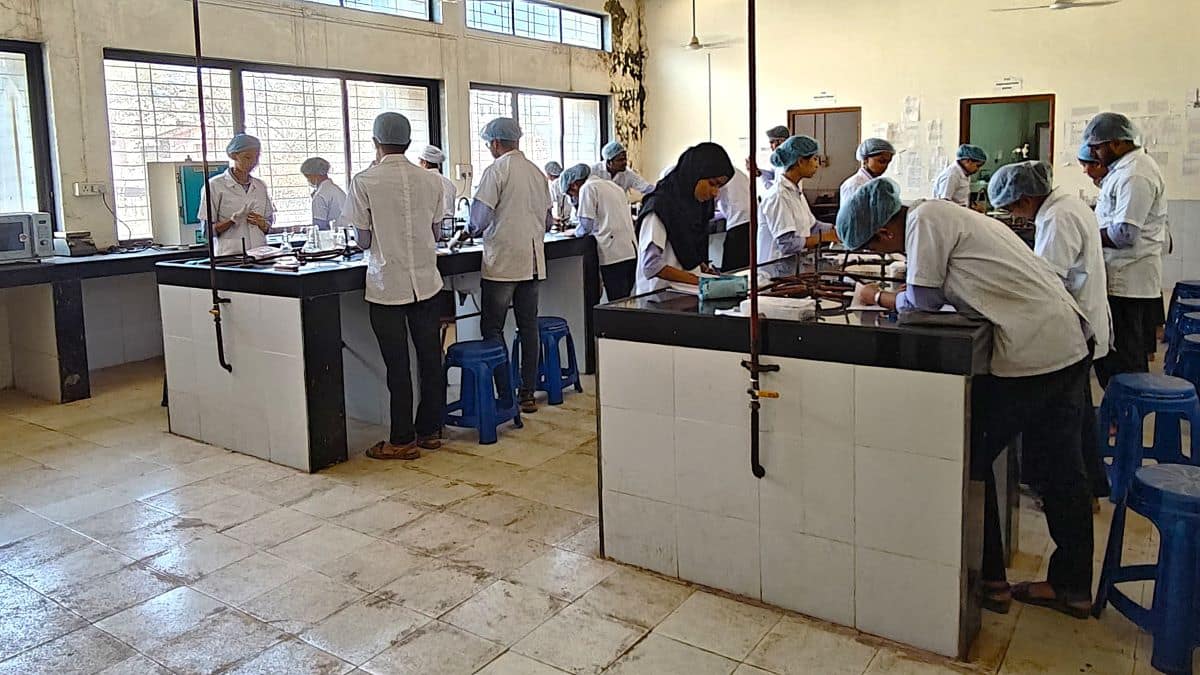
MUMBAI: On a warm May morning, Jagannath Shinde is holding court on the ground floor of his bungalow in Kalyan, on the outskirts of Mumbai. Among the throngs of people lined up for free medicines being distributed by the pharmacist-politician is a young woman. As soon as she introduces herself as a recent pharmacy graduate from Karnataka, Shinde interrupts her. He knows her problem all too well.
The woman had obtained her degree from one of the state’s many shell pharma colleges – the ones requiring students to show up only for exams – and is now finding it difficult to register with the Maharashtra State Pharmacy Council (MSPC). Shinde, a member of both the Maharashtra State Pharmacy Council (MSPC) and the Pharmacy Council of India (PCI), tells her that the state council has stopped recognising pharma graduates from other parts of the country due to uncertainty about the quality of their training.
“Many approved colleges work in a bogus manner. They don't get students due to the abundance of seats and hire agents to enrol students from other states. They even create fake documents and marksheets to admit the students,” he later explained.
In the last few years the state has witnessed an unprecedented growth in pharmacy colleges, even as the enrollment has more or less plateaued. Almost one-third of the undergraduate (UG) seats have remained vacant during the last three admission cycles.
Shinde is experiencing first-hand the challenges of underwhelming enrollment. His one-year-old pharmacy college, which he has named after himself, recently got a notice from PCI for not employing enough faculty members. But it won’t be easy to hire more teachers, as the college could fill only around one-third – 35 out of 100 – of its approved BPharma seats, leaving it with limited financial resources.
“I got a notice to fill the posts, but how can I? I can't do anything wrongful. So, we are issuing advertisements [for teachers]. We are also meeting students urging them to take admission in the institute,” he said.
Spurt in pharmacy colleges
Figures from the State Directorate of Technical Education (DTE) and Common Entrance Test Cell (Maharashtra CET Cell) show a dramatic expansion of pharmacy training avenues in Maharashtra in the last decade. Between the academic years 2016-17 and 2025-26, the number of colleges offering BPharm courses tripled from 168 to 531, while their cumulative intake more than quadrupled from 11,588 to 32,951.
In the initial years, between 2016-17 and 2018-19, both the intake capacity as well as the actual admissions to BPharm programme kept growing almost in sync with each other, indicating a demand-driven expansion. However, the pace of proliferation rapidly exceeded the demand, with the divergence between the two getting bigger by each passing year.
Also read Maharashtra scraps post-MBBS service bond; junior doctors’ group welcomes move
Even as the enrollment growth rate reduced to a trickle, the colleges continued to mushroom unabated. For the first time, in 2023-24, the state suddenly found almost one-third of its pharmacy seats unfilled, a gap that has persisted till date. The data shows that the bulk of the vacancies are concentrated in a small number of institutes, most of them new. As many as 11 colleges didn't get a single student in 2025-26, while 37 recorded admissions in single digits. A total of 158 out of 531 colleges couldn't fill half their seats.
Maharashtra Pharma Colleges: Intake, admission over 10 years
Year | Institutes | Intake | Admissions |
2016-17 | 168 | 11,588 | 11,305 |
2017-18 | 188 | 13,353 | 13,054 |
2018-19 | 228 | 17,188 | 16,825 |
2019-20 | 292 | 22,500 | 18,910 |
2020-21 | 321 | 25,370 | 23,641 |
2021-22 | 362 | 29,230 | 27,583 |
2022-23 | 396 | 31,810 | 28,219 |
2023-24 | 453 | 42,794 | 28,439 |
2024-25 | 515 | 48,051 | 31,827 |
2025-26 | 531 | 48,878 | 32,951 |
Pharmacy courses and the industry
The spurt in pharma colleges in the state aligns with the consolidation of the Indian pharmaceutical industry, especially during the Covid-19 pandemic years. Today, the country's pharmaceutical industry ranks third globally by volume and eleventh by value, show government figures. According to the Economic Survey 2025-26, the Indian pharma exports grew at a Compound Annual Growth Rate (CAGR) of 7% between financial year 2015-16 and 2025-26. The Mumbai-Pune corridor is a major pharma hub.
While experts agree that the mushrooming of the pharmacy institutes is mainly driven by the growth in the industry, there are other factors at play as well. “Until 2022, there was a ban on opening of new colleges, so when the ban was lifted, many colleges applied for and received approvals for new programmes,” said Milind Umekar, President of the Association of Pharmaceutical Teachers of India (APTI) and the Indian Pharmaceutical Congress Association (IPCA).
Umekar adds that the major reason for the growth was the increased interest in pharmacy education after the COVID-19 pandemic. Students and parents became more aware of the diverse career opportunities available in the pharmaceutical sector, including research and development, clinical studies, pharmacovigilance, formulation development, and drug and vaccine manufacturing.
However, the supply has now far exceeded the demand. The problem is compounded by the long-drawn admission and college approval process. “Many newly-established colleges have struggled to attract admissions, while reputed institutions continue to receive strong student interest. As pharmacy admissions often begin later than engineering admissions, causing many students to choose other professional courses,” said Umekar.
Pharmacy Council of India and Maharashtra govt
The sudden growth in pharmacy colleges is reminiscent of a similar boom – and bust – in engineering institutes in Maharashtra as well as other parts of the country. The swift approval for the new institutes has also raised concerns about the manner in which the proposals were adjudicated. Alarmed by the vacancy level, the state higher and technical education department, last year, conducted an inspection of around 150 pharma institutes which were set up in the last three years.
The inquiry revealed glaring lacunae in the colleges, when it comes to meeting PCI’s faculty and infrastructure norms. The state, then, requested the council to bar 89 colleges – 18 BPharm and 71 diploma (DPharm) – from admitting new students – a plea ratified by the apex regulator. However, within two weeks, PCI reversed the decision for 42 of them, after some of them complied with the requirements while others got relief from the Bombay High Court (HC).
But who is responsible for letting these institutes start operating without meeting the stipulated norms? The answer depends on who asks the question.
The PCI’s approval process requires colleges to submit consent from the examining authority – university in case of degree colleges – and a No Objection Certificate (NOC) from the state government.
There are contradictory claims being made by the state government officials, which has now been pushing for a freeze on new approvals. When Careers360 had asked a top official from the state higher and technical education department in October last year about the unchecked permissions to the new institutes, he alleged that PCI had approved the institutes without the state’s NOC. However, another official claimed that the state had, in fact, greenlit the proposals before they were sent to PCI.
PCI’s role in permitting the new colleges without due diligence is already under the scanner. In July last year, the Central Bureau of Investigation (CBI) had raided the bungalow of PCI chairperson and BJP leader from Gujarat, Montu Patel, alleging that he and his associates embezzled over Rs 5,400 crore by granting approvals for colleges in exchange for bribes. The investigating agency, in its FIR, claimed that the council had granted approval to as many as 870 pharma colleges within 13 days in 2023-24 by changing the in-person inspection process to a quick online inquiry. A Delhi court, however, granted him pre-arrest bail saying that the allegations against him weren't backed by “any cogent material”.
While, after being named by CBI, Patel was removed from the Gujarat State Pharmacy Council as well as the PCI chief, the national council website still identifies him as the head of the body. When Careers360 recently reached out to him to seek comments on the proliferation of pharma colleges in Maharashtra, he said he was not “authorised” to speak on the subject.
The DBATU Lonere factor
The Dr Babasaheb Ambedkar Technological University (BATU), Lonere, the state’s sole affiliating technical university, has also been blamed for issuing consent for the new institutes. Incidentally, the years which recorded the highest growth in pharma colleges are also the ones when BATU was finding its footing as an affiliating institute. Until 2016, the institute had functioned merely as a unitary technical university.
According to a BATU official, the university, until now, didn't have a proper perspective plan, which would have mapped the growth of new colleges under its jurisdiction. The colleges also benefited from a “backdoor entry”, where PCI allegedly granted approvals to diploma institutes to add degree sections without any fuss.
In September last year, the university tightened its inspection process. The colleges are now required to have at least 50% of faculty during the inspection visits, while all their statutory bodies must be in place. The NAAC accreditation has been made mandatory. Recently, the university also had its first five-year perspective plan approved by the state, where it has proposed a freeze on new colleges until 2031.
“We’ve got an assurance from the health ministry that no new institutes will be permitted without the state's consent,” said an official.
Another institution has also been favourable to colleges: the judiciary. “If PCI denies permission to anyone, they go to the courts. And once they do that the government can't do anything. It's a vicious cycle,” said Shinde.
Noting the unabated growth in pharmacy institutes and the rising number of graduates, the council, in July 2019, had put a nationwide moratorium on starting new colleges offering diploma and degree programmes. However, the decision was set aside by the Delhi HC in March 2022 in response to multiple petitions by educational bodies. The verdict was later upheld by the Supreme Court.
In 2024, even after the Maharashtra government had resolved to not let any new institutes come up, the state had to issue 30 NOCs, after the colleges moved Bombay HC. “The colleges managed to get favourable rulings as there was no basis for the state to deny them approval. However, with the perspective plan in place, we have a stronger case,” said the BATU official.
Also read ‘At Regulatory Crossroads’: Psychology courses caught in UGC, NCAHP, RCI tangle, causing confusion
B.Pharma Graduates: Jobs cut
Experts worry that the damage already done may prove detrimental to pharma education and graduates in the country. “Maharashtra has close to 5 lakh pharmacists, but only 1.35 lakh chemist shops. Licences for drug stores are issued irrationally. And when they don't find business, they are shut. They also sell sub-standard medicines,” said Shinde.
He also points out that many of the graduates are struggling to find jobs due to shrinking job opportunities as manufacturing plants of many top pharmaceutical companies have moved out of the state. “What's the ministry of health and family welfare (MoHFW) and NITI Aayog, the centre’s policy think tank, doing? They should study these issues,” he said.
Umekar has urged the state government, universities, and DTE to regulate further expansion and ensure that existing institutions seeking approval for new postgraduate programmes first obtain QCI, NBA and NAAC accreditation. “Maintaining quality, ensuring employability, and balancing demand and supply are essential for the sustainable growth of pharmacy education in Maharashtra,” he said.
 Add as a preferred source on google
Follow us for the latest education news on colleges and universities, admission, courses, exams, research, education policies, study abroad and more..
To get in touch, write to us at news@careers360.com.
Next Story
]West Bengal frames teacher transfer policy; will move staff, posts from over 4,000 zero-enrolment schools
West Bengal has over 4,000 zero-enrolment schools with over 19,000 teachers. State govt plans rationalisation. Teachers can state 3 choices; age, subject factors. Here’s the proposed policy
Pritha Roy ChoudhuryLatest Education News
]Related News
]Puducherry considers direct bus services for Community College students
Keralam initiates steps to appoint permanent university vice-chancellors, says higher education minister
SRFTI rusticates six students for assaulting VC, violating campus discipline


