
PARAKH’s Foundational Learning Study 2026 to cover 1 lakh Class 3 students across 10,000 schools
Shradha Chettri | April 7, 2026 | 10:35 AM IST | 3 mins read
NCERT PARAKH’s FLN survey supports the NIPUN Bharat Mission to ensure universal foundational literacy and numeracy by Class 3
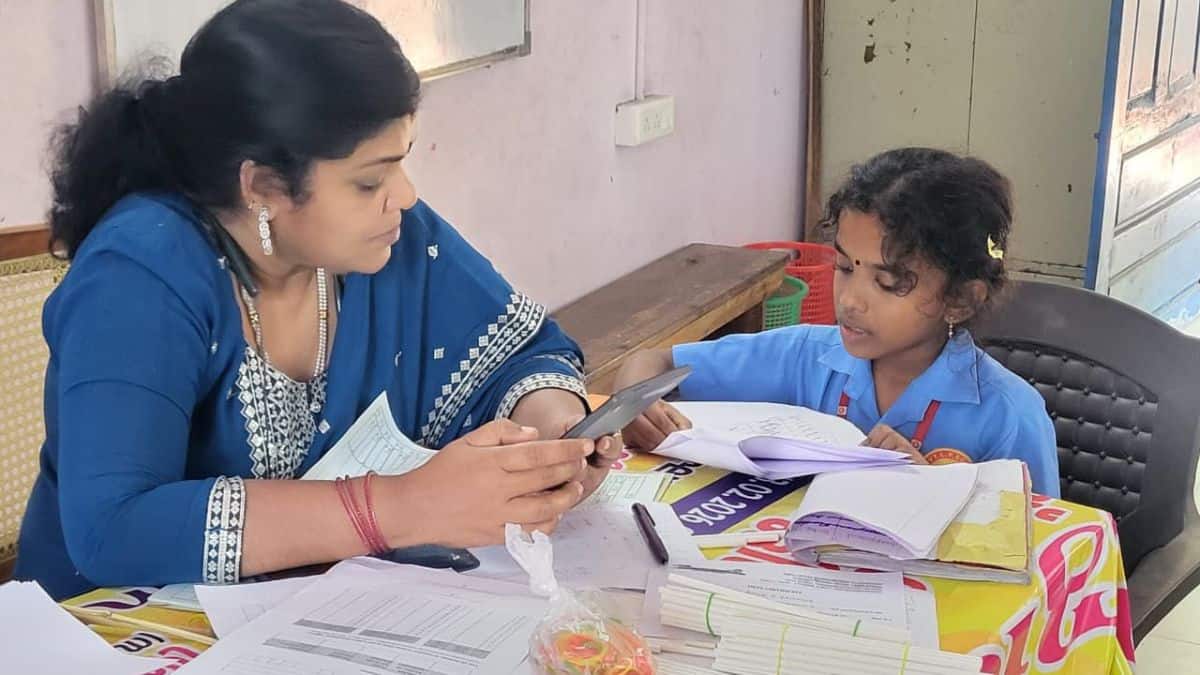
FLS 2026: The Foundational Learning Study (FLS) 2026 being conducted by PARAKH will be much wider than before, covering over 1 lakh students across 10,000 schools in 776 districts. With tablets used for real-time data capture, the study is a “mid-term analysis” to understand the success of NIPUN Bharat Mission, said an official.
The study is crucial since NIPUN Bharat Mission, envisaged by National Education Policy 2020, was integrated within Samagra Shiksha Abhiyan to achieve foundational literacy and numeracy (FLN) targets by Class 3 by 2026-27. PARAKH, full form Performance Assessment, Review, and Analysis of Knowledge for Holistic Development – an independent assessment body under the National Council of Educational Research and Training (NCERT) is conducting the study.
Last month, the parliamentary panel on education headed by Congress MP Digvijaya Singh had recommended the mission be extended till 2032, as it is set to be “wound up” this financial year.
The ministry of education had launched the National Initiative for Proficiency in Reading with Understanding and Numeracy (NIPUN) Bharat in July, 2021.
Also read CBSE changing Class 9, 10 syllabus from 2026-27; 3rd language compulsory, 2 levels of maths, science
Foundational Learning Study 2026
The previous FLS, conducted in 2022, was administered from March 23 to 26 across India, but this time it is being done in a phased manner.
The PARAKH is assessing FLN competencies of students at the end of Class 3.
“FLS 2026 covers a large and diverse sample including over 10,000 schools and more than 1,00,000 students across 776 districts in 36 states and UTs. The study includes government (central and state), government-aided and private schools, ensuring wide representation across school management types,” said Indrani Bhaduri, CEO and head of PARAKH.
FLS 2022 covered 86,000 Class 3 students from 10,000 schools. Like before, assessment is being conducted in 20 different languages.
“It is on a one-on-one mode, using tablets enabling real-time data capture and enhancing the accuracy and efficiency of the process,” said Bhaduri.
Also read Karnataka 2nd PUC Results 2026 LIVE: When is the Class 12 result coming?
PARAKH FLS study in 4 phases
The first phase of FLS is complete; it covered Lakshadweep, Kerala, Tamil Nadu, Jammu and Kashmir, Arunachal Pradesh and Telangana.
The second phase is currently underway with training and survey administration in progress in Madhya Pradesh, Odisha, Manipur, Uttarakhand, Jharkhand and Andhra Pradesh.
Preparations for the third phase are complete with Bihar, Ladakh, Maharashtra, Sikkim, Uttar Pradesh and Nagaland ready for training and implementation.
The fourth phase will cover the remaining 18 states and UTs.
“The FLS study is pivotal in redefining how we understand and strengthen the bedrock of education systems. It provides robust, evidence-based insights into whether children are acquiring essential literacy and numeracy competencies at the early grades, skills that are non-negotiable for all subsequent learning. Furthermore, the study strengthens accountability by providing actionable data to educators, administrators, and policymakers. It also informs the design of holistic progress cards and formative assessment strategies, ensuring that classroom practices are aligned with foundational competencies,” said Bhaduri.
PARAKH: FLS 2026 Vs Rashtriya Sarvekshan
FLS offers a deeper, diagnostic understanding of foundational literacy and numeracy skills at Class 3, unlike the Rashtriya Sarvekshan (formerly NAS), which provides a system-level overview of student performance across Classes 3, 6 and 9 and informs macro-level policy and benchmarking.
PARAKH Rashtriya Sarvekshan 2024 focused on reading comprehension and mathematics outcomes.
FLS assesses a wider range of subskills including oral language, comprehension or listening comprehension, phonological awareness, decoding of letters, words and non-words, picture reading and comprehension, oral reading fluency with comprehension, writing and detailed numeracy competencies such as number identification, basic operations (addition, subtraction, multiplication and division), word problems, measurements, simple fractions, patterns and data handling.
“While Rashtriya Sarvekshan provides aggregate-level insights, FLS generates granular, subskill-level evidence, making it an important tool for identifying early-stage learning gaps, tracking progress since the 2022 baseline and guiding targeted interventions to achieve universal foundational literacy and numeracy under NEP 2020 and NIPUN Bharat mission by 2026–27,” said Indrani.
 Add as a preferred source on google
Follow us for the latest education news on colleges and universities, admission, courses, exams, research, education policies, study abroad and more..
To get in touch, write to us at news@careers360.com.
Next Story
]Dual degrees, faculty exchange: States bet on foreign university tie-ups, but fine print tells another story
UGC regulations ease dual, joint degrees as ranking pressure, immigration rules, and NEP accelerate foreign university collaborations, but NITI Aayog survey shows barely half of them deliver results
Musab QaziLatest Education News
]Related News
]Christian schools in Bengal flag concern over 'attacks', seek meeting with RSS chief
CBSE Date Sheet 2027 LIVE: Class 10, 12 exam schedule soon; timings, guidelines, grading system
Bihar: Seva Sankalp Abhiyan competitions see participation from students of 95,195 schools


