
Education ministry has spent under 55% of budgets for Samagra Shiksha Abhiyan, mid-day meal scheme this year
Shradha Chettri | March 25, 2026 | 06:15 PM IST | 7 mins read
4 key ministry of education schemes, including SSA which supports public schools and PM POSHAN for mid-day meals, have seen poor actual spending against budget allocations
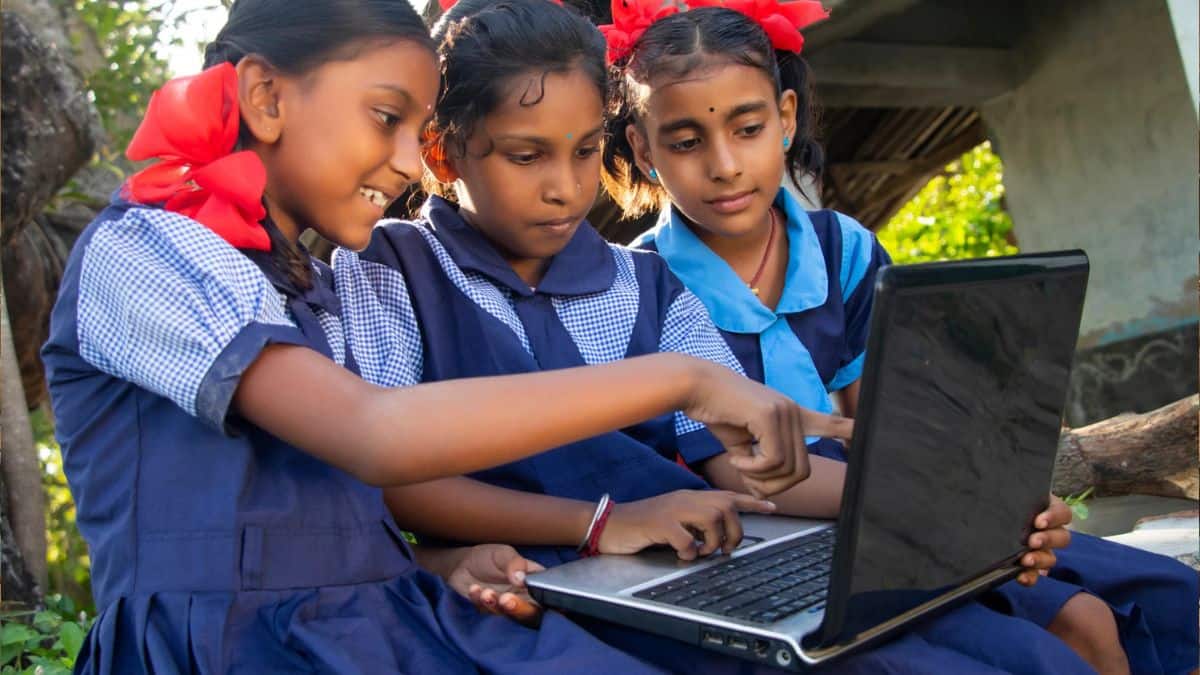
Education Ministry Budget: Just 54.9% of the budget allocated to Samagra Shiksha Abhiyan (SSA), the largest and most critical scheme supporting public education in the country, has been utilised up to February for the 2025-26 financial year which ends in six days. Under another important scheme PM-POSHAN, which supports mid-day meals from Classes 1 to 8, the state of West Bengal has not received funds since 2023-24.
The ministry has also still not been able to launch the DHRUV scheme. Announced in 2019, it was supposed to be a national initiative for the early identification and nurturing of gifted and talented students across the country.
These details were presented before the parliament on Tuesday, by the parliamentary standing committee on education headed by Congress MP Digvijaya Singh.
Reviewing the demands for grants 2026-27 for the department of school education and literacy, the panel has recommended that the National Council for Educational Research and Training (NCERT) expedite the process of releasing books for students of Classes 9 to 12 under the National School Curriculum Framework (NCF). Recently, the body had asked schools to continue with the earlier books in the 2026-27 academic year as well.
Education ministry uses only 60% of budget
Against a combined budget estimate of Rs 62,660 crore for five centrally-sponsored schemes, the actual expenditure in the 2025-26 financial year stands at Rs. 32,296.54 crore, as of February 13. The report notes that this is “barely 51.5% of the BE and only 60.1% of the RE of Rs. 53,730.02 crore in the same financial year”.
In the 2026-27 allocation, school education received 2.6% of the total budget and the BE has risen from that for the current year. However, budgets get revised and usually downward.
The 2025-26 budget was revised to Rs 70,567.14 crore – a reduction of Rs 8,004.96 crore or 10.19% from the BE of Rs. 78,572.10 crore for the same year.
The government told the panel the reduction was “on account of lower releases” under four major schemes shown in the table below.
Budget for major education schemes (in Rs crore) | ||
|---|---|---|
Scheme | Budget Estimate | Revised Estimate |
Samagra Shiksha Abhiyan (SSA) | 41,250 | 38,000.02 |
PM POSHAN (mid-day meal scheme) | 12,500 | 10,600 |
PM-SHRI | 7,500 | 4,500 |
STARS | 1,250 | 500 |
“As per the DoSEL, the reduction was attributed to the slower pace of fund utilisation by states and UTs, delayed submission of proposals, and inability to release funds to Tamil Nadu, Kerala, and West Bengal during 2024-25,” said the report.
The committee has further reiterated that the government must work to resolve the issue expeditiously and amicably with the states of Tamil Nadu and West Bengal.
“Further, the Committee is of the view that SNA-SPARSH, now being rolled out in States/UTs, should be expanded to all states expeditiously to enable just-in-time release of funds, improved monitoring, and enhanced transparency in fund utilization,” the report added.
SNA-SPARSH (Real-time System of Integrated Quick Transfers) is a platform that enables "just-in-time" (JIT) funds release for centrally-sponsored schemes (CSS) by the government of India.
Poor SSA fund utilisation: Panel
Under SSA alone the utilisation stands at just 54.9% of the BE of Rs. 41,250 crore.
Under Samagra Shiksha Abhiyan, financial assistance is provided to states and union territories for undertaking various activities to improve learning outcomes, reduce dropout, and enhance infrastructure including opening and strengthening of new schools, construction of school buildings, additional classrooms and others. It is the main scheme supporting the Right to Education Act and the fundamental right to education.
In 2026-27 allocation of funds for the scheme stands at Rs 42,100 crore. However, the SSA is also under review with government mulling outcome-based funding for it.
Apart from monitoring the fund utilisation, the panel has also observed that the dropout rate for some states is persistently above the national average which is a matter of concern.
“The committee recommends that the department should identify at least ten districts with the highest secondary dropout rates in each of the states where secondary dropout exceeds 15% and prepare a district-specific intervention plan in collaboration with the state government and address the locally-dominant factors of dropout.” the report stated.
The committee also wants that the gender gap in enrolment at secondary level must be addressed through targeted incentives, with special focus on states like Bihar, Jharkhand, and Madhya Pradesh where girls' dropout rates remain high.
West Bengal: No mid-day meal funds for 2 years
One of the largest school nutrition programmes in the world is a centrally sponsored scheme to improve the nutritional status of children enrolled in Classes 1 to 8 and Balvatika in government and government-aided schools.
The budget analysis shows that in 2024-25 the actual expenditure was Rs 9,903 crore against the allocation of Rs 12,467.39 crore and in 2025-26, as on February 13, 2026, actual expenditure is Rs 6,639.22 crore against an allocation of Rs. 12,500 crore.
West Bengal has received nothing for the scheme for 2023-24. Kerala and Tamil Nadu have however. Meanwhile, post 2022-23 the coverage of students under the midday meal scheme has been decreasing.
“The pattern shows year-on-year divergence between the allocations and the actual utilisation by the schools. The committee recommends that the department should introduce a quarterly fund release schedule for PM POSHAN that is fixed at the beginning of the financial year to monitor the fund utilisation systematically,” added the report.
It also wants the SNA-SPARSH model to be extended to PM POSHAN as a priority.
The scheme has also seen a persistent decline in the number of beneficiaries from 12.16 crore in 2022-23 to 10.99 crore in 2024-25.
NCERT textbooks, vacancies
The parliamentary panel has a host of recommendations for the already-beleaguered National Council of Educational Research and Training (NCERT), apart from highlighting over 60% vacancy of staff.
Recommending that the NCERT develop and publish books for Classes 9-12 on priority, it has also asked it to publish textbooks in all 8th Schedule languages and major regional languages to support mother-tongue-based multilingual education as envisaged in the National Education Policy (NEP) 2020.
It has also asked the body to collaborate with the Indian Institute of Creative Technologies (IICT) to establish content creator laboratories in schools, as proposed in the budget speech 2026-27.
The panel has also recommended the expansion of PARAKH’s mandate to include a National Standard for School Board Equivalence.
“To ensure a level playing field for students from different state boards in competitive exams, NCERT should also develop a ‘Common Assessment Blueprint’ that focuses on competency-based evaluation rather than rote memorization,” the report said.
Extend NIPUN Bharat Mission till 2032
“The committee notes that the NIPUN Bharat Mission has seen some successes but is set to be wound up this financial Year. It recommends that it be extended for another 5 years till 2032, with its ambit broadened to include children from grades 3 to 5, with a focus on oral reading fluency in addition to basic literacy and numeracy,” the report added.
It also wants the government to increase budget allocation to Rs 6,000 crore from Rs 2,500 crore.
“The committee further recommends that the ministry consider a census assessment for all grade 5 students (government and private) to diagnose system health and enable early course correction post the completion of the expanded NIPUN Bharat Mission. The ministry may also consider the use of Personalised Adaptive Learning (PAL) products, leveraging advances in technology to support education among children,” the report added.
Support for ULLAS scheme
The committee has expressed concern that the flat allocation of Rs 160 crore for four consecutive years, from 2024-25 to 2026-27, for ULLAS is “inadequate” given the scale of adult illiteracy in the country.
“A significant enhancement in allocation is required to commensurate with the estimated 25+ crore functionally illiterate adults so that the target of making all adults above 15 years of age literate by 2030 is achieved,” the report added.
It also recommends that FLNAT (Foundational Literacy and Numeracy Assessment Test) should be conducted twice annually across all states.
The panel report also highlighted that states such as Maharashtra, Gujarat, Haryana, Karnataka and Jharkhand have shown low or no release of funds under the scheme. It also wants that the volunteer teachers under the scheme be provided at least token compensation/incentives.
 Add as a preferred source on google
Follow us for the latest education news on colleges and universities, admission, courses, exams, research, education policies, study abroad and more..
To get in touch, write to us at news@careers360.com.
Next Story
]Revamp Samagra Shiksha Abhiyan, serve breakfast under PM POSHAN, regulate foreign university campuses: Panel
Digvijaya Singh-led panel recommends ‘strict oversight’ of 18 foreign university campuses, third-party audit of PM-USHA, filling of over 60% vacancies in AICTE, UGC, research fund for state institutes
Shradha ChettriLatest Education News
]Related News
]Maharashtra MBBS interns demand Rs 30,000 monthly stipend, warn of strike from November 2
J-K doubles MBBS, BDS interns' and FMGs' monthly stipend amid agitation
Medical interns in J-K restart agitation over stipend hike; allege government failed to honour assurance


