
UGC control, scholar attacks, sackings: India’s academic freedom ‘severely restricted’ in 2026, says SAR
Azib Ahmed | September 15, 2026 | 03:55 PM IST | 5 mins read
SAR cites BJP govt’s growing influence on universities, police action against student protests, TISS Mumbai, Jamia Millia, Delhi University rows as key factors
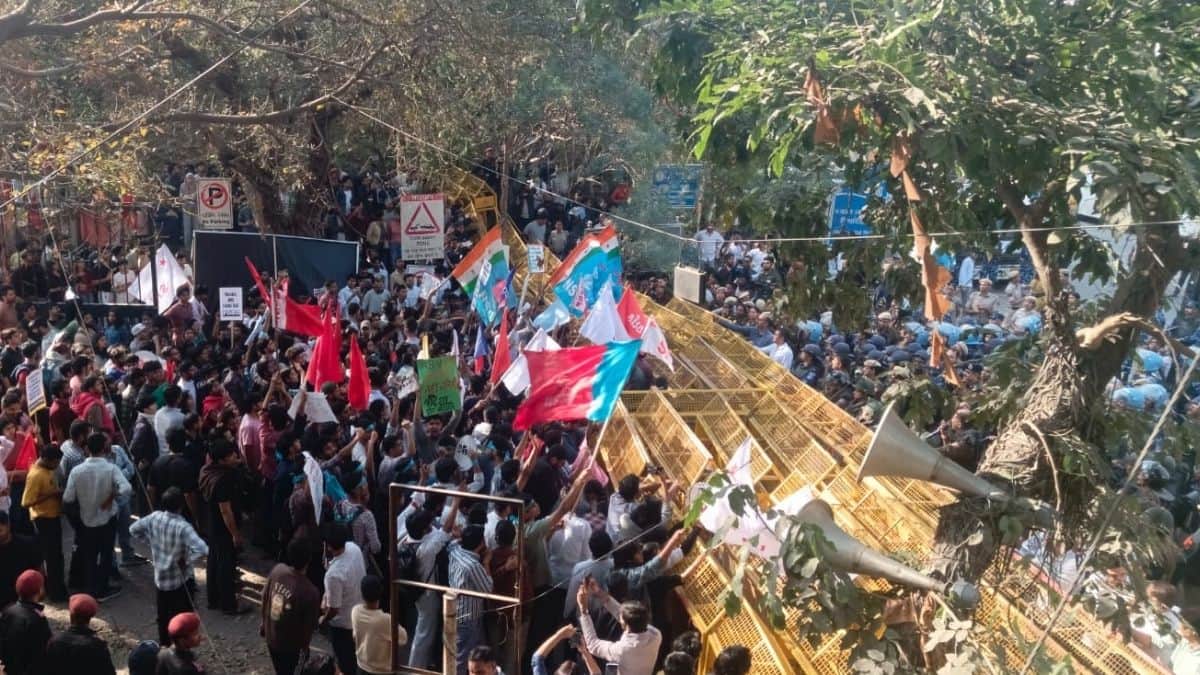
India’s academic freedom is “severely restricted” in 2026, with growing government influence over higher education, restrictions on student expression and protests, and action against faculty members and academic events, according to the Scholars at Risk (SAR) report released this week. The report also records 382 attacks on scholars; 42 of those were in India, the highest count.
The SAR report says the central government expanded its influence over university governance, leadership appointments and academic priorities, while university authorities and police took action against students and faculty in several instances.
The report documents faculty dismissals, cancellation of academic events, restrictions on student gatherings and police action against protests across Indian universities. It also records instances of violence involving students and police at protests and campus gatherings and highlights university actions restricting student expression and academic activities.
Scholars at Risk has published reports on academic freedom since 2015. The ‘Free to Think 2026’ report, based on findings from SAR’s Academic Freedom Monitoring Project (AFMP), examines attacks recorded between July 1, 2025 and June 30, 2026.
It documents 382 attacks on scholars, students and institutions across 59 countries and territories and highlights concerning developments and trends in 22 countries and territories, including India. Also in this group are Afghanistan, Bangladesh, China, Colombia, Georgia, Nigeria, Pakistan and the United States.
The report says academic freedom has deteriorated globally. The 2026 Academic Freedom Index (AFI) found significant declines in 50 of 179 countries over the past decade, while only nine recorded improvements. India was among the countries rated “severely restricted”, alongside Hong Kong, Indonesia, Pakistan, and active war zones – West Bank in Palestine and Ukraine.
Higher Education: Academic freedom shrinks further
For India, the AFI score has fallen from 0.16 in 2024 to 0.14 in 2026. “Since 2022, greater restrictions on the freedom to research and teach have driven declines in India’s AFI,” the report says.
The report attributes a significant part of the trend to the growing role of the University Grants Commission (UGC) in higher education policy. “The ruling Bharatiya Janata Party (BJP) continued to deploy the UGC as a primary vehicle for state influence over higher education,” the report said.
It cites concerns around UGC policies that it said were perceived to increase government control over universities, including the dilution of standards for recruitment of vice-chancellors and the removal of the 10% cap on contract faculty, which SAR said could accelerate the casualisation of academic labour.
NCERT social science textbook row
The report highlights a March 2026 Supreme Court intervention involving three academics who had worked with the National Council of Educational Research and Training (NCERT) on a middle-grade social science textbook’s “corruption in the judiciary”, which the court considered to “project a negative image” of the institution. The court banned the textbook and ordered governments to dissociate from its authors. It also imposed a “life ban” barring three academics from receiving public funding for curriculum development.
One of them, Michel Danino, a guest professor at Indian Institute of Technology (IIT) Gandhinagar and chairperson of the National Council of Educational Research and Training (NCERT) social science curricular group, was dismissed from his faculty position, the report said.
Later on, the Supreme Court modified its position on May 22 allowing public universities and states to independently decide whether the academics could contribute to future curricular work.
Separately, the report said the Jammu and Kashmir government banned the sale, distribution and possession of 25 books by globally respected scholars, historians and journalists dealing with Kashmir’s sociopolitical history.
Faculty dismissals at universities
The SAR report 2026 also documents several cases in which university authorities took action against faculty members over their academic or public expression – South Asian University against Snehashish Bhattacharya, SRM Institute of Science and Technology against Lora Santhakumar and Jamia Millia Islamia against Virendra Balaji Shahre.
The report also notes the cancellation of lectures at Banaras Hindu University and Mumbai University, saying the events were cancelled because of the invited speakers’ criticism of the BJP-led government. At Delhi University, a seminar titled ‘Land, Property and Democratic Rights’ was cancelled citing “administrative reasons”. Its convenor resigned and speculated that the cancellation was connected to the subject of the seminar, according to SAR.
TISS, Jamia Millia: Protests and clashes
Student expression and protests were another major concern highlighted in the India section.
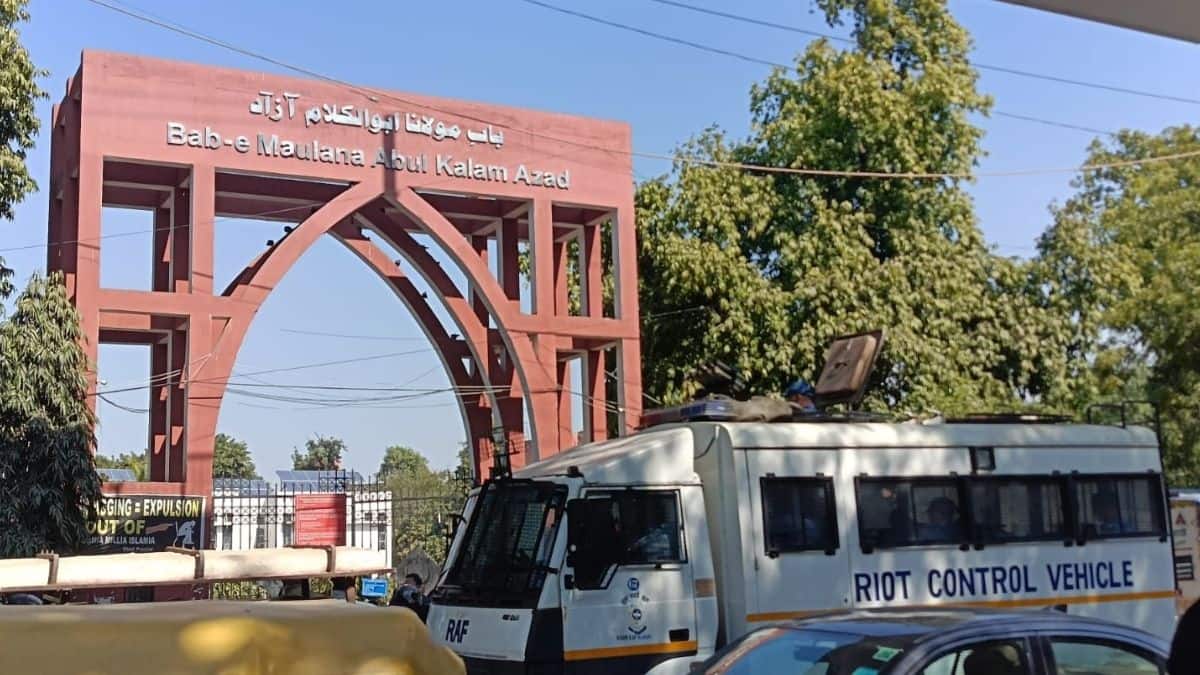 RAF riot control vehicle deployed outside JMI gate during a campus protest. (Representational image: Adnan Ali)
SAR said students faced pressure from university authorities, police and rival student groups. For instance, Tata Institute of Social Sciences (TISS) and Jamia Millia Islamia, cited lack of official permission or “unauthorized” gatherings while taking action against students involved in peaceful protests.
The report also highlighted a temporary “blanket ban imposed by the University of Delhi on public meetings, rallies and demonstrations.” SAR said the ban led to the cancellation of cultural festivals, press conferences, iftar gatherings and other assemblies involving five or more people.
After the ban expired, the university required protests to receive approval 72 hours in advance, warning that violators could face expulsion or police action.
Indian Universities: Most attacks on scholars
The academic freedom report lists 42 India-related attacks on scholars – the most of any country and followed by the USA with 40 – during the reporting period, covering universities and colleges across the country. The entries cover different categories of attacks, including killings, violence and disappearances, imprisonment, prosecution, loss of position and other incidents.
The report says ideological differences among student organisations increasingly turned academic and cultural events into political flashpoints. The SAR notes violent clashes between including the rightwing Akhil Bharatiya Vidyarthi Parishad (ABVP), a BJP affiliate; the leftist All India Students’ Association (AISA) linked to a communist party, the CPI ML; the Congress’ the National Students’ Union of India (NSUI); and others.
SAR links campus tensions to issues such as national identity, caste, religion and interpretations of history, as well as academic and policy decisions. In some cases, protests and disagreements between student groups escalated into clashes across campuses . Jadavpur University, English and Foreign Languages University, Azim Premji University and several others have seen such violence in the recent past.
SAR also reports several instances of police intervention against student protests, at Osmania University and in Rajasthan.
 Add as a preferred source on google
Follow us for the latest education news on colleges and universities, admission, courses, exams, research, education policies, study abroad and more..
To get in touch, write to us at news@careers360.com.
Next Story
]India added 196 public universities in 15 years, but most barely functional; private ones outnumber them
While Rajasthan added 40 new private universities, Gujarat saw the highest growth with 54; funding, bureaucratic hurdles and often, governors, have slowed expansion of higher education in public universities
Shradha ChettriLatest Education News
]Related News
]SRFTI students allege power cut amid protest; institute defends disciplinary action
TGBIE finds 65 junior colleges in Telangana with fake fire safety certificates
IIT Hyderabad begins PhD admissions for January 2027 session; apply by November 10


