
Protest as ‘law and order issue’: Students note pattern of universities filing FIRs to tackle ‘disagreements’
Azib Ahmed | March 9, 2026 | 11:52 AM IST | 9 mins read
In just 2026, University of Hyderabad, Azim Premji University, Lucknow University chose to file police cases against own students instead of conducting internal inquiries for WhatsApp posts, discussions, protests
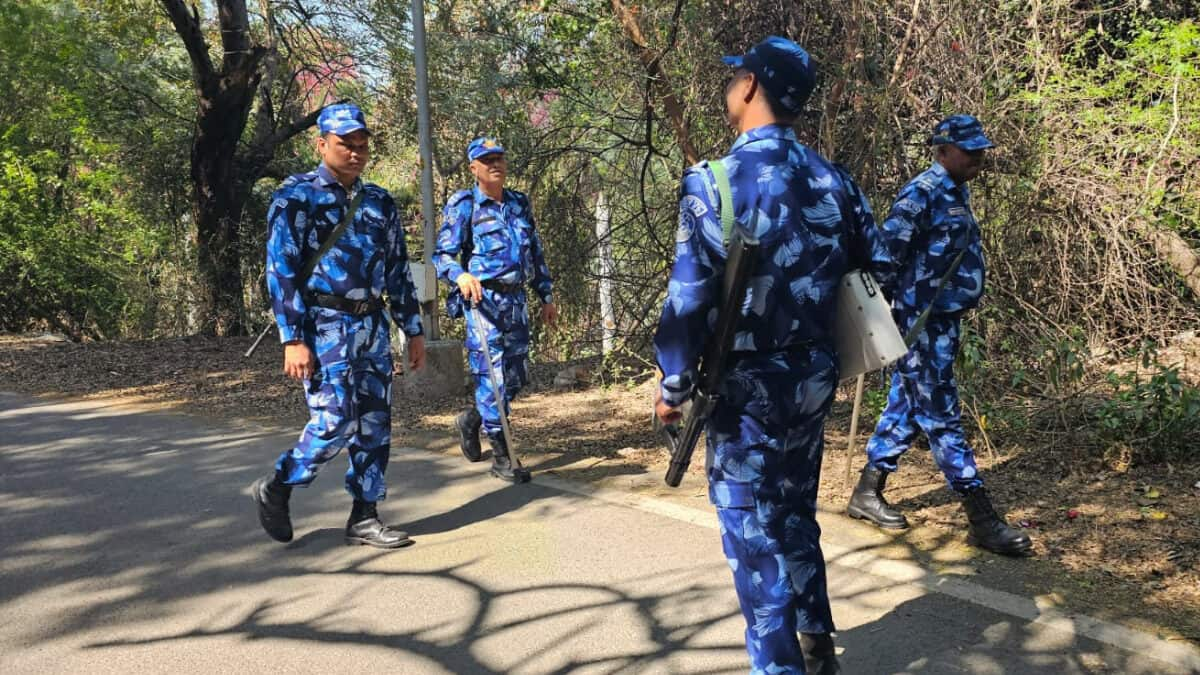
On February 26, a first-year postgraduate student of University of Hyderabad received a call from university security informing him they were coming to meet. Campus security arrived at his hostel, two policemen from Gachibowli police station in tow. “That is when I was told an FIR had been filed against me,” he said.
The UoH, a central university, had filed a police complaint against its own student over his alleged WhatsApp status – he maintains images of his status posts on the messaging app were doctored to show “blasphemous” and “offensive” remarks – before an internal proctorial enquiry. Central University of Hyderabad’s law and statutes, like those of most universities, has provisions for disciplinary proceedings and punitive action against students. It has used them before, most controversially, against Rohith Vemula.
But as student activists and organisations have noted with concern, there’s a growing pattern of university administrations filing police complaints against their own students instead of resolving disputes through internal mechanisms.
Apart from UoH, Lucknow University (LU), University of Kerala (KU), Jawaharlal Nehru University (JNU) and the private, Azim Premji University (APU) have all filed cases against the students – all just this year – and for ‘offences’ ranging from ‘unauthorised’ discussions to full-fledged protests.
“It is an alarming pattern,” said Lekha Adavi, national vice-president of the All India Students’ Association (AISA). The Left-leaning organisation’s opposition to the party in government and its affiliates has brought several of its members in the administrations’ crosshairs, including the UoH student. The Students’ Federation of India has had the same experience.
Student leaders allege that administrations are increasingly turning to criminal law instead of internal disciplinary mechanisms when dealing with campus dissent, a shift they describe as “criminalisation of campus protests” and treating disagreements as “law-and-order issues”.
University of Hyderabad: WhatsApp status
The UoH student insists the case against him is based on fabricated screenshots and that the university unnecessarily escalated the matter to the police.
“This began as a personal conflict with a classmate,” he said. “Earlier, he had made some misogynistic statements about women that were discussed within the department and several students had called him out. Since then, I have been a target.”
According to him, the dispute escalated when two screenshots allegedly showing him posting derogatory remarks began circulating on campus. One screenshot referred to Lord Ram, while the other allegedly mocked rural students studying in the UoH. He said the screenshots were fabricated. “I came to know on February 3 that someone was circulating screenshots of a WhatsApp status under my name containing blasphemous and offensive remarks. I had never posted such a status. Those screenshots were fabricated,” he said.
He was summoned by UoH’s chief proctor the following day. “I went to the proctor’s office and clearly stated that the screenshots were not mine. I wrote a written statement denying the allegations. The person who accused me was also called but did not appear,” he said. He further alleged that the complaint submitted to the university included material provided by members of the Akhil Bharatiya Vidyarthi Parishad (ABVP). “The complaint was not just from that individual. The screenshots were part of a complaint submitted by ABVP members,” he said.
The university did not hold a full proctorial board inquiry before approaching the police. “I was never called for a proper proctorial board meeting. Normally such cases are examined internally where evidence is reviewed and both sides are heard. That process was bypassed,” he said.
Also read Ambedkar University: Five students suspended amid ongoing protest
Around three weeks later, he was taken to the Gachibowli police station and questioned. “The police took my phone for some time and questioned me. They were relatively cordial and said the matter would likely be resolved if I had not done anything wrong. But the experience itself was extremely stressful,” he said. His family back home is also anxious about the fallout of the police case and part of why he asked not to be named in this story.
The FIR, he said, was registered under Sections 196, 299 and 352 of the Bharatiya Nyaya Sanhita (BNS) that deal with maintaining public tranquility and preventing provocative behaviour.
He added that the case has had a psychological impact even though classes continue. “My professors have been supportive and classes are continuing, but the psychological stress of dealing with police, lawyers and legal procedures is immense. For a student pursuing a master’s degree, being suddenly pulled into a criminal process over disputed screenshots is extremely distressing,” he said.
UoH’s action feels like a betrayal. “A university thousands of kilometres away from my home is where I placed my trust. But without even conducting a full internal inquiry, it treated me as a potential criminal and filed an FIR. That has shaken my faith in the system.” Despite student campaigns, Hyderabad University hasn’t withdrawn the complaint.
Lucknow University, Kerala University
Also in late February, Lucknow University filed an FIR against 50 unnamed students following protests over the closure of the Lal Baradari mosque on campus. LU chose the police instead of addressing students’ concerns internally.
Shantam Nidhi, an AISA member at the university, said the complaint was filed by registrar Bhavna Mishra after students questioned the legality of shutting down the prayer space. “On February 22, the university closed the Lal Baradari mosque without prior notice or consultation with stakeholders. Students simply asked whether the action was legal and requested the executive order, inspection report and financial audit related to the decision,” they said.
Instead, the administration issued notices and approached the police. The charges were rioting, vandalism and disturbing communal harmony on campus. Mishra did not respond to an email from Careers360 seeking comment.
“Students who were asking questions were served notices and the matter was taken to the police. …If the administration shows the executive order, inspection report and financial audit, the basis of the protest would end. Along with AISA, members of the Congress-affiliated Nation Students Union of India and Samajwadi Party’s Samajwadi Chhatra Sabha had also protested.
Taukeel Ghazi, a member of the Samajwadi Chhatra Sabha and a former student of University of Lucknow, said police issued challans of Rs 50,000 each to 18 students after protests. The students were asked to furnish the amount and sign a written undertaking that they would not take part in protests or similar activities for a year. He added that a separate FIR was also registered in which around 50 students were listed as “unknown”.
“We went to give a memorandum to Bhavna Mishra, but she refused to accept it, saying she was not the concerned authority, even though the notice about fencing and sealing the Lal Baradari area had been issued under her,” he said. Ghazi added that while action was taken against some students, those he claimed created disturbances during the incident were not acted against.
Similarly, the Kerala University administration filed a complaint when the Students’ Federation of India (SFI) protested against the vice-chancellor inside his office in February. Similar tensions were reported last year as well, when student protests over university decisions led to police complaints and action on campus. Here the matter is further complicated by the conflict between the state government – currently led by the CPI(M) to which SFI is linked – and the centrally-appointed governor over university administration and VC appointments.
“The registrar was appointed by the vice-chancellor and is acting according to the VC’s instructions, while the VC himself is acting according to the governor. In some cases, complaints have been filed not only against students but even against syndicate members,” said M. Shivaprasad, SFI state president. The protest itself was a result of the university dismissing the Kerala University College Union before its term was over – a decision reversed by the Kerala High Court.
Disagreement as ‘law-and-order’ issue
Students see the cases as meant to have a chilling effect on student politics.
“Filing police complaints like this is a way to control student protests and union activities on campus,” said Shivaprasad.
“There is a growing pattern of criminalising student dissent. Instead of engaging with students or resolving disputes through university mechanisms, administrations are increasingly filing police complaints,” explained Shantam Nidhi. “It is not just students. Even faculty members who express dissenting views have faced complaints or notices. This shows how disagreement with the administration is increasingly being treated as a law-and-order issue.”
It became one at the private Azim Premji University in Bengaluru, after a group of outsiders, allegedly members of the BJP-linked Akhil Bharatiya Vidyarthi Parishad broke in and vandalised the venue of a talk organised by the Spark Reading Circle. The situation escalated into a confrontation, after which the Azim Premji University registrar filed a police complaint against the intruders and the organisers’ social media handle.
The student council criticised the move as disproportionate, even as individuals linked to ABVP were granted bail after campus disruptions.
“A university is supposed to be a space where learning and discussion happen not just inside classrooms, but beyond them,” Adavi said. “Education is not a unilateral, one-way process. Discussions, guest lectures and political debate are integral to campus life. Students are now facing criminal charges for organising discussions outside classrooms.”
The Azim Premji University spokesperson said, “The university follows strict procedures before any event is held on campus, and no event of this nature had been approved,” the spokesperson said, adding that the event did not take place.
The spokesperson said the university filed a formal complaint against the intruders for vandalism and assault, and lodged a second complaint against a particular social media handle for unauthorised use of the university name. The social media handle was Spark Reading Circle’s, run by APU students.
JNU and the shadow of 2016
Jawaharlal Nehru University has seen recurring bursts of protest and police action in 2026. In January, the JNU administration sought an FIR after a campus event near Sabarmati Hostel where some students allegedly raised “provocative” slogans.
Following a complaint from the university’s chief security officer, the Delhi Police registered an FIR. The event was to mark the anniversary of the 2020 campus violence and took place shortly after the Supreme Court denied bail to activist and former JNU research student, Umar Khalid.
Later, in February, 14 students were arrested during a protest march against remarks made by JNU Vice-Chancellor Shantishree Dhulipudi Pandit on a podcast over the implementation of UGC equity regulations, the rustication of JNUSU office bearers and the proposed Rohith Act.
On police action in JNU, Adavi questioned the scale of deployment.
“In JNU, the police have alleged that students attacked them and threw stones. But videos show ABVP members standing on walls and throwing stones. Rapid Action Force, tear gas, water cannons, bomb squads and sniffer dogs were brought to campus. These are measures used when there is a perceived threat to the state. Are students terrorists?” she said. “They are admitted through your own entrance mechanisms. They are your talented students.”
She described the present moment as part of a continuum that began in 2016, when sedition charges were filed against JNUSU office bearers and others, including Khalid. Aishe Ghosh, all-India joint secretary of SFI, described 2016 as a turning point.
“In 2016, we saw the first kind of penalisation of protest. To raise even a small voice, someone could be sent to jail. Universities were suddenly branded as anti-national spaces,” she said.
Careers360 emailed the administrations of all five universities mentioned in this report seeking their responses. Except for APU, no other university responded till the time of publication. If they do, this story will be updated with their comments.
 Add as a preferred source on google
Follow us for the latest education news on colleges and universities, admission, courses, exams, research, education policies, study abroad and more..
To get in touch, write to us at news@careers360.com.
Next Story
]Maharashtra Budget: Key scholarship scheme loses 82% funds; cuts across schemes for poor students in higher ed
Tuition Fee Scholarship loses over 82%; others face massive cuts; one for law, teacher training wiped out. Also in Maharashtra CM’s budget 2026 – 10 ‘educational cities’, foreign campuses, public health institute in Nagpur
Musab QaziLatest Education News
]Related News
]NEET PG Counselling 2026 LIVE: MCC round 1 seat allotment results out; MD, MS cutoffs, reporting begins soon
Jamia Protest: HLC appeals to students to end agitation, cooperate with JMISU drafting committee
ISRO communication and media scholar India’s sole representative from field in world top 2% scientists list


