
Institute of Rural Management Anand enters a new era with fresh campus, MBA courses, curriculum
Sheena Sachdeva | December 17, 2025 | 11:58 AM IST | 6 mins read
The newly formulated Tribhuvan Sahkari University has launched three MBA courses focussed on agribusiness management, cooperative banking and finance, and cooperative management’.
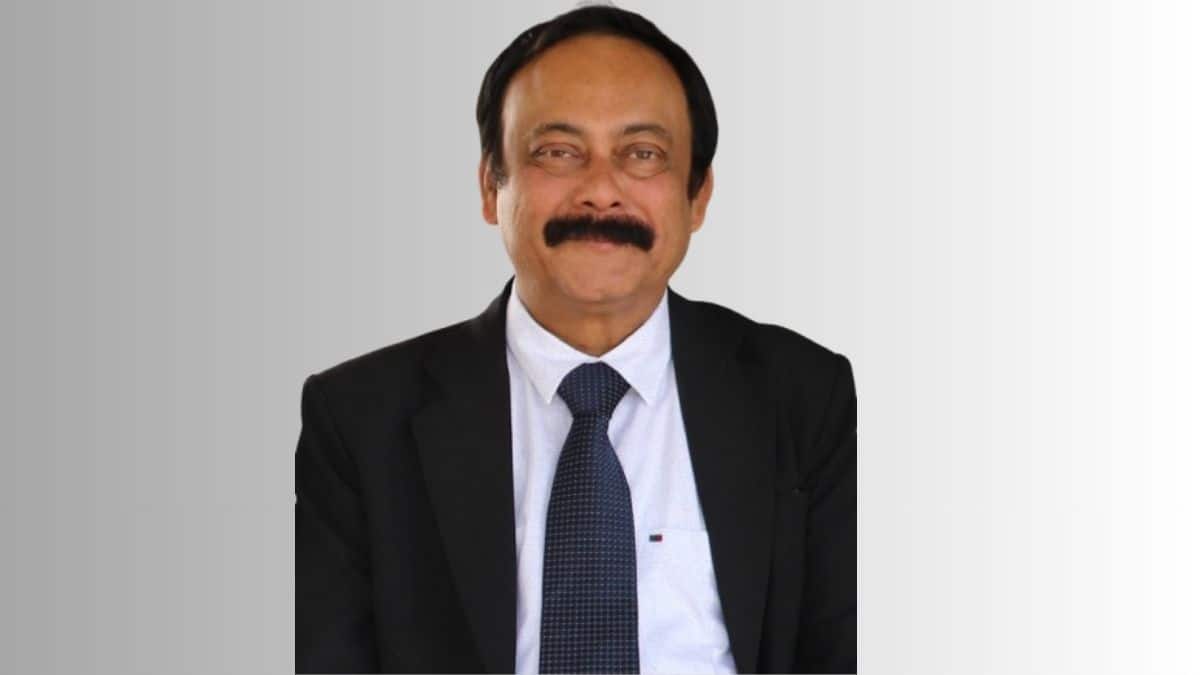
In April, the Indian government set up the “Tribhuvan” Sahkari University on a foundation laid by the famed Institute of Rural Management Anand (IRMA) in Gujarat. Now, IRMA is a school within the fledgling central university which, in its inaugural year, has launched three programmes.
Saswata Biswas, director, IRMA and dean, School of Cooperative Management, speaks to Careers360 about the transition, curriculum, expanding beyond Gujarat, broad vision and more. Edited excerpts:
Why was IRMA chosen for conversion into a university?
There are many reasons. IRMA has been there for 46 years. It was established to cater to two sectors: cooperative and dairy. The vision was to develop the managerial resources required for cooperative trading. Slowly, over the years, this also included many social organisations and government development agencies. Our bigger mandate is to serve the cooperative sector.
While the university mandate came in this year, the process started long ago. For many outsiders, it may be sudden or new. But for those of us on the inside, the whole process started long back.
However, in 1992, during one of the biggest conferences on the cooperative industry, the idea of IRMA becoming a university someday was seeded. But many other issues came up over the years. However, after the establishment of the ministry of cooperation, we saw the light of the day and realised that it is now a possibility. We are thankful to the ministry for transforming the seed into a reality in 2025.
The government continues to have great expectations, and adding more students and faculty is part of it. Now, this is where the ministry thought we could expand and have a bigger campus and more resources for infrastructure. All this became possible after we got converted into a university.
Also read Agriculture courses in Maharashtra see 8% uptick in UG admissions, but job prospects remain grim
The university is also recognised as an Institution of National Importance (INI) with Rs 500 crore earmarked for it. How do you plan to utilise it?
These funds have been given primarily for our infrastructure. The government has given us a new piece of land – 125 acres – 5 km from IRMA’s campus. Most of this money will go into building physical and IT infrastructure.
What does having the ‘INI’ tag change? It puts IRMA in the same leagues as IIMs, IITs?
We are in a different field. Indian Institutes of Technology (IIT) are technical institutes and Indian Institutes of Management (IIM) largely cater to the corporate sector. We do not have the intent of catering to either of these directly. Our area is to professionalise the cooperative sector. The INI status gives us freedom.
Earlier at IRMA, we were constrained due to the regulatory framework of our institute in higher education which lacked the autonomy to frame our programmes as per our requirements. Though, these frameworks are good for certain universities. For instance: the old management education is largely geared to serve the private corporate sector. However, since inception, IRMA has been catering to the cooperative and other social sector organisations.
In our programmes, we have a village field segment where the students are required to go and stay in a village for eight to 10 weeks. Earlier, we wanted to have two internships as part of programmes. But we had to reduce it to one because our regulator didn't allow us to include those experiences. Even the number of classroom hours were prescribed. We had to try to conform and in the process, we had to give up on certain parameters that we thought were important. Internally, we felt a strong need for autonomy.
As India’s "first-ever national cooperative university", what are its goals and responsibilities?
We are the first-ever cooperative university in the world. Our focus area is the co-operative sector, which is huge. While we are still estimating its contribution to India’s GDP, it is substantial. If you take one cooperative sector, like dairy or fertilizer, each is doing Rs 1 lakh crore of business or more. Further, if you include all types of cooperatives, there are 18-19 sectors, sugar, dairy, and pharma have high amounts of exports and imports. Even the banking of these cooperatives contributes to the economy.
The university is dedicated to professionalising the sector. In the past, little has happened. Apart from professionalising the dairy sector, which was done to some extent, all other sectors were relegated to the background. Our first attempt is trying to bring in professional management practices. We have a decade-long plan to cover all the segments, including the primary level. We are slowly progressing towards that through training, outreach activities, education programmes, including research and consultation.
We will work at all levels simultaneously. It will not be a top-down approach but the effort will be done at both levels.
Are there any new additions to the university ?
For the academic year 2025-26, three new programmes have been introduced by the “Tribhuvan” Sahkari University: MBA in Agribusiness Management, MBA in Cooperative Banking and Finance, and MBA in Cooperative Management.
Further, we will also launch a programme on social innovation in the cooperative sector.
There are many other programmes lined up. Another strategy is to build excellence in organisations across the country. We are doing this through giving affiliations to different organisations already working in this sector.
We are also exploring and talking to different state departments about having TSU campuses outside Gujarat. We also want to improve the research quality in the co-operative sector.
Also read From farms to plates: MBA agribusiness graduates are in demand and jobs will grow
IRMA is now a school within the university. What changes have happened within its faculty and courses?
The idea was to pass the vision of IRMA to TSU. IRMA still has its own director and its board. The IRMA faculty members are working in the new schools.
Maybe from next academic year, we will start recruiting new faculty for the university. There is not much of a difference in terms of academic norms and standards. The only change is that we have restructured the courses. For example, the cooperative management course will have a different syllabus. Overall, the curriculum will be different.
In the university, each school will have its own board and these boards will be regulated by the Board of Studies. Ultimately, the executive council and the Board of Governors of TSU will be functioning differently.
How has IRMA done on placements over the last 2-3 years? How are you planning for TSU?
We are unique in the sense of our placements. We have had 100% placements since inception. In 2024-25, the highest package was Rs 15.8 lakh and lowest, Rs 9.5 lakh. The mean package was Rs 15.77 lakh and the median, Rs 15.8 lakh per annum. Further, the year-on-year growth is 11.25% from last year and median growth in cost-to-company has been 5.3%.
Also read ICAR ex-deputy DG: India’s agricultural universities need urgent overhaul
However, the final campus placements for IRMA have been testament to the faith placed in the institute by our cherished recruitment partners since forever. We have successfully completed placements for all the batches of the PGDM (RM) since its inception.
This has been possible because of the robust systems in place. But most importantly, placements have always been a student-driven activity supported by the institute. That allows for a more participative process and keeps the students not only confident of the whole system but also makes them more accountable and more responsible. When the time comes, the same principle will be applicable to the university at large.
 Add as a preferred source on google
Follow us for the latest education news on colleges and universities, admission, courses, exams, research, education policies, study abroad and more..
To get in touch, write to us at news@careers360.com.
Next Story
]Viksit Bharat Shiksha Adhishthan Bill centre’s ‘total power’ grab over higher edu, say MPs; draft goes to JPC
Viksit Bharat Shiksha Adhishthan Bill 2025 abuses law, flouts federal structure, allege opposition MPs; say it undermines states and university autonomy, imposes Hindi through excessive Sanskritisation
Shradha ChettriLatest Education News
]Related News
]IIIT Ranchi Suicide: Students' protest enters 3rd day, demand director’s resignation
Allahabad HC questions UP government over SC quota in four medical colleges
DU proposes new hostels, redevelopment projects to accommodate over 30,000 students


