
Viksit Bharat Shiksha Adhishthan Bill centre’s ‘total power’ grab over higher edu, say MPs; draft goes to JPC
Shradha Chettri | December 15, 2025 | 07:28 PM IST | 5 mins read
VBSA Bill 2025 abuses law, breaches federal structure, alleges opposition; says it undermines states and university autonomy, imposes Hindi in nomenclature
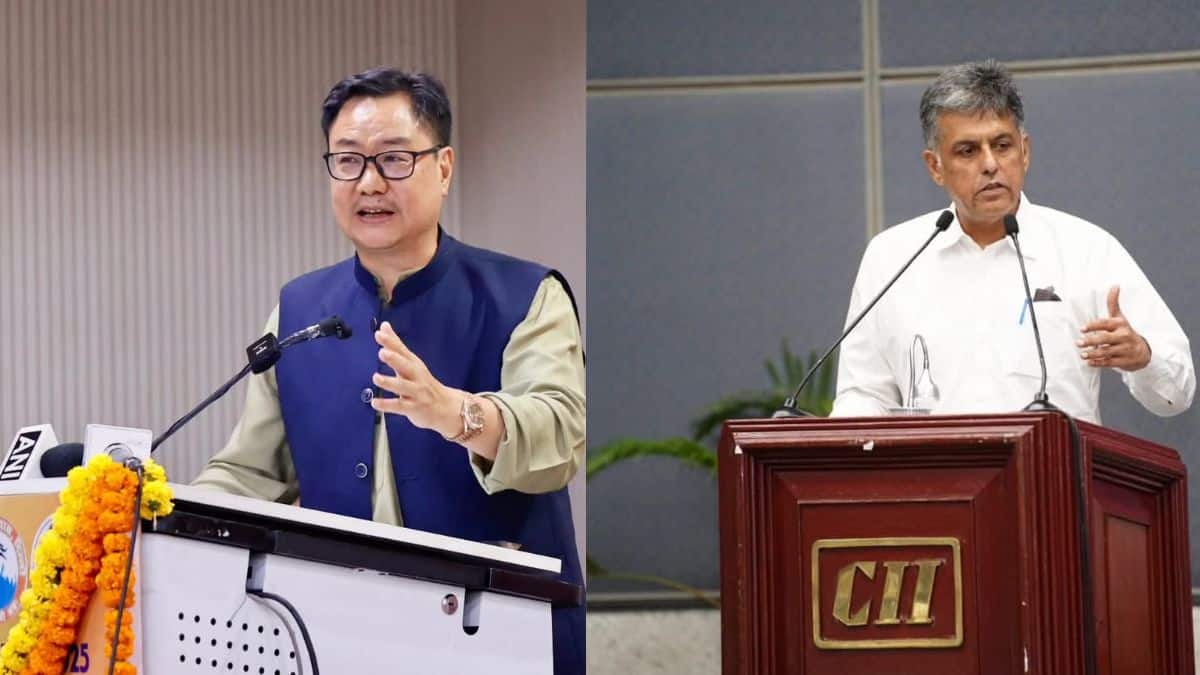
VBSA Bill 2025: Following strong opposition from several MPs and stakeholders, who raised concerns over “excessive centralisation” and “violation of the federal structure”, the central government has referred the Viksit Bharat Shiksha Adhishthan Bill 2025 to a joint parliamentary committee.
The bill – earlier known as the Higher Education Commission (HECI) Bill 2025 – was introduced in parliament on Monday by education minister Dharmendra Pradhan and drew immediate criticism from opposition benches.
Minister for parliamentary affairs Kiren Rijiju asked the Lok Sabha chairman to form a committee in consultation with Rajya Sabha and members of the political party. He had already received multiple letters, including one from the chairman of the parliamentary standing committee on education, Digvijaya Singh, asking him to refer the bill to the panel first.
Kiren Rijiju said, “During the meeting in the business advisory committee, many honourable members have requested that this is an extensive bill and we need further delibration. The government hereby proposes to send it to a joint parliamentary committee.”
He asked the speaker to constitute the JPC in consultation with other houses and various political parties.
The VBSA Bill seeks to replace the University Grants Commission (UGC), All India Council for Technical Education (AICTE) and the National Council for Teaching Education (NCTE) with a single body with vastly different structure and functions than its predecessors.
VBSA Bill 2025: Excessive centralisation, say MPs
Congress MP Manish Tewari, who was the first to speak against the bill, said the VBSA Bill 2025 proposed enforced “excessive centralisation” and went “beyond standards and intruded into administration, affiliation, establishment, closure of university campuses, institutional autonomy of the state universities".
“The bill suffers from excessive delegation of legislative power, ranging from matters of accreditation frameworks, degree granting power, penalty, institutional autonomy and even supersession are left to be determined by rules, regulations and executive direction. This abdication of essential legislative function violates settled constitutional principles governing delegated legislation. The bill undermines independence of statutory regulatory bodies by making them bound by policy directions of the central government and subject to executive discretion. Such provision erodes institutional independence and offends the constitutional requirement of fairness, non-arbitrariness and check on executive powers under Article 14,” said Tewari.
Another Congress MP from Tamil Nadu, Jothimani called the bill an attack on “federalist structure”.
“This bill moved forward despite the parliamentary standing committee on education explicitly finding that the bill maintains the union government's heavy composition and insufficient state representation. The state public universities and their affiliated colleges getting 81% of the students enrollment, this policy making bodies composition must reflect the immense scale and responsibility held by this sector. The proposal moves away from independent regulation with provision of overriding powers to the union government,” she added.
Name as ‘Hindi imposition’
Jothimani called out the bill’s excessive Sanskritisation and said the nomenclature directly violates Article 348 B.
“There is no technical reason to use these names. 53 times Hindi names are used in the text of the bill (sic). I see this as a Hindi imposition. Tamil Nadu is being deprived of Samagra Siksha fund as we are not agreeing to the three-language policy in NEP. This is another way of imposing Hindi in states like Tamil Nadu,” she said.
While the business list published before the winter session of parliament still had the name down as HECI Bill 2025, by the time it cleared cabinet on Friday, it was called “Viksit Bharat Shiksha Adhishthan”. The three councils under the Adhisthan will be called – Viksit Bharat Shiksha Viniyaman Parishad or the regulatory council, Viksit Bharat Shiksha Gunvatta Parishad or the accreditation council and Viksit Bharat Shiksha Manak Parishad or the standards council.
NK Premchandran, MP from Kerala, representing the Revolutionary Socialist Party (RSP), said he doesn’t know the meaning of the word Adhishthan and raised his objection.
“Article 348 clause B, states that the authoritative text of the bill shall be in English, but the nomenclature of the bill is… I don't know which language is this, whether Sanskrit or Hindi (sic),” said Premchandran.
He also questioned the overriding powers of the centre on state universities and called it an imposition of political philosophy and ideology of the centre. A key criticism against the VBSA Bill and its precursor, the HECI Bill, is that it robs the regulatory authority of funding powers which remain in the hands of the ministry, that is the central government and through it, subject to political influence.
G Selvam, DMK MP from Tamil Nadu, also has similar objections. “In the name of coordination and determination of standards, the entire regulation of higher education institutions comes under the union government. This is basically a legislation which gives arbitrary powers to the union government. This bill is nothing but abuse of the process of law,” said Selvam.
VBSA Bill 2025: Arbitrary introduction
Sougata Ray, professor and AITC MP from West Bengal, said it was the ministry of parliamentary affairs’ “ineptness” that the bill was introduced in such a way.
“We got the copy of the bill late last night. Today in the list of businesses, the introduction of the bill was not mentioned. The supplementary list of business was circulated at 1 pm. Is this the way the parliamentary affairs ministry functions? They do not give us an opportunity to prepare,” said Ray.
Premchandran said it was “bulldozed in the House”.
Roy said, “Earlier the UGC decided on allocated funds for universities and colleges. It has now been subsumed under the VBSB. I do admit that under Article 66, the centre has the power to legislate matters of education, even though it is under Concurrent List. …We have so many state universities in West Bengal and parliament will have total power over them. They will appoint vice chancellors. As it is, in Kerala, West Bengal, Tamil Nadu, the governors are interfering with the functioning of the universities. This bill gives legitimate power to the centre, to control functioning of the universities. This essentially undermines autonomy and independence of statutory regulatory bodies and checks on executive powers under Article 25.”
 Add as a preferred source on google
Follow us for the latest education news on colleges and universities, admission, courses, exams, research, education policies, study abroad and more..
To get in touch, write to us at news@careers360.com.
Next Story
]Tamil Nadu universities in ‘slow decay’ as VC vacancies drain funds, talent, stall academic functioning
Madras University certificates stuck; Madurai Kamaraj University loses crores; research stalls at Bharathidasan; faculty recruitment blocked everywhere; how Tamil Nadu government–Governor fight hurts education
K. Nitika ShivaniLatest Education News
]Related News
]J-K doubles MBBS, BDS interns' and FMGs' monthly stipend amid agitation
Medical interns in J-K restart agitation over stipend hike; allege government failed to honour assurance
'Spare India from anarchy': Indian-origin students, academicians condemn anti-EC protests


