
PMKVY: CAG flags missing names from Skill India scheme, 34 lakh losing payout due to poor NSDC oversight
Shradha Chettri | December 19, 2025 | 05:03 PM IST | 8 mins read
For first two PMKVY versions, 94% lacked valid bank account details, trainer IDs ‘null’ for 61 lakh; under PMKVY 4.0, over 1 lakh underage certified; NSDC overcharged Rs 24 crore
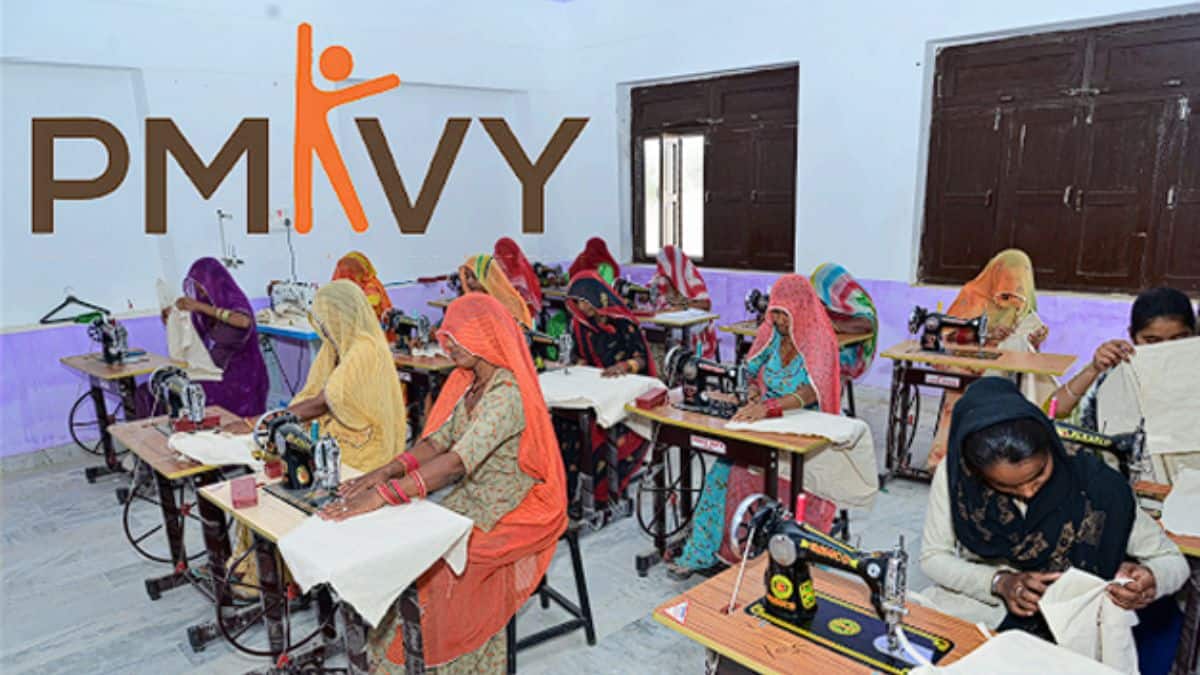
For as many as 25,908 candidates who were supposedly trained and certified under the second and third versions of the Pradhan Mantri Kaushal Vikas Yojana, the names recorded are "Null" or "Migrated Data". For over 61 lakh certified candidates, trainer IDs are missing. Plus, 34 lakh certified candidates have been denied their promised payouts of Rs 500, an audit by the Comptroller Auditor General (CAG) of India published this week has revealed.
The CAG looked into the implementation of the PM Kaushal Vikas Yojana and the body tasked with overseeing it – the National Skill Development Corporation (NSDC) – and found infractions everywhere. It found financial irregularities and poor fund management, irregular enrolments and placements, lax IT controls, invalid bank accounts and constant details and weak monitoring across the board.
It even pointed out that the NSDC-run schemes routinely allow participation and certification of underage candidates, right up to the current iteration of the PMKVY 4.0 which has supported the training of 1.18 lakh underage candidates.
The PMKVY was launched in 2015, as part of the Skill India Mission, with the goal of skill development through short-term training (STT), upskilling and reskilling, and recognition of prior learning (RPL). The current version of the scheme – PMKVY 4.0 – started in 2022 and is slated to continue till 2026. NSDC is the implementing agency of PMKVY.
With poor financial management as one of main issues flagged, CAG has recommended that the Ministry of Skill Development and Entrepreneurship (MSDE), which is the nodal ministry for this skilling initiative, “should strategically plan to ensure that the scheme expenditure capacity is not adversely impacted between phases and strengthen its financial control mechanism”.
The CAG audit was conducted at Ministry of Skill Development and Entrepreneurship (MSDE), NSDC and in eight selected states – Assam, Bihar, Jharkhand, Kerala, Maharashtra, Odisha, Rajasthan, and Uttar Pradesh – at their respective State Skill Development Missions and selected District Skill Committees.
This apart, National Skill Development Fund and National Council for Vocational Education and Training (NCVET) were also reviewed for finance and skill-related issues.
Also read Education budget utilisation has improved since Covid pandemic: Government data
PMKVY 4.0: NSDC’s financial mismanagement
The CAG noted, “At the central level, the audit observed incorrect financial estimations, weak financial control and delayed fund transfers. NSDC-related financial irregularities included incorrect accounting, excess claims, and non-transfer of funds to District Skill Committees. In states, State Skill Development Missions (SSDMs) struggled to effectively utilise PMKVY funds.”
The CAG said that only after the audit pointed out lapses did the ministry recover interest of Rs 12.16 crore retained by NSDC. Further, for PMKVY 1.0, NSDC had overcharged administrative expenses by Rs 24.13 crore, it added.
“Despite clear instructions of the ministry regarding expenditure, there was non release of funds by NSDC to District Skill Councils. There were delays in release and non-utilisation of funds under the state component. Funds were released in violation of receipt and payment Rules,” it added.
Incorrect estimation and delay in transfer of central component funds worth Rs 222.63 crore burdened the Consolidated Fund of India (CFI).
Of 37 Sector Skill Councils (SSC), 26 responded to auditors with 23 stating that outstanding dues of Rs 52.15 crore – pending from April 2016 to August 2022 – constrained their functioning. “Reasons attributed by these SSCs include pendency of claims with NSDC/SSDMs and candidates’ attendance related issues,” the report added.
Weak IT controls affecting DBT
During PMKVY 1.0, the training cost was provided to successful candidates as reward money – averaging Rs 2,200 under the RPL component and Rs 8,000 for STT.
“It was noted that during this phase, DBT amount of Rs 40 crore remained unpaid due to incorrect/incomplete bank and Aadhaar details and the NSDC transferred the unutilised amount to CFI,” the report said.
For PMKVY 2.0 and 3.0, direct benefit transfer (DBT) payments were outstanding for 34 lakh candidates. Bank account mapping of candidates was also crucial as the guidelines mandate payout of Rs 500 to each certified candidate through DBT.
“During a survey of candidates from the ongoing training batches, around 20% (195 of 1,045) of trainees responded that they were not aware of cash benefits,” it stated.
As per data model of the mission, each batch of training must mandatorily contain trainer/assessor ID, trainer/assessor Name, and their mobile number.
Analysis of data of 3.39 lakh batches related to PMKVY 2.0 and 3.0 revealed the following:
- Name was “Null” or “Migrated Data” in case of 1,507 batches involving 25,908 certified candidates
- Trainer ID was “Null” or “0” in case of 2,30,758 batches involving 61,12,030 certified candidates
- Trainer mobile number was either “Null” or “Migrated Data” or was invalid (9 digits, starting from 1-5) in the case of 1,599 batches involving 28,891 certified candidates.
- Assessor name was found “Null” in 45 batches wherein 851 candidates were certified
- Assessor contact number was “null” or “none” in 3,27,220 batches wherein 93,01,810 candidates were certified.
Similar was the case with the bank account details:
“Analysis of data related to PMKVY 2.0 and 3.0 revealed that bank account details’ field contained zeros, ‘Null’, ‘N/A’ or was blank in case of 90,66,264 of total 95,90,801 participants i.e., for 94.53% cases. In the case of the remaining 5,24,537 candidates, 12,122 unique bank account numbers were repeated for 52,381 participants in two or more instances,” the CAG report added.
On further analysis of DBT payments in August 2023, the CAG found that payments were processed only for 24.53 lakh certified candidates (25.58%) and were successful for only 17.69 lakh candidates (18.44%) under PMKVY 2.0 and 3.0.
“As reported by the Ministry in October 2024, out of 95.91 lakh candidates, 61.14 lakh (63.75%) have been paid through DBT. The details indicate that due to insufficient information, payouts to more than 34 lakh certified candidates still have not been made even after the completion of the respective PMKVY phases,” the report highlighted.
The CAG has recommended to the ministry to ensure strict enforcement of the IT controls prescribed under PMKVY 4.0 and consider putting in place a data retention policy specifying data to be retained, place and period of its retention with responsibilities of bodies retaining data.
NSDC: Underage trainees, irregular enrolments, placements
The CAG has found that under the PMKVY scheme, candidates were enrolled without meeting eligibility criteria (age, education, work experience).
As an example the CAG points out, ‘Group Farming Practitioner’ required a minimum age of 20 years, yet 52,214 candidates were certified. Similarly ‘Self Employed Tailor’ required 18 years as the minimum age, but 40,953 underage candidates were certified.
“While examining the updated PMKVY data (October 2024), it was noted that in respect of PMKVY 4.0, against minimum age requirements, 1.18 lakh underage candidates for 365 job roles were certified, indicating that the ministry was yet to implement corrective measures for excluding ineligible candidates from enrolling for skill training,” the report stated.
As part of STT, only 41% of trained and certified candidates were reported as placed, with an audit identifying irregularities in placement claims submitted by some Training Partners (TPs).
RPL’s Best-in-Class Employer component also showed irregularities in agency selection, proposal scrutiny, assessment evidence, and monitoring.
The irregularities included:
- Use of same photographs as evidence for different trainings
- Inspections at multiple states on the same day/time by the same inspector.
Examination revealed 80 instances where multiple locations in different states were reported as physically visited by the same NSDC Inspector(s) on the same day.
“It emerges from the reply of the Ministry that the purpose of monitoring of RPL-BICE activities adopted by NSDC i.e., physical inspection with geo-tagged devices at the time of training/certification to establish the fact regarding conduct of the process was defeated. The ministry should strengthen oversight mechanisms and ensure strict enforcement of system validation checks for effective monitoring,” it added.
As per CAG, the monitoring mechanism was ineffective as provisions of attendance and mandatory feedback from trainees were not fully implemented, “limiting monitoring and scope for improvements in scheme planning”.
Also read Governor as Chancellor: Colonial-era role being used to ‘choke’ universities in opposition states
PMKVY: Skill mismatch at micro level
The CAG report also points out that PMKVY has been implemented in phases without a clear long-term plan. “Training efforts did not align with identified skill requirements across sectors and states. The convergence mechanism with other government skill initiatives was ineffective,” it added.
The National Policy for Skill Development and Entrepreneurship (NPSDE) was formulated in 2015 to identify and plan for the challenges of skilling requirement by 2022 and the document envisages its review after five years.
However, till October 2024, the ministry stated the NPSDE was still in process. For PMKVY 4.0, the ministry has decided to rely upon sectoral studies conducted by SSCs and demands identified through different levels of skill development planning.
“PMKVY training in the first three phases were not in sync with skill-gap requirements identified under the plan. The absence of micro-level skill-gap information in NPSDE or PMKVY guidelines resulted in a concentration of training in specific job-roles/sectors. Further, in a communication to NSDC (July 2022) the Ministry also attributed the selection of job-roles without any skill-gap analysis and assessment of market demand as the primary reason for poor placement under PMKVY,” the report added.
The CAG has recommended that the ministry should align its skill trainings with skill gaps identified in job roles across sectors and states in line with market demand.
 Add as a preferred source on google
Follow us for the latest education news on colleges and universities, admission, courses, exams, research, education policies, study abroad and more..
To get in touch, write to us at news@careers360.com.
Next Story
]Latest Education News
]Related News
]Uttarakhand police recruitment for 1600 vacant posts soon: CM Dhami
Bihar cabinet approves establishment of Patna's first tech park, expects 5,000 jobs


