
Fill AIIMS Delhi, NIMHANS Bangalore vacancies; use population as basis for new medical colleges: Panel
Musab Qazi | December 11, 2025 | 10:10 PM IST | 6 mins read
Parliamentary committee on health and family welfare’s reports also raise fee issue, push for capping of MBBS seats
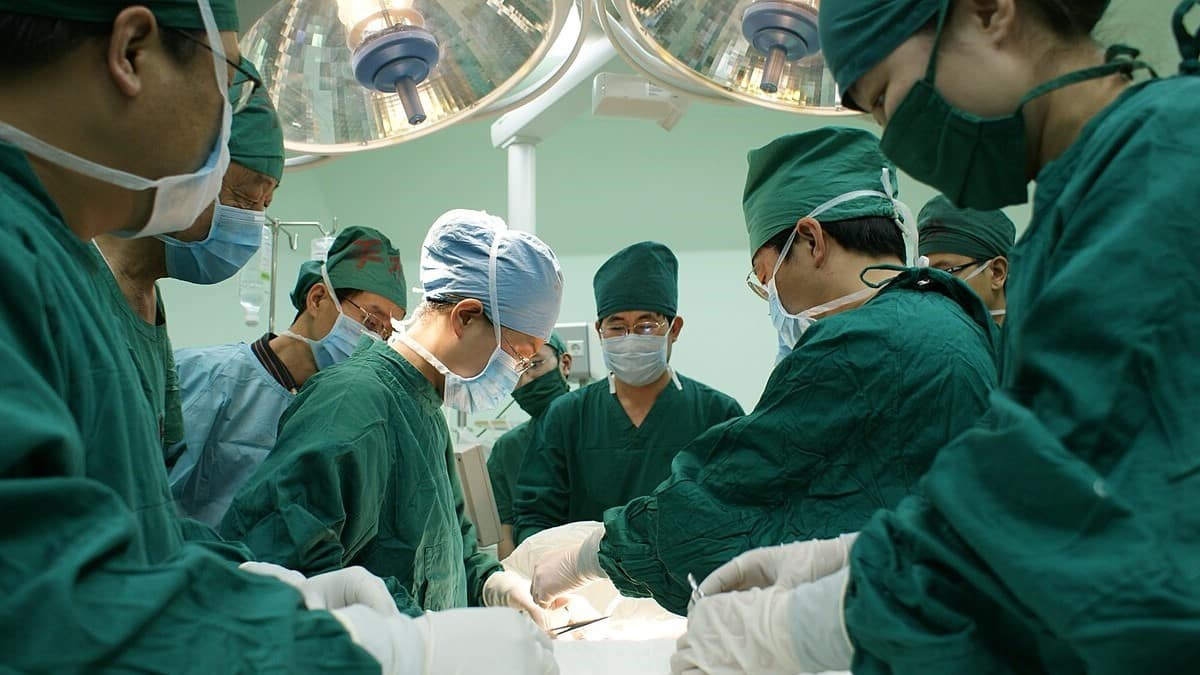
The parliamentary committee on health and family welfare has expressed its concern over the central government’s decision to defer the capping of MBBS seats, meant for addressing regional imbalance in medical education’s access, for the academic years 2024-25 and 2025-26.
The panel has also reiterated its concerns about shortage of faculty and non-faculty staff in the central medical education institutes, including the All Indian Institute of Medical Education (AIIMS) Delhi, National Institute of Mental Health and Neuro Sciences (NIMHANS) Bengaluru, Vardhman Mahavir Medical College (VMMC) New Delhi, as well as the new AIIMSs. It has once again pulled up the ministry of health and family welfare (MoHFW) for the delays in upgrading government medical colleges and hospitals around the country under Pradhan Mantri Swasthya Suraksha Yojana (PMSSY). The committee also continued to be dismayed by the poor allocation for healthcare research.
The comments were noted in five reports recently tabled in parliament by the committee chaired by Samajwadi Party leader and Rajya Sabha MP Ram Gopal Yadav. The reports seek to evaluate the government’s actions to its previous recommendations on improving quality of medical education, implementation of PMSSY and workings of various departments and organisations under the health ministry.
Also read Are NEET, JEE Main based on NCERT books? Why NTA won’t say clearly
The committee, which in its March report had recommended sanctioning new medical colleges on the basis of population instead of a ‘district-wise’ approach, took umbrage to the ministry’s response that the population-based method, notified in 2023, has been postponed. The move, according to the committee, delays correcting regional imbalances in medical education and healthcare accessibility.
“The committee, therefore, recommends that the [health and family welfare] department should expedite the implementation of the population-based criterion for establishing medical colleges to ensure equitable distribution of healthcare infrastructure across states and regions, especially in underserved and densely populated areas,” reads one of the latest reports.
NMC: Population-based medical colleges, MBBS seats
The population criterion, introduced in the National Medical Commission’s (NMC) Undergraduate Minimum Standards Regulations (UG-MSR) 2023, links the number of desired medical seats in an area to its population – 100 MBBS spots for 10 lakh people. This parameter is aimed at reducing regional disparities in the availability of medical education opportunities. However, southern states, which have a higher concentration of medical colleges, have opposed the ceiling on their MBBS seats.
The committee repeated its suggestion to consider granting permission to increase MBBS seats in a college up to 250, up from the current cap of 150 seats per institute. The proposal, however, has been qualified with the availability of adequate infrastructure and faculty at the institute, and would be carried out in a phased manner.
The panel also faulted the centre for failing to address the shortfalls it had highlighted in upgrading 75 government medical colleges and hospitals, as well as setting up six new AIIMS in Bhopal, Bhubaneswar, Jodhpur, Patna, Raipur, and Rishikesh under PMSSY. The scheme, announced in 2003, is aimed at correcting regional imbalances in the availability of affordable and reliable tertiary healthcare services.
The health ministry informed the committee, which had previously carried out study tours to review the progress of various projects of the scheme, that only four out of 75 upgrades of government healthcare institutes – Patna Medical College; Government Medical College, Surat; Guru Teg Bahadur Hospital, Delhi and Government Medical College, Cuttack – are pending.
While the Guru Teg Bahadur Hospital project is delayed as Rs 80 crore is yet to be released by the Delhi government, the detailed project report (DPR) for the Cuttack institute is awaited. Andhra Pradesh has also so far not made available its share of funds to upgrade the colleges at Anantapur and Vijayawada.
The committee, in response, reiterated its earlier recommendation that a formal mechanism be institutionalised to monitor and report fund releases on a quarterly basis, to ensure timely implementation of works.
It also reminded the ministry about its suggestions to reform the procurement process for the colleges, including making the bidding for equipment more competitive. The panel also pulled up the health and family welfare department for failing to address “the wastage of public funds” worth Rs 3.26 crore during procurement of equipment at the colleges. The Comptroller and Auditor General (CAG) had previously flagged that 75 equipment supposed to have been purchased for the institutes remained unaccounted for by HLL Lifecare, a health service provider under the ministry, as well as the concerned colleges.
“The Committee, in this regard, recommends that a centralised digital dashboard be developed for real-time tracking of tender issuance, approval, delivery, installation, and operationalisation of equipment across all GMCs. The effective monitoring mechanism must ensure that there should be no delay in procurement of medical equipment in any GMC,” says a report.
AIIMS, GMC: Persisting faculty vacancies
Noting the persisting faculty and non-faculty vacancies across the upgraded GMCs, the committee questioned the ministry for not providing any details about the progress made since September 2019, when the ministry had taken up the issue of appointing specialists at the facilities with the concerned states.
“The committee, therefore, recommends that a structured manpower audit be conducted for each GMC upgraded under PMSSY to assess current staffing gaps across faculty, non-faculty, healthcare allied and professional services, and support services. The ministry should also set up a robust follow-up mechanism to ensure time-bound action by State Governments on the creation and filling of posts, at various levels so as to open employment generation opportunities and ensure that all departments of GMCs are made functional,” it has been recommended.
As for the vacant posts in AIIMS as well as other top medical colleges, the committee emphasised a “structured and time-bound” recruitment strategy. It also underscored that essential personnel should be appointed on a regular and permanent basis rather than on a contractual basis.
The committee also said that it wasn’t “satisfied” with the budgetary allocation on medical research, even though the outlay for the health research department under MOHFW has increased by 47% from Rs 2,663 crore in fiscal year 2021-22 to Rs 3,900 crore in 2025-26.
Also read MBBS fees skyrocket, cross Rs 1 crore at 32 deemed-university medical colleges
“Keeping in view, that the spending by both the government as well as the medical colleges in health research has remained stagnant in terms of the percentage of GDP since last few financial years, the committee recommends further that medical research and innovation needs massive impetus and there is an urgent need to substantially increase the government expenditure on health research infrastructure or provide incentives/ ecosystem for collaboration with leading private research firms,” notes one of the reports.
In response to the committee’s previous recommendation about making medical education more affordable and regulation of capitation fees, MoHFW informed that NMC, in 2022, had already issued guidelines determining the fees at private and deemed university colleges. However, these directives were challenged in the court and the matter is subjudice, it was informed.
 Add as a preferred source on google
Follow us for the latest education news on colleges and universities, admission, courses, exams, research, education policies, study abroad and more..
To get in touch, write to us at news@careers360.com.
Next Story
]21 IIMs have less than 200 SC, ST, OBC teachers against 1,880 sanctioned posts despite quota law
Parliament panel data shows IIM Ahmedabad, Bangalore, Lucknow among worst performers; while Jammu has one ST teacher on rolls, Calcutta has none; Kozhikode has 21 of 33 reserved posts vacant
Shradha ChettriLatest Education News
]Related News
]Maharashtra MBBS interns demand Rs 30,000 monthly stipend, warn of strike from November 2
J-K doubles MBBS, BDS interns' and FMGs' monthly stipend amid agitation
Medical interns in J-K restart agitation over stipend hike; allege government failed to honour assurance


