
Are NEET, JEE Main based on NCERT books? Why NTA won’t say clearly
Musab Qazi | December 11, 2025 | 12:10 PM IST | 9 mins read
NTA insists its exams are not NCERT textbooks-based but decisions on answer keys and JEE Main, NEET syllabus, RTI reply and coaching institutes say otherwise
NEET 2026 College Predictor
Predict your MBBS, BDS & AYUSH admission chances with the NEET College Predictor. Get personalized college recommendations based on rank, category & quota.
Try Now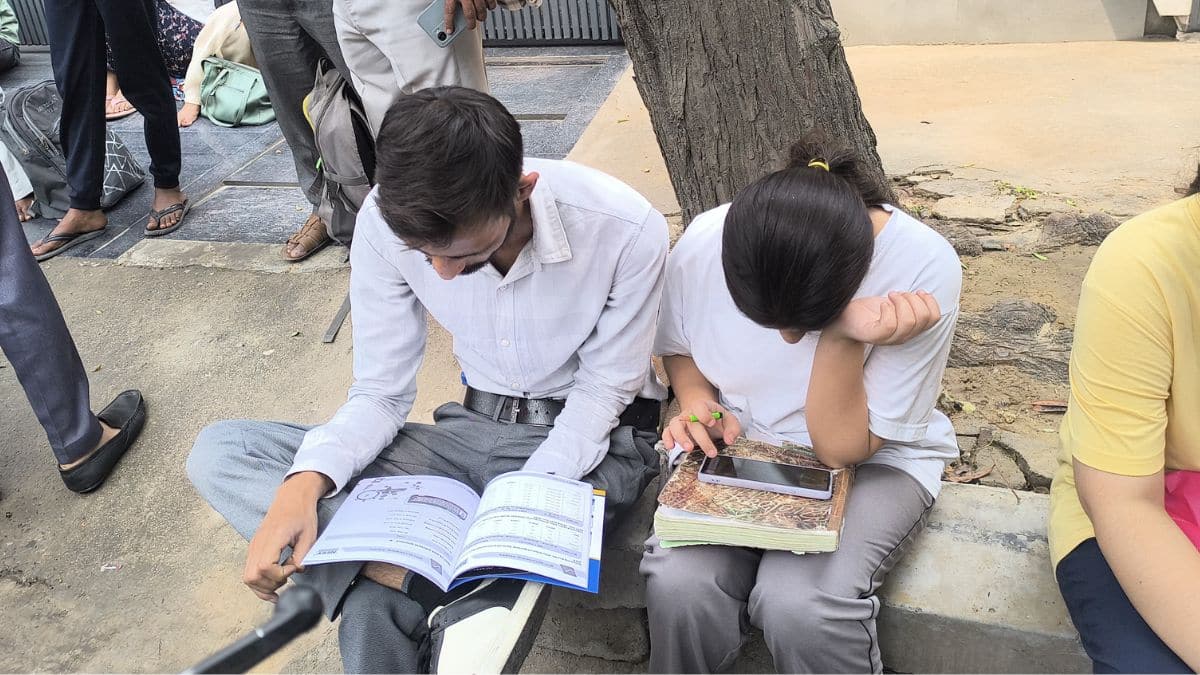
Over the last few years, students litigating exam answer keys has practically become a ritual. This is especially true of the highly-competitive Joint Entrance Examination Main (JEE Main) for engineering and the National Eligibility cum Entrance Test (NEET) for undergraduate medical admissions.
Petitioners often cite the National Council for Educational Research and Training (NCERT) and other state textbooks to challenge the answers and, in some instances, even questions, set by the exam body, National Testing Agency (NTA).
In each case, the testing body invariably points to the rulings of its “subject experts”, discounting references to the texts. In fact, in a response to a plea questioning two questions in NEET UG paper in 2024, NTA unequivocally said that it doesn’t prescribe any particular textbook for it and only follows the curriculum prepared by the National Medical Commission (NMC).
However, the question of a definitive source text – or lack thereof – for post-high school entrance tests conducted by the NTA remains unresolved. In July, in a brief reply to a right to information (RTI) query seeking a list of reference material NTA uses to frame questions and answer keys, the body asked the applicant to refer to NCERT textbooks.
But, a subsequent inquiry about the details fetched a stock response: “no such information available”. The questioner, who asked to remain anonymous, has shared the copies of NTA’s RTI replies with Careers360.
NTA exams and transparency
The NTA’s shifting stance is a constant source of intrigue and agony for candidates. For the RTI applicant, it attests to the lack of transparency and standardisation at NTA.
NTA was set up in 2017 as an autonomous body under the union education ministry’s higher education department to be the sole agency for carrying out most of the pan-India entrance tests. The agency’s operations have constantly been under scrutiny, with things coming to a boil last year when the NEET 2024 exam was embroiled in widespread claims of paper leaks, errors and mismanagement.
Following the fiasco, a government-appointed committee headed by the former Indian Space Research Organisation (ISRO) chairperson K Radhakrishnan proposed a slew of reforms to overhaul the agency and its examination system. Among other guidelines, the panel has recommended that the agency create an updated “extensive resource library” for each subject area, which would include textbooks and reference books of various authors and belong to a range of university and school systems.
Politics of standardised tests
The dichotomy between the test prep coaches and trainees who treat NCERT books as the “bible” for JEE and NEET and the agency trying to distance itself from is an indicator of the politics surrounding standardised tests in the country. Ever since NEET was first brought in 2013 and reintroduced in 2016, there has been principled opposition to the exam from some states.
Among the most vociferous of the NEET’s critics is the state of Tamil Nadu, which believes that the test favours the privileged and urban students with access to private schools and coaching institutes. The state laid out its case against the national test in a 2021 report by ‘high level’ committee tasked with studying the impact of NEET on medical admissions in Tamil Nadu.
One of the key findings of the report was that, post-NEET, the proportion of students from the Central Board of Secondary Education (CBSE) schools, which follow the NCERT curriculum, admitted to the MBBS programme jumped from a mere 0.39% to 24.91%, while the share of successful state board candidates dropped from 32.57% to 17.26%. The committee observed a similar reversal of fortune for candidates belonging to English-medium and private management schools. As per the CBSE’s own data, the vast majority of its schools are private.
Also read Will NEET UG go online? Education ministry again mulls CBT mode for MBBS exam; what we know so far
The report attributed this trend to the NEET exam being based on NCERT curriculum, rather than any of the state board syllabi. “The introduction of NEET as sole criteri[on] for admission into medical colleges has adversely affected the share of seats which were historically enjoyed by the TNSBSE [Tamil Nadu State Board of School Examinations] students. But it worked positively for the CBSE and other board students probably because of the NEET’s inclination towards the CBSE syllabus,” notes the report.
NCERT as ‘Bible’ for NEET exam
The question of the national tests’ alignment with the NCERT syllabus is a no-brainer for the coaching institutes. They point out that when the national textbooks were shortened as part of the curriculum ‘rationalisation’ exercise after the Covid-19 pandemic, both JEE Main and NEET syllabi were truncated in tandem. They, too, have found the CBSE students to be relatively better placed to crack these tests.
“NCERT books, especially the biology one, are treated as the Bible. It’s understood that nothing is asked outside of it. Hence, there’s no need to look beyond it. One may need the NCERT exemplar books at the most for more difficult questions. Whatever NTA might say, the national tests’ curriculum is completely in accordance with NCERT. The deletions in the latter’s texts were reflected in the revised JEE syllabus too,” said Keshav Agarwal, president of the Coaching Federation of India.
And while, unlike medical admissions, the states continue to have their own entrance tests for engineering courses, the preeminence of JEE Mains has compelled them to align their science and mathematics curricula more closely with NCERT texts.
“The state board students have to separately prepare for the state board exams as well as NEET and JEE. Hence, the Maharashtra state board has gradually changed its curriculum, and within a few years, it will simply be a copy of the NCERT syllabus. In states like Rajasthan, Uttar Pradesh and Bihar, barring the cover of the books, the entire content has been lifted from NCERT books,” said Anil Kapasi, managing director of Mumbai-based Arihant Academy.
The authorities, too, aren’t always shy about the unified tests’ association with the national textbook publisher. For instance, earlier this year, Mamidala Jagadesh Kumar, then University Grants Commission (UGC) chairman, in an opinion piece in The Indian Express advocating for the Common University Entrance Test (CUET) for the central universities’ admissions, let out that the test closely aligns with the NCERT curriculum. He, in fact, cited this as a proof of the test’s inclusiveness.
“The coaching culture in India has predated CUET for decades. CUET has disrupted this space by designing a test that aligns closely with the NCERT curriculum, making it less dependent on external coaching,” he wrote.
NEET syllabus in court cases
In most legal challenges to the accuracy of questions and answers in entrance tests, the NTA has stood by its tests and answer keys, relying solely on the verdicts of its subject expert committees. The courts, too, have largely deferred to their opinion, citing the legal maxim of not sitting in judgment of an expert body’s pronouncements. However, in some cases, they have also sought a further review of the objections through outside experts.
For instance, in 2021, when a NEET UG candidate from Thrissur challenged a biology question’s prescribed correct answer in Kerala High Court, he cited an extract of the core modules prepared by the Telangana Open School Society (TOSS) as well as the Odisha and Tamil Nadu Class 12 biology textbooks. The NTA, in its response, asserted that the answers were framed and reviewed by its subject experts and were accurate. The judge ruled that it would be “highly improper” for the courts to wade into the correctness of the answers, unless there were “glaring mistakes”.
Similarly, the next year, when a student disputed answers prescribed for three biology questions based on his reading of the Class 11 and 12 biology NCERT textbooks, NTA again presented the findings of subject experts. The Delhi High Court accordingly rejected the plea.
However, there have been exceptions, most notably in 2024. As part of its hearing on the NEET paper leak issue, the Supreme Court (SC) also considered a challenge to a physics question’s answer. While NTA had first stated that option 4 was the correct answer in its NEET answer key, following the demand from some students, it decided to deem another, option 2, as also acceptable. The court decided to send the objection to a panel of three faculty members at the Indian Institute of Technology (IIT) Delhi, which affirmed the NTA’s original answer key.
The RTI applicant points out that even the NEET physics question controversy arose out of a lack of clarity on whether NCERT textbooks, and which edition of them, are the standard for the entrance test.
“NTA received 13,373 challenges to the provisional answer key of one question in Physics. Due to the differences in the old and new editions of the NCERT textbook, the Subject Expert(s) held that two options be taken as correct in place of one option for this Question,” the agency had noted in its June 2024 press release.
Justifying the agency’s decision, the Solicitor General Tushar Mehta had told the Supreme Court that the government had received representations from many poor students stating that they had used their elder siblings’ older NCERT books to study. The court rejected the contention that there can be two correct answers.
Also read NEET PG 2025 data 'leaked, sold'; personal details of 1.38 lakh aspirants exposed, claim doctors
However, it’s in response to another challenge to two questions from the same paper before the Nagpur bench of the Bombay High Court (HC) that the NTA spelt out its position on the NCERT and other textbooks.
The NTA director’s affidavit said, “NCERT is not the only guide book for students appearing in NEET UG, which is a pan India exam where students from various state boards, CBSE, ICSE etc. appear. Different textbooks are followed by different boards in different states….I state that there is no prescribed text book by the NTA for the purpose of syllabus prescribed by the NMC, from which the students are expected to study.”
NTA needs ‘SOP for paper setting’
The RTI applicant says that the disparity in NTA’s positions underscores the need for a standard operating procedure (SOP) in paper setting and resolving post-exam grievances. He sought details about the expert committee adjudicating the complaints, including their qualifications and experience.
“They don’t have a single stance or clear policy. They keep changing their statement, creating uncertainty,” he said, adding. “The K Radhakrishnan committee has flagged the lack of SOPs in NTA’s operations.”
He accused the agency of misguiding the candidates as well as the courts by not disclosing their answer-key policy. “NTA experts, during post-exam answer-key challenges, do not provide any guidelines as to which books or published work are acceptable to them. Do the expert committees themselves follow any guidelines from NTA or NMC? If they are, they are yet to disclose it. The testing agency needs to address the issue as studying NCERT books is the de facto practice among NEET aspirants,” he added.
 Add as a preferred source on google
Follow us for the latest education news on colleges and universities, admission, courses, exams, research, education policies, study abroad and more..
To get in touch, write to us at news@careers360.com.
Next Story
]Kasturba Gandhi Balika Vidyalayas retain only 50% higher-class students despite improved enrolment: Govt data
Retention rate a healthier 84.2% in middle school while dropout rates improve across levels, but 370 Kasturba Gandhi Balika Vidyalayas still non-functional; Jharkhand has highest teacher-pupil ratio, education ministry tells Rajya Sabha
Shradha ChettriLatest Education News
]Related News
]Students protest in Latur, accuse Dipke of leaving NEET struggle midway, moving on to other issues
NEET 2027: Education minister reviews NTA exam readiness ahead of CBT infrastructure shift


