
MGM University VC: FYUP adds to students’ skills, three-year degree puts them at disadvantage abroad
Azib Ahmed | August 19, 2026 | 01:16 PM IST | 7 mins read
MGM University VC talks about the implementation of NEP, why FYUP is the norm globally, scholarships, industry partnerships, and more
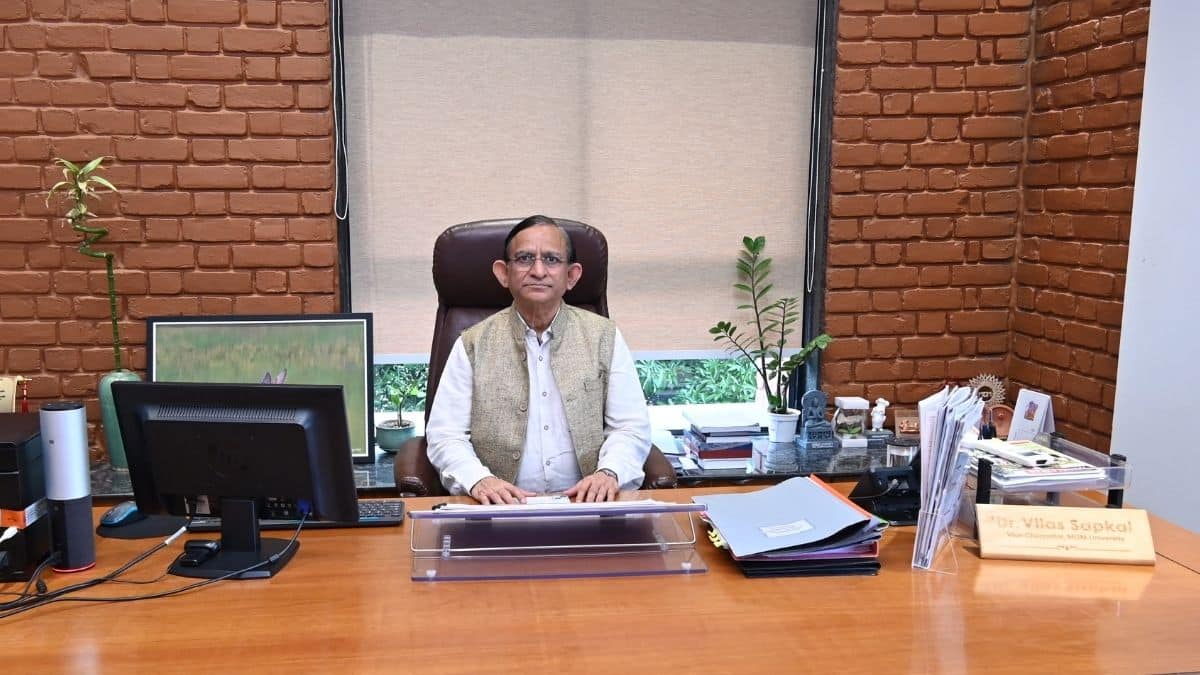
Before becoming a university, the MGM University in Aurangabad, now Chhatrapati Sambhajinagar in Maharashtra, was a group of educational institutions run by the Mahatma Gandhi Mission (MGM) Trust. It operated colleges and institutes in engineering, management, pharmacy, medicine, nursing, journalism, fine arts and other disciplines at Aurangabad, Nanded, Navi Mumbai, Parbhani in Maharashtra and Noida in Uttar Pradesh.
With its fifth convocation scheduled on September 26, Colonel Prof. Dr. Vilas Sapkal, vice chancellor of MGM University talks to Careers360 about the university’s evolution, implementation of the National Education Policy (NEP) 2020, four-year undergraduate programmes, research, industry collaborations, scholarships and changing student preferences for courses and more. Edited excerpts from the conversation:
When was MGM University established? What are the key academic departments it currently has?
MGM University was established in 2019 by the Maharashtra government through an Act passed by the state assembly and council. Located in Chhatrapati Sambhajinagar, the university currently has seven faculties departments – engineering and technology, commerce and management, basic and applied sciences, design, performing arts, interdisciplinary studies, and social sciences and humanities.
MGM University offers around 300 programmes and has approximately 9,000 to 10,000 students. It is a prominent university in the Marathwada region and, through the implementation of the National Education Policy (NEP) 2020 and international collaborations, is emerging as a preferred destination for students.
You mentioned NEP 2020. What challenges did you face in implementing it, and how does the university use it to benefit students?
When the NEP 2020 was formulated, suggestions were sought from various stakeholders to make it an inclusive policy. NEP enables students to study beyond a single discipline. We offer certificate, diploma, degree and postgraduate programmes, along with interdisciplinary and multidisciplinary programmes. Students can choose major, minor and open elective subjects and pursue two degrees simultaneously.
Students can choose combinations such as computer science and business analytics, design and languages, basic sciences and humanities, and hotel management based on their interests.
International norms are also important for MGM University. A four-year undergraduate (FYUP) degree, for instance, gives students global recognition and the university is focusing on developing its capacity and competence.
What challenges do students face in managing such a flexible curriculum?
We have a structured timetable, with classes scheduled between 7:30 am and 7:30 pm. We have utilised our facilities and faculty effectively to provide quality education and successfully implement the flexible curriculum.
With the flexibility offered under NEP, how are students responding to the four-year undergraduate programme?
The four-year undergraduate programme has been implemented, and the first batch has reached the fourth year this year. Students have the option to exit earlier based on their personal circumstances, such as financial or family requirements.
However, from a student’s perspective, the fourth year of the UG programme adds significantly to their knowledge and skills. It includes projects, internships, research methodology and advanced subjects, which enhance their overall competence. This is also why four-year undergraduate degrees are the norm globally.
We have received a positive response from students. The admission and results processes are still ongoing, while teachers continue to explain the programme and its benefits. Students should opt out only when there is a genuine need, such as health or financial issues.
A three-year degree can also put students at a disadvantage when applying abroad, as they miss the additional subject knowledge and skills offered in the fourth year.
Does the four-year undergraduate programme require specialised or additional faculty and research guides, and how is MGM University ensuring that students receive adequate research guidance?
No, we already have sufficient experienced research guides. Research guidance is not limited to the four-year undergraduate programme; we also have postgraduate and PhD programmes.
Around 500 research students are currently working at the university, and we do not face a shortage of research guides. Our postgraduate faculty also provide guidance, ensuring students receive the necessary support and facilities.
The final year is particularly important. In engineering, for instance, students undertake an extended practical project in the fourth year, with one teacher guiding a group of 10 students.
As per Maharashtra government guidelines, the top 7.5% of students who opt for research have to undertake specialised research. We have sufficient research guides to support these students.
How important are research and project-based learning in the university's academic approach?
Research is central to quality education at MGM University. We give strong importance to research and project-based learning, as projects help students understand the practical application of what they learn. Skill-based and applied education enhances students’ abilities and improves their employability.
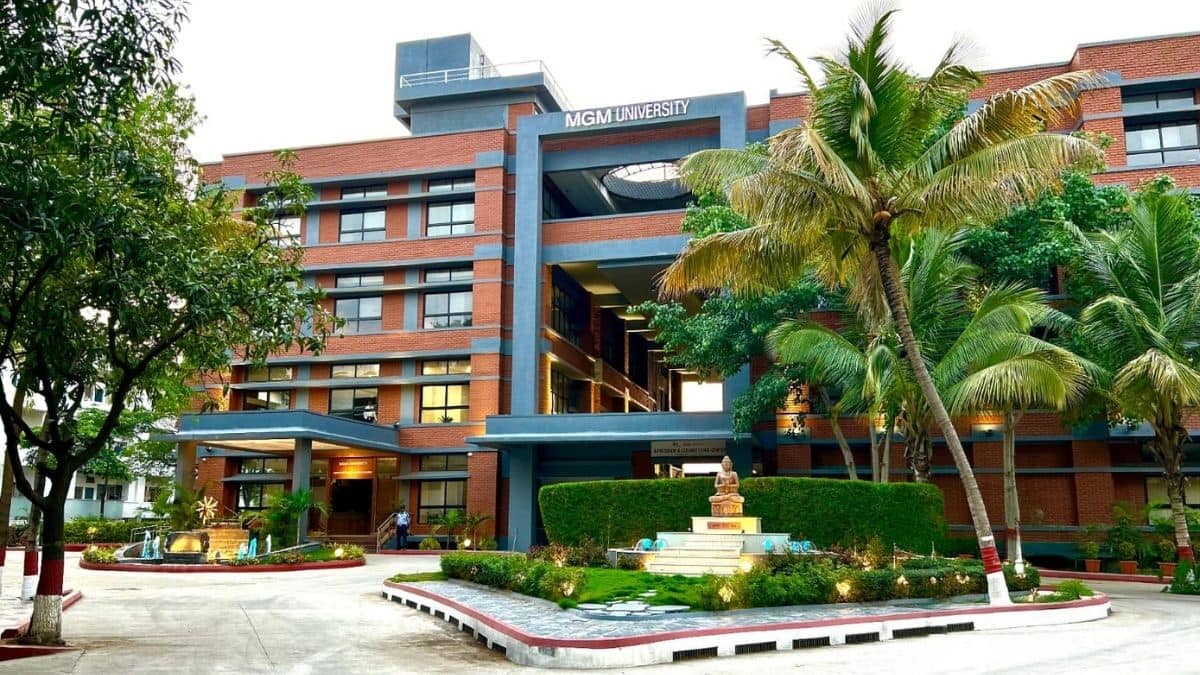 MGM University, Chhatrapati Sambhajinagar, Maharashtra. (Image: By special arrangement)
How does MGM University approach placements and industry collaborations?
We have a central placement agency, along with placement teams at each institute. We regularly sign MoUs with industry partners, through which we bring industry experts to the university and facilitate placement opportunities for students.
Recently, Toyota signed an MoU with MGM University for engineering and management programmes, as the company is setting up a manufacturing plant here in Chhatrapati Sambhajinagar. We also have collaborations with several other companies, with around 200 of them engaging with the university.
We have also partnered with media organisations such as Sakal Media Group and The Hindu. The Hindu has entered Maharashtra for the first time and signed an MoU with MGM University. Under the partnership, it will offer internships to our students at its plant in Chennai and send industry experts to interact with students during the semester.
Also read PM Research Chair: 3,600 apply for fellowship; over 400 for ‘host institution’ status, says govt
How is MGM University aligning its courses and curriculum with the changing industry demands?
We regularly update our curriculum to meet changing industry requirements. Our approach is project-driven, as new industries and projects require students with specific skills and knowledge.
We focus on developing students who are skilled, knowledgeable and quick learners. Emerging areas such as semiconductors, artificial intelligence, machine learning and data science are gaining importance, while design and tourism also offer opportunities.
In management, we are introducing several new specialisations beyond business analytics. Design thinking is another important area. In media and mass communication, digital media and AI are becoming increasingly important, and we are updating the curriculum accordingly to prepare our students.
Do you think students’ preferences for courses have changed over the last 10 years?
Student preferences continue to evolve with the changing pattern of development in the country. Growth across industries, the service sector, agriculture and exports is creating new opportunities, giving students more course options.
Earlier, engineering was a major choice, but students are now exploring fields such as design, pharmacy, law, hotel management, tourism, social sciences and languages.
Also read Assam’s State Higher Education Council: Facilitator or another bureaucratic layer, ask academics
What are the key institutes under MGM University?
MGM University has several institutes and programmes. Jawaharlal Nehru Engineering College (JNEC) is a college, while the university has institutions such as the School of Engineering and Technology, Institute of Information and Communication Technology, Institute of Management and Research (IOMR), BBA and MBA courses, design, and applied and basic Sciences.
These institutes have benefited significantly from being part of it. MGM university has a high level of legal and academic autonomy, which provides greater flexibility. This has enabled the institutions to benefit considerably.
JNEC was earlier affiliated with Dr Babasaheb Ambedkar Technological University (BATU). How did the transition to MGM University happen?
JNEC is now part of MGM University, along with the campus, institutes and colleges under the university. Following the establishment of MGM University, its affiliation with BATU changed accordingly.
Earlier, some colleges were affiliated with Dr Babasaheb Ambedkar Marathwada University (BAMU), while JNEC was affiliated with BATU. This was a technical decision taken when BATU was established. At the time, BATU gave colleges across Maharashtra the option to either remain affiliated with their existing university or move to BATU. JNEC chose to join BATU.
Also read Why Maharashtra’s BATU University makes engineering, pharmacy graduates wait years for marksheets
What are MGM University's plans for the future?
MGM University is progressing in multiple areas. Our primary focus is to strengthen research and commercialise patents. We are also working towards improving our NAAC and NIRF rankings.
Our aim is to provide students with accessible, affordable and quality education.
How does MGM University ensure affordability for students?
We offer several scholarships, including merit scholarships, chancellor’s scholarships, those for economically weaker students, wards’ scholarships and alumni scholarships.
Our fees are three-to-four times lower than those of Pune colleges. We keep the fees reasonable, offer installment options and provide scholarships to ensure students can continue their education. Around 20% to 25% of our students receive scholarships.
 Add as a preferred source on google
Follow us for the latest education news on colleges and universities, admission, courses, exams, research, education policies, study abroad and more..
To get in touch, write to us at news@careers360.com.
Next Story
]Locked Toilets to Teacher Shortage: CJP’s school audit campaign reveals chronic neglect of govt schools
According to CJP’s Ashutosh Ranka, ‘between 1,200 and 1,500’ volunteers conducted school inspections across the country starting August 15. They uncovered severe infrastructure and manpower gaps the communities want fixed
K. Nitika ShivaniLatest Education News
]Related News
]JNU VC defends handling of hunger strike, cites talks and twice-daily medical care for students
St Stephen’s terminates 2 assistant professors appointed during ex-principal’s tenure over irregularities
NIOS 6-month bridge course in primary teacher education registration reopens on October 21


