
NCERT teaching shame, not respect; blurring of Mohenjo-daro ‘Dancing Girl’ in book draws criticism
K. Nitika Shivani | June 19, 2026 | 11:49 AM IST | 3 mins read
Education systems should teach that human bodies are normal. Instead NCERT textbook ‘reinforcing idea that women’s bodies are inappropriate’, say experts
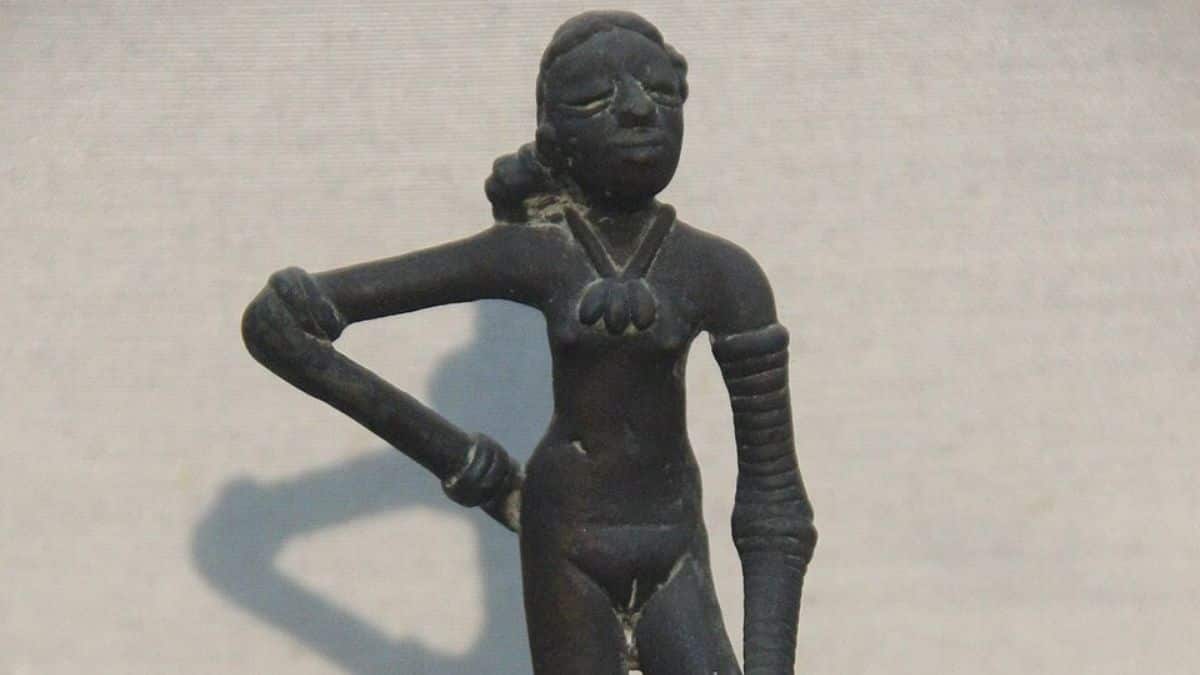
When the National Council of Educational Research and Training's new Class 9 arts textbook depicted the iconic "Dancing Girl" of Mohenjo-daro with her bare torso blacked out, the move triggered a debate that went beyond historical accuracy, reopening questions about how society perceives women's bodies and the messages educational institutions send to children.
"The problem has never been a woman's body, what she wears, how she looks or how she presents herself," said Bengaluru-based psychologist Dhruvita Chauhan, who has been following this issue closely. "Education systems should teach children that human bodies are normal. Instead, when institutions alter historical artefacts to make them appear more acceptable, they reinforce the idea that there is something inappropriate about women's bodies."
The 2600 BCE bronze figurine, one of the most recognisable artefacts of the Indus Valley Civilisation, appears in the textbook Madhurima with shading that obscures details visible in the original sculpture. Michel Danino, who headed the committee behind NCERT's new Class 6 Social Science books, criticised the alteration, calling it an "obsolete Victorian view" of nudity.
"If the Dancing Girl cannot figure as she is, and with proper dimensions, in a chapter on Indian art, then we have a serious problem," Danino told a Press Trust of India, arguing that such changes misrepresent the original artefact. Notably, the same figurine appears in NCERT's Class 6 social science textbook in a form much closer to the original.
NCERT book and the female body
Chauhan said the controversy points to a larger issue and that is society's tendency to associate the female body with shame rather than normalcy. Children learn not only through explicit lessons but also through the values embedded in educational choices.
"When an institution decides a historical representation needs to be covered up, it sends a message. I genuinely struggle to understand the mindset behind such decisions," she said.
According to her, treating women's bodies as something that must constantly be hidden can contribute to unhealthy attitudes rooted in embarrassment and moral policing rather than respect.
Objectification real; this isn't the solution
Shanthala Irashi, a teacher, acknowledged that classrooms are not immune to objectification.
"I've seen students draw on faces and figurines while class is going on. That's not new," she said. "I have noticed objectification becoming more visible over the years. The drawings are often unpleasant to look at." But she said she also believes altering educational material addresses the wrong problem.
"That is a completely different issue altogether," she said. "The answer cannot be changing historical representations."
Challenging inherited beliefs
A former teacher with children in school in Vishakhapatnam, argued that patriarchal beliefs continue to shape how society responds to women's bodies.
"Women are exhausted by constant objectification," she said. "Part of the blame lies in how we educate children. If children were taught from a young age that bodies are normal and respect has nothing to do with how much skin someone shows, perhaps things would be different."
She said previous generations often passed down the belief that hiding women's bodies offered protection.
"But covering up has never stopped harassment or wandering eyes," she said. "The real issue is the mindset behind objectification. That is what needs to change."
Social media asks: Why alter history?
The alteration also triggered criticism online, with many social media users arguing that the episode demonstrates why conversations around feminism and bodily autonomy remain relevant.
Some questioned why a 4,600-year-old artefact, studied and displayed for decades without controversy, suddenly required modification in an educational setting. Others argued that shielding children from historical representations of the human body only reinforces shame and stigma.
People on social media say that the debate over the "Dancing Girl" is no longer just about a textbook illustration. It has become a reflection of contemporary anxieties around gender, censorship and the messages children receive about women's bodies.
The figurine itself has survived thousands of years unchanged but education in India is making patriarchy win even today, said one user on Instagram.
 Add as a preferred source on google
Follow us for the latest education news on colleges and universities, admission, courses, exams, research, education policies, study abroad and more..
To get in touch, write to us at news@careers360.com.
Next Story
]Latest Education News
]Related News
]Board Exam 10th, 12th Time Table 2027 LIVE: RBSE, Andhra Pradesh date sheet soon; passing marks
CBSE Date Sheet 2027: Class 10, 12 exam dates soon on cbse.gov.in; passing marks, sample papers
Telangana to implement 25% RTE quota for EWS children in private schools: Report


