
Assam Agricultural University Jorhat enrolled excess students for 5 yrs despite 41% vacant faculty posts: CAG
Musab Qazi | December 5, 2025 | 03:30 PM IST | 6 mins read
AAU Jorhat wrongfully excluded 44 teaching candidates, has only 12% functional equipment, spent Rs 2.8 crore on abandoned fisheries college, finds CAG
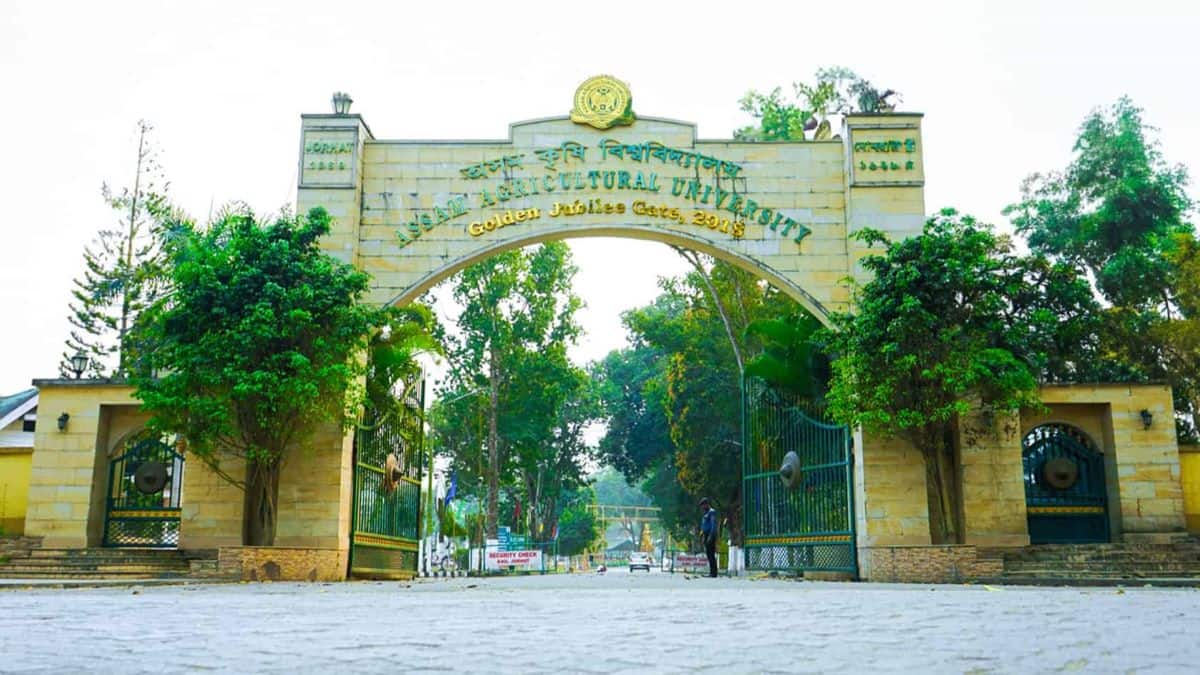
As many as 41% of teaching positions and 69% of non-teaching spots were vacant at the Assam Agricultural University (AAU) Jorhat over five years even as the institute consistently admitted more students than its intake capacity during this period. Two of the constituent colleges of the university haven’t got their own infrastructure in the last decade and report an acute shortage of necessary equipment.
Around 42% of the research papers published by the university between 2017-18 and 2021-22 were of below par quality, while its placement cell has no record of helping any student. These are some of the findings from a recent performance audit of AAU, one of the two state agri universities in Assam, published by the Comptroller and Auditor General (CAG) of India.
The review, which is part of a larger scrutiny of the state’s social, economic and general sectors by the national watchdog, also unearthed irregularities in the university’s recruitment and procurement practices. These include the wrongful exclusion of 44 teaching candidates from the hiring process and award of contracts worth Rs 281.5 crore outside the state’s online procurement system.
CAG flagged the shortcomings and violations of the norms based on an audit conducted from July 2022 and February 2023, covering a period stretching from 2017-18 to 2021-22. The auditors probed a sample of three out of nine academic institutions, two regional agricultural research stations, two commodity research stations and eight Krishi Vigyan Kendras under AAU. It also perused 27 out of 65 research projects completed by the varsity in this span of time.
AAU Jorhat Admission: Enrolment more than capacity
The report, released earlier this week, indicates that, in four out of five audited years, the number of students admitted to undergraduate (UG) programmes exceeds the approved intake capacity. In 2021-22, for instance, the enrollment in UG programmes was 630 against 567 sanctioned strength – an excess of around 11%. In three of the sampled institutions – College of Agriculture, Jorhat; College of Veterinary Science, Guwahati; and College of Community Science, Jorhat – the excessive admissions ranged from 2% and 22%.
The auditors underscored that admitting students beyond the intake capacity would impact the quality of education due to the infrastructure constraints. The varsity was also faulted for violating the Veterinary Council of India’s (VCI) norms by unilaterally increasing the capacity of its UG veterinary science programme. The varsity administration explained to the CAG team that the excess enrollment was due to the addition of unsuccessful students of previous years. It, however, didn’t provide any justification for the veterinary college seat hike.
Assam Agricultural University: Vacant faculty posts
The audit also flagged disparity in staff appointments, with as many as 449 out of 1,096 teaching and 1,142 out of 1,645 non-teaching posts lying vacant. Interestingly, while AAU has almost double the number of required professors, only 7% of associate professors spots are filled. Also, despite the shortfall, the three of the sampled colleges reported an average teacher-student ratio of 1:7 – well above the 1:10 ratio prescribed by the Indian Council for Agricultural Research (ICAR) and the University Grants Commission (UGC).
“This suggested that there was scope for higher intake of students subject to availability of infrastructure and fulfilment of other normative requirements associated with various courses,” opines the report.
CAG also found that the university had debarred 44 candidates who had applied for 50 assistant and associate professor positions in 2019 and 2022 for lacking Permanent Residence Certificate (PRC) of Assam, even though it wasn’t mentioned as a pre-condition in advertisements for posts, the AAU Act or the varsity’s statutes.
To auditors, this constituted a violation of the constitutional prohibition on discrimination on the basis of caste, creed and region. While the administration justified the exclusion, pointing out that the PRC clause was part of the service rules approved by the varsity chancellor, the contention was rejected by the auditing team.
The institute’s Training and Placement Cell also came under the auditors’ crosshairs, as the body neither made any plans for placing students, nor did it maintain any records of applications received from students and action taken on them. While the institute asserted that the cell helped students provide employment, it didn’t keep any records. It also informed that a placement policy is being finalised.
AAU Jorhat: Research papers, infrastructure
AAU’s research and development activities were also found to be wanting. Following a review of 27 research projects that were reported to have been completed, the auditing team found three to be abandoned and incomplete for 10 to 15 months as of March 2022, despite Rs 0.85 crore spent on them.
Out of total numbers of 715 research papers claimed to have been published by AAU in the audited period, 39 (5%) were repetitions. A total of 283 (42%) papers had scored below five or weren’t even rated by the National Academy of Agricultural Sciences (NAAS), which evaluates quality of agri research articles. The varsity also lacked a Prioritisation, Monitoring and Evaluation (PME) Cell, as recommended by ICAR in 2014.
Some of the sampled institutes had gaps in requisite infrastructure, according to the report. For instance, the College of Community Science, set up in 2019 in Jorhat, is being run out of only two dedicated classrooms and a makeshift classroom in corridor against the four required for the course. The horticulture and sericulture colleges, established in the College of Agriculture premises are yet to get their own independent facilities, and are facing a paucity of staff, classrooms and laboratories.
In College of Veterinary Science, Guwahati, CAG found only 12% of equipment available, of which only 71% was functional, across 110 categories of critical equipment. However, there was no shortage in the other 500 categories.
AAU: Rs 2.8 crore spent on fisheries college
The audit of AAU’s finances too threw up some irregularities. Most notably, the university had avoided floating 88 tenders amounting to Rs 281.5 crore through the Assam government’s e-procurement system. This, according to the report, is a violation of the state’s 2016 and 2018 instructions that goods and services valued more than Rs 0.50 crore should be purchased through the online procurement system. The university attributed that failure to “lack of proper technical infrastructure and inadequate training”.
In an alarming waste of resources, the university, between 2011 and 2013, had spent around Rs 2.5 crore for constructing a fisheries college at Kachamari only to shift it to Raha as the former was an isolated location prone to flooding from rainwater as well as a hydroelectric project.
“The [university’s] reply is indicative of the fact that the site was selected without proper planning and survey leading to the entire expenditure of Rs 2.50 crore incurred at Kachamari for construction of Fishery College being wasteful,” reads the report.
Careers360 has reached out to AAU vice chancellor Bidyut Chandan Deka for a response to the audit’s findings. This report will be updated if and when he responds.
 Add as a preferred source on google
Follow us for the latest education news on colleges and universities, admission, courses, exams, research, education policies, study abroad and more..
To get in touch, write to us at news@careers360.com.
Next Story
]AICTE Approval Process Handbook: From 2026-27, more foreign-student seats, minor specialisation in diploma
AICTE’s revised approval process India for 2026-27 raises cap on foreign-student seats to 25% in business schools, PG in engineering colleges; adds ‘minor specialisation’ to diploma programmes
Sheena SachdevaLatest Education News
]Related News
]DBATU selected among 160 institutions for 'IBM Quantum Qiskit Fall Fest 2026'
IIM Calcutta invites applications for 10th batch of 'Executive Leadership Programme for Women'


