
‘BTech Not Enough’: Outdated engineering curriculum leaves students paying to bridge classroom-to-career gap
Team Careers360 | June 11, 2026 | 02:09 PM IST | 8 mins read
BTech students in tier-2, 3 towns and engineering colleges must rely on online courses to close the gap between curriculum and industry demands. Even then, employment a struggle
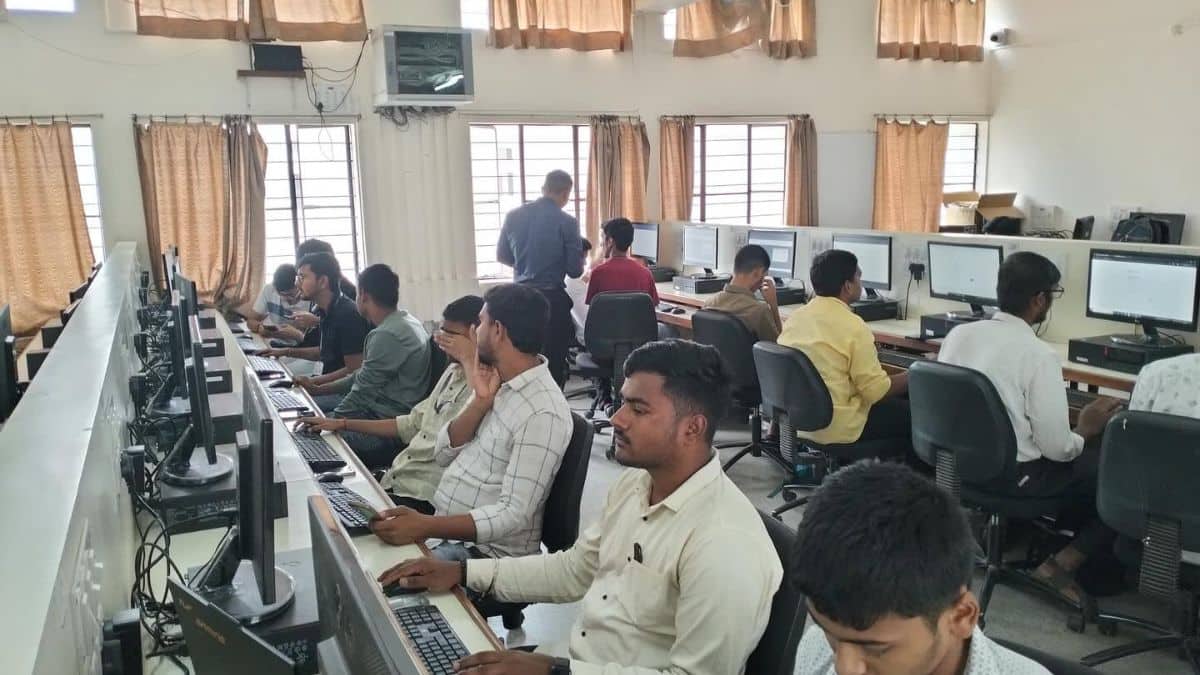
By Sheena Sachdeva and Azib Ahmed
“Most engineering colleges across India’s tier-two and three cities and towns do not have a curriculum that is aligned with industry requirements,” said Netra Deshpande, a final-year student of electronics and telecommunication at a government engineering institute in Nanded, Maharashtra.
With thousands of others like herself, Deshpande has tried to close the gaps herself. She started exploring other avenues of learning – free and paid online courses – from the second year of her degree.
“I have done Java and C++ courses from YouTube and other platforms. I also did a paid course from Apna College, an online learning platform, for Rs 5,000,” she said. These courses typically range from short modules to longer programmes depending on the subject. “For web development, it can be three to six months. Data science courses are longer. Some include workshops, meetings or recorded lectures along with projects and internships,” she added.
Also read Anna University students piece together BTech courses as faculty gaps lead to fragmented teaching
BTech Courses: Constantly upskill
This is a familiar problem outside the handful of top engineering colleges. The engineering curriculum has not kept pace with industry needs. In consequence, engineering students are compelled to continuously upskill, both during their degree and after graduation, through online courses, often at an additional cost, just to remain industry-relevant and employable.
For some, this also means shifting career paths altogether. Prathamesh Mutyal, a civil engineer who graduated from a government engineering college in Pune, in 2019, said he turned to software testing after struggling to find opportunities in his field. “I tried in civil, but there were hardly any opportunities. That’s when I shifted to IT and enrolled in a software testing and development course,” he said.
Also read Student Suicides: NTF interim report flags impact of NEET, JEE-type exams on mental health
BTech Engineering: Beyond formal education
Engineering colleges do not see this as a failure but as a change in the way learning happens now.
“One of the biggest challenges is the lack of literacy in using artificial intelligence tools. Engineering students today need to acquire additional skills to secure a job,” said Sandeep Murlidhar Joshi, principal of Pillai College of Engineering, New Panvel, Maharashtra. “Students increasingly need to go beyond their formal education and build skills that the current curriculum does not adequately cover.”
There have been efforts to push the institutions to modernise their curriculum. Over the last few years, the technical education regulator, All India Council for Technical Education (AICTE), has developed “model curricula” for various branches of engineering. But their adoption has been slow and ineffective. A final-year general computer science engineering (regional language) student from Poornima Institute of Engineering and Technology, Jaipur, who did not want to be named, said, “Though teacher support is there, the curriculum is still not updated.”
PIET Jaipur registrar, Balwan, who uses only his first name, countered saying that the curriculum is updated with relevant AI and data science courses.
“AI and other new-age technologies are evolving at a rapid pace, there is something new every day,” said a second-year BTech in IT engineering student from a private engineering institute in Solapur. “By the time the curriculum is updated, the technology itself becomes outdated,” he added.
Also read IIT placements panel discusses ban on sharing of JEE Advanced ranks with recruiters
Skill courses boom
In the final year of BTech in general computer science (regional language) at PIET Jaipur, a student said that platforms offering workshops and certifications are in high demand. “Platforms like Outskill regularly provide workshops and certifications as most students want a professional certificate,” they said.
Students across colleges report similar spending patterns. A second-year BTech IT student from Walchand Institute of Technology, Solapur, said, “I did a certificate course on Agentic AI through Capabl. It was a four-month course with weekly project submissions. I paid Rs 3,000.” The student added that a majority of their peers opted for similar courses and much the same price-points.
That said, what the courses offer vary widely.
A third-year BTech student in electronics and computer science at an autonomous college affiliated to Mumbai University took a 10-week course in data science and machine learning in his first year, paying Rs 3,000. “It included industry-level projects and training for interview questions that could be asked during internships,” they said.
BTech syllabus a ‘burden’
Across campuses, the BTech curriculum’s disconnect from industry is noticeable. The Jaipur student pointed out that at their college, AI and machine learning are still not part of the formal curriculum. “These tools are relatively new, so they haven’t been added yet. Our branch does not even have a dedicated AI course. There are occasional sessions and workshops, but they are not part of the curriculum,” he said.
“There is a huge gap between what we are taught and what is actually needed in the industry. It has made it almost mandatory for us to take up additional courses and learn skills on our own,” Deshpande added.
Students also question the relevance of syllabus content that continues to be taught. The Solapur student said the curriculum has expanded without becoming meaningful. “We have subjects like personal ethics, but how is that relevant for engineering students? Under NEP 2020, there was a commitment of reform, but in reality, they have just added more subjects without removing outdated ones. Earlier we had four subjects in a semester, now we have eight. The older subjects were not useful, and now additional courses make it more burdensome,” the student said.
Also read IISER Bhopal discontinued BS-MS course over placement issues, offering BTech-MTech degrees: Director
Many now see the formal curriculum as a basic framework rather than a pathway to employment. The Mumbai University student said, “The curriculum is not strong enough to prepare you for real life. It only builds a foundation. Beyond that, you have to learn coding and other skills on your own.”
Even in premier institutions, students say exposure to new-age tools remains limited. A second-year student from a core-engineering department at a top National Institute of Technology, said, “No one is teaching new-age tools like AI. We have to keep experimenting on our own. There are some electives, but they are not part of the mainstream curriculum.”
BTech Courses: Faculty gaps
Faculty long out-of-touch with industry and lacking in updated skills only compound the problem. “In tier-2 and tier-3 cities, the quality of teachers is poor,” said a Solapur student. “Even in our college, many teachers are not well qualified. There is a huge problem of availability of qualified teachers. The approach towards teaching is also not right, and that itself becomes a problem.”
Teachers haven’t bothered to update what they know. “They teach what they learned in their time, which has changed over the years,” said Deshpande.
IT, Data Sciences: Shift from core branches
With limited opportunities in core engineering sectors, many students are moving to IT and data sciences in search of better prospects. However, students say that online courses alone are not enough to make this transition.
Prathamesh Mutyal’s batchmate, Bhaskar Deosarkar, a mechanical engineer, also shifted to IT during the Covid-19 pandemic when opportunities in core sectors declined. In 2021, he enrolled in an online programme with UpGrad, spending around Rs 35,000 on a six-month course.
While the course helped him build a foundation, Bhaskar said it was only the starting point. “It’s not just about doing the course. You have to build projects and develop skills,” he said. He added that he spent another four to eight months working on projects before securing a job.
Bhaskar initially joined Infosys through an off-campus placement with a package of around Rs 3.5 lakh per annum. He said that students from non-computer science backgrounds are often offered support roles instead of core development work, though he has since moved into a web development role.
Also read With CSE surge, these specialised BTech courses are vanishing from engineering colleges
Hamza Ali, owner of IT firm Standard Touch in Kalaburagi (formerly Gulbarga), Karnataka, said this trend is now common. Students from civil, mechanical and electronics backgrounds are increasingly moving to IT, he said, largely because of better opportunities. “Compared to mechanical and civil, IT is still better. In core fields, payouts are low,” he said.
While such students may lack basic IT knowledge initially, he believes the gap is not hard to bridge. “What we study in engineering colleges is mostly not relevant to the current IT market. Whatever is needed can be learned within a few months,” Hamza said.
He added that the mismatch between education and industry is not limited to core branches. “Even computer science graduates need additional training before getting employed. What students learn in college is not aligned with industry needs,” he said.
BTech: Placement pressure, uncertain outcomes
Even after investing time and money in upskilling, students say placements are uncertain and highly competitive. “The market is very competitive now. We work hard, but what matters is how many projects you have done and how hands-on your skills are, as hiring expectations vary widely across roles,” said Deshpande. “Each company wants a different tech stack. Some want frontend, some software development and IT operations (DevOps), some cloud or System Analysis Program (SAP) Development (SAP),” she added.
Mutyal spent around Rs 40,000 on an online course after shifting fields. “They teach everything, but you don’t get real-time work experience,” he said. Then, there are timing and market conditions. While IT hiring surged during the Covid-19 period, it slowed down soon after. “By the time I completed the course, layoffs had started. Interviews were not being scheduled.”
Deosarkar added that despite pursuing the online courses, the placements were dismal. “Out of around 120 students in my batch, only five or six were placed, even after doing the courses.”
 Add as a preferred source on google
Follow us for the latest education news on colleges and universities, admission, courses, exams, research, education policies, study abroad and more..
To get in touch, write to us at news@careers360.com.
Next Story
]Latest Education News
]Related News
]CJP Protest: Delhi Police detain students, party leaders; IYC announces legal helpline
Chandigarh University launches ‘Campus Tank Season 2’, offers 15 million US dollars for student startups
Patna: JD Women’s College teachers oppose Mata Sita University affiliation, demand repeal of Bihar Act


