
IIFT Plans: Dubai campus as ‘international platform’, AI in MBA courses, improving placements
Shradha Chettri | December 1, 2025 | 12:00 PM IST | 5 mins read
Indian Institute of Foreign Trade VC, Rakesh Mohan Joshi the new GIFT City Gujarat and Dubai campuses; the specialised MBA rage and more
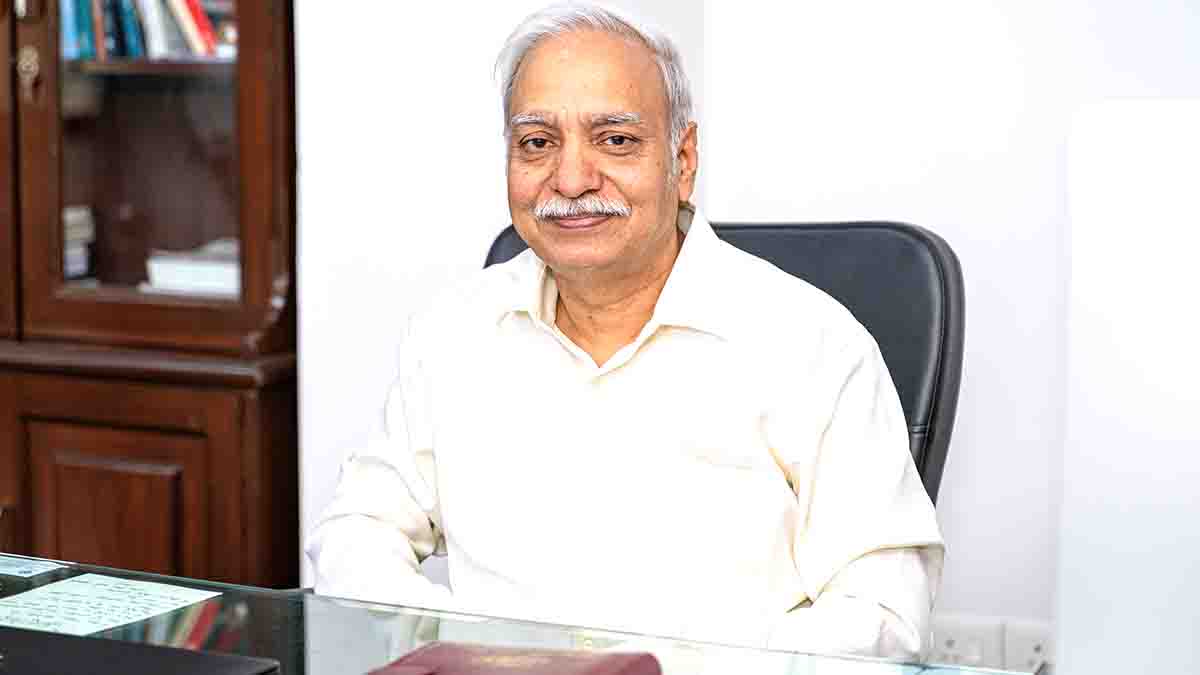
Professor Rakesh Mohan Joshi, vice-chancellor of Indian Institute of Foreign Trade (IIFT) – a deemed-university – shared that the new foreign campus in Dubai, being built at the Expo City, will be operational from the next academic session. During an interaction with Careers360, he also spoke about how the value of general MBA is declining and why institutes need to focus on specialised management disciplines.
Admission to IIFT Delhi and other campuses is based on the Common Admission Test; the IIM CAT 2025 is scheduled for November 30 and will be administered by the Indian Institute of Management (IIM) Kozhikode.
Edited excerpts from the conversation below.
IIFT has recently announced a new foreign campus. Can you give us some details?
We have got all approvals from the governments of Dubai and India. We are on a strong footing. Our IIFT New Delhi team is soon headed for a visit to Dubai. It took almost two years for us to get the approvals.
IIFT has a core strength in international trade and business and Dubai is a hub in that area. Our programmes are highly-sought-after in Dubai. We are going to start long-term courses, which would be MBA, certain diploma programmes, and certificate programmes. Importantly, we have an executive development programme in Dubai and some research programmes focussed on international trade.
Our campus will come up at the Expo city in Dubai – a hub of international trade and business. We are likely to commence our programmes in the next academic year.
Our Dubai campus will serve as an international platform. We will try to customise our programmes according to the need of the place. We are also evaluating the Dubai market so that we can launch the BBA programme. We are working on it.
The Indian Institute of Foreign Trade also has several branches in the country now. How has the expansion helped the institute grow?
Earlier, we had just one campus in Delhi. Then we started IIFT Kolkata in 2006. We also have a campus at Kakinada, Andhra Pradesh, where we launched the MBA programme and are in the process of shifting to a new campus. It is coming up on 30 acres. We have also commenced our new campus in GIFT City, Gandhinagar, where we have our MBA in international trade and business. GIFT City is the place to be – it is the global financial centre which has state-of-the-art multinational companies. With this expansion, the brand value of IIFT would increase.
Also read IIM Jammu lowers CAT 2025 cut-offs, increases weightage to 42%; batch size likely to go up to 300
India requires people who are trained in international trade and business. Due to globalisation, companies are facing a lot of global challenges. Our students are ready to meet these challenges and that is what makes IIFT more relevant than before.
How supportive have the state governments been for building the IIFT campuses?
All state governments have been very supportive. Many states want IIFT to operate on their land. In the case of Kakinada campus, 50% of the entire funding and the land came from the state government. We are also getting a lot of support from the Gujarat government for the Gift City campus. We have invested there.
Since its inception, how do you think management education has evolved?
Management education has completely transformed. Earlier, management education was basic MBA with few students. Now, India has got the largest ecosystem of management schools.
Also read ‘IIM Ahmedabad aims to extend full or partial freeships to 40% of students’: Director
Moreover, our pedagogy has changed. Earlier, it was inward oriented. Now it is about incorporating global issues and adapting to global changes. Technology has made it possible to expand. We also have some online programmes.
Now we are also integrating Artificial Intelligence (AI) into the pedagogy. However, we need to prepare ourselves and the institute, managers, professionals, students and even our programmes to be future ready in order to accept changes in the business environment and education system.
Now, the value of the general MBA is declining. Getting admission in an MBA institute today is much easier than it was 20 years ago.
IIFT is much more relevant now because we have specialised training in international business and trade. I think the time has now come for specialised management education.
We started a course of business analytics which trains our students towards data driven decision making. I think we will replicate all our Delhi campus experiments at other campuses as well, depending on the demand.
How has AI impacted placement offers being received by IIFT students?
AI is still at a nascent stage. People mostly know about ChatGPT when it comes to AI, but there is much more to it.The existing things are fast getting obsolete. People started using the internet 25 years ago. The advent of Wikipedia led to the death of encyclopaedias and online dictionaries. But now even Wikipedia is facing challenges, in terms of information availability. AI is getting integrated into student assignments and research methodology. There are special tools which help students reduce repetitions.
Now students need to focus on the conceptual aspect of subjects and decision-making. I think the way companies carry out recruitments will change in a substantive manner. I feel students need to be ready to learn these changes and be responsive.
Also read ‘IIM Calcutta’s new programmes to include 40% AI-based content’: Director
How have the IIFT placements been?
Last year, the market for IIFT was not so good. But given that the best of the IITs and IIMs could not place their students in the best way possible, I think IIFT has done reasonably well with placements. The highest placement in the last academic year was Rs 1.2 crore, which was more than most of the top IIMs in the country.
We have been consistently working closely with the industry and government. I am sure this year is going to be much better.
How has NEP implementation impacted IIFT?
We are working on it. NEP is about integrating diverse disciplines. We are in the process of implementing it. International trade and business are itself the integration of various disciplines. Management education is not a basic discipline like economics or English. We are diversifying and focussing on internationalisation, globalisation and trade.
IIFT has been running online and hybrid programmes. What growth have these seen?
Online programmes offer opportunities and sometimes even compete with offline programmes. The clientele for online is different. For offline courses, we have students from across the country and even abroad. We are very strong in that area.
How has the growth been of PhD programmes at IIFT?
Our PhD programmes are very popular. We have 140-150 PhD students enrolled at our Delhi and Kolkata campuses. We will soon be starting PhD programmes at the IIFT Kakinada campus and the Dubai campus, once we establish it. Our research is integrated with the industry and looks at real problems. It makes IIFT much more relevant than our competitors.
 Add as a preferred source on google
Follow us for the latest education news on colleges and universities, admission, courses, exams, research, education policies, study abroad and more..
To get in touch, write to us at news@careers360.com.
Next Story
]CAT 2025: Four IIMs exit Common Admission Process to join JAP 2026, leave MBA aspirants confused
Newer IIMs such as IIM Raipur, Kashipur, Ranchi, and Tiruchirappalli experimenting with common, ‘single-window’ admission counselling, IIM Udaipur goes solo. Students wish all 21 would come together.
Shradha ChettriLatest Education News
]Related News
]NEET PG Counselling 2026 LIVE: MCC round 1 college reporting from October 26; MD, MS cutoffs
Kerala University VC says no move to ban student politics, stresses need to curb violence
NIIT University holds 16th convocation, announces 100% placements for 2026 graduates


