
IIM Amritsar wants to build ‘distinct identity’ in MBA education, NIRF doesn’t capture full picture: Director
Aeshwarya Tiwari | July 3, 2026 | 11:26 AM IST | 7 mins read
IIM Amritsar explores algorithmic trading, AI integration across MBA courses, aims to increase scholarships; director says faculty retention, not just NIRF, is the real challenge
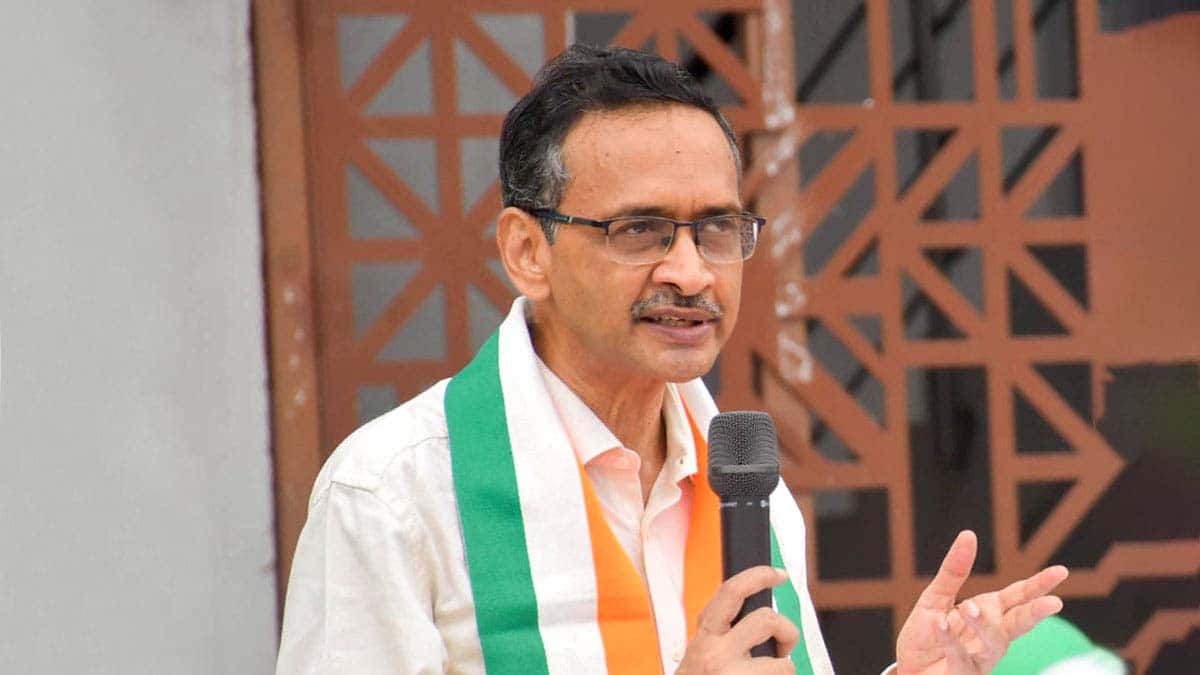
Samir Kumar Srivastava, director IIM Amritsar speaks to Careers360 about the institute’s current standing and future direction, including concerns around NIRF rankings, faculty retention, and student quality. He also shares insights on improving institutional growth through global collaborations, case-based learning, research output, scholarships, and adapting management education to post-pandemic industry and academic shifts. Edited excerpts:
Where do you think IIM Amritsar genuinely stands today?
In today’s fast-moving environment, I believe IIM Amritsar is at a stage where it must grow faster while staying competitive. At the same time, we should not benchmark ourselves only against the IIMs, but also learn from institutions like ISB, XLRI, SP Jain, MIT, and even leading engineering colleges. The key is to build a strong learning mindset and become an institution that enables innovation and future-ready education.
As a young institution, our biggest strength is faculty. While older IIMs took decades to establish themselves, today’s environment demands much faster progress. Overall, I see IIM Amritsar as an institution in its early but promising growth phase, focused on long-term, sustainable, and future-oriented development.
Your NIRF ranking has fallen. What do you think is the reason?
Not everything can be measured purely through rankings and metrics. That said, there were certain challenges that impacted our NIRF performance, particularly a decline in faculty strength due to both internal and external factors. Parameters such as faculty-to-student ratio were affected, which naturally influenced the rankings.
Newer IIMs tend to have a larger proportion of younger faculty which also impacts scoring metrics. However, I believe that strong systems, quality resources, the right motivation, and a clear long-term vision eventually lead to meaningful outcomes. Rather than adopting short-term tactics to improve rankings quickly, our focus is on building a strong and sustainable institution.
You have been associated with top institutions like MDI Gurgaon and IIM Lucknow. What is your perspective to improve rankings and institutional growth?
Institutions like MDI and IIM Lucknow took many years to build their reputation and reach the top. At that time, there were also fewer competitors. Today, the environment is far more competitive, and while we are continuously trying to improve, other institutions are evolving simultaneously. In such a dynamic landscape, even a small gap can affect rankings significantly.
At the same time, I believe rankings and metrics do not always capture the complete picture of an institution’s quality and impact.
Do you think the ranking system should change?
I believe rankings, such as NIRF, should be viewed as broad indicators rather than absolute measures of an institution’s quality. Some metrics are useful, but they do not capture the complete reality of education and institutional impact.
At the same time, rankings are important because they help institutions reflect on where they may be falling behind and where improvements are needed. Since NIRF rankings are based on data collected over multiple years, institutional progress also takes time to reflect. Our approach is to focus on long-term development rather than expecting dramatic changes overnight.
Since admissions are based on exams like CAT and institutes already use cut-offs and selection criteria, do you think student quality should be included in rankings?
Currently, NIRF rankings do not directly measure student quality; they focus more on student outcomes. In reality, measuring “quality” itself is extremely difficult because concepts like excellence and quality are relative and cannot be captured perfectly through a single metric.
What institutions can do is build strong systems and processes that ensure consistency and minimise deviations. But no evaluation system is flawless. Just as examinations have evolved from traditional three-hour exams to continuous evaluation, every system brings improvements while also introducing new limitations. The same applies to rankings. NIRF may not be perfect, and there is certainly scope for refinement, but it should not be ignored either.
At the same time, ranking parameters should evolve gradually. If frameworks are changed too frequently, institutions may struggle to understand and adapt to them effectively.
Is there any unique initiative you would like to introduce during your tenure?
Our focus is not just on introducing trendy themes like AI or sustainability as standalone offerings, but on integrating them deeply across the curriculum. I believe concepts such as experiential learning, experimentation, AI, and sustainability should become part of everyday teaching across subjects rather than being treated as separate labels or buzzwords.
We are also exploring emerging areas like algorithmic trading and other industry-relevant domains. Over time, once these initiatives become more established and successful, we may expand into specialised certifications and new programme offerings.
The post-pandemic environment has changed MBA education significantly. Have you introduced any new case studies or teaching approaches?
Yes, we have established an internal case center to encourage the development of new and relevant case studies. We are also in discussions with startups and industry partners for potential collaborations – some are still in the early stages.
We are actively encouraging and incentivising faculty members to write cases that reflect contemporary business challenges and post-pandemic realities. Every year some faculty members are sent to institutions like Harvard for exposure and learning.
At the same time, we want to develop our own innovative approaches and establish an independent identity rather than remaining followers.
What kind of tie-ups or faculty development initiatives have you introduced?
We send faculty members to Harvard primarily for colloquiums and training programmes focused on case teaching methodologies. The objective is to expose faculty to global teaching practices and continuously enhance their learning.
What are the key challenges you face in retaining faculty at IIM Amritsar, especially given the changes reflected in NIRF data?
The current number of permanent faculty is about 39, and earlier figures in NIRF data also included certain categories of visiting faculty, which are counted differently based on the guidelines. In terms of retention, one of the main challenges is building a strong and supportive academic ecosystem. Faculty retention is not driven only by compensation; it also depends on infrastructure, working conditions, and overall institutional environment.
In NIRF rankings, IITs such as IIT Delhi often appear higher in research metrics compared to IIMs. Why do you think this gap exists?
Research output in frameworks like NIRF is largely driven by quantitative measures such as publications and citations. However, such metrics only capture one dimension of academic work.
Concepts like excellence or quality are subjective and cannot be fully captured through numerical indicators. There is a natural tendency to quantify everything to create a composite score, but in doing so, some important contextual factors may get simplified or overlooked. As a result, small differences in numbers can sometimes lead to large shifts in rankings, even when real-world differences are not that significant.
We are actively working on strengthening research and institutional capabilities, including incubation and industry collaboration. We are engaging with multiple stakeholders, including international universities, IIT Ropar, and industry partners, to build initiatives around innovation and entrepreneurship.
Should IIM Amritsar increase freeships or scholarships for students?
We are trying to increase scholarships and freeships, but the biggest challenge is financial sustainability. We are reaching out to industry partners for sponsorships and support, but large-scale funding has been limited so far. While we do manage smaller awards and scholarships, fully funding freeships requires significant resources, and we are still in the process of building those support systems. At this stage, we are also not in a position to depend heavily on alumni contributions, as many of them are still at the early stages of their careers.
What have been the key challenges in your first year as director?
While some challenges have been addressed, others are still work in progress. Leading a young institution is a gradual process. My primary focus has been students. Ensuring strong academic support, improving infrastructure, and expanding scholarship opportunities for economically weaker students remain key priorities. Once resources are available, we are committed to strengthening these areas further.
Are you planning to bring more industry-specific faculty into IIM Amritsar?
We already engage extensively with industry professionals through guest lectures, colloquia, and short sessions. However, full-time faculty roles require a balance between academic depth and industry experience. While we are open to hiring, they are also expected to meet academic standards, and recruitment is done through proper selection processes. We are not trying to simply replicate what other IIMs are doing. Our intent is to build a distinct identity for IIM Amritsar over time, in terms of faculty strength, academic programs, and overall outcomes.
 Add as a preferred source on google
Follow us for the latest education news on colleges and universities, admission, courses, exams, research, education policies, study abroad and more..
To get in touch, write to us at news@careers360.com.
Next Story
]GMR Aero Technic’s aviation course produces professionals airlines can deploy from day one: President
With paid on-job training, Boeing 737 and Airbus A320-type rating, GMR Aero Technic is more than a conventional aviation college, says its president; talks about its dual DGCA-EASA curriculum and more
Aeshwarya TiwariLatest Education News
]Related News
]IIT Kanpur launches biggest fundraising campaign, announces new entrepreneurship school, military drone hub
Centre approves medical colleges in Maharashtra and Goa with 50 MBBS seats
Hindu College staff body alleges financial, admission irregularities; demands DU intervention


