
‘MDI Gurgaon’s AICTE recognition is freedom with responsibility’: Dean on Category 1 autonomy
Pritha Roy Choudhury | December 1, 2025 | 01:37 PM IST | 6 mins read
AICTE’s graded autonomy will help MDI Gurgaon attract foreign students; launch AI, data science, liberal arts courses; become a multidisciplinary university, says dean
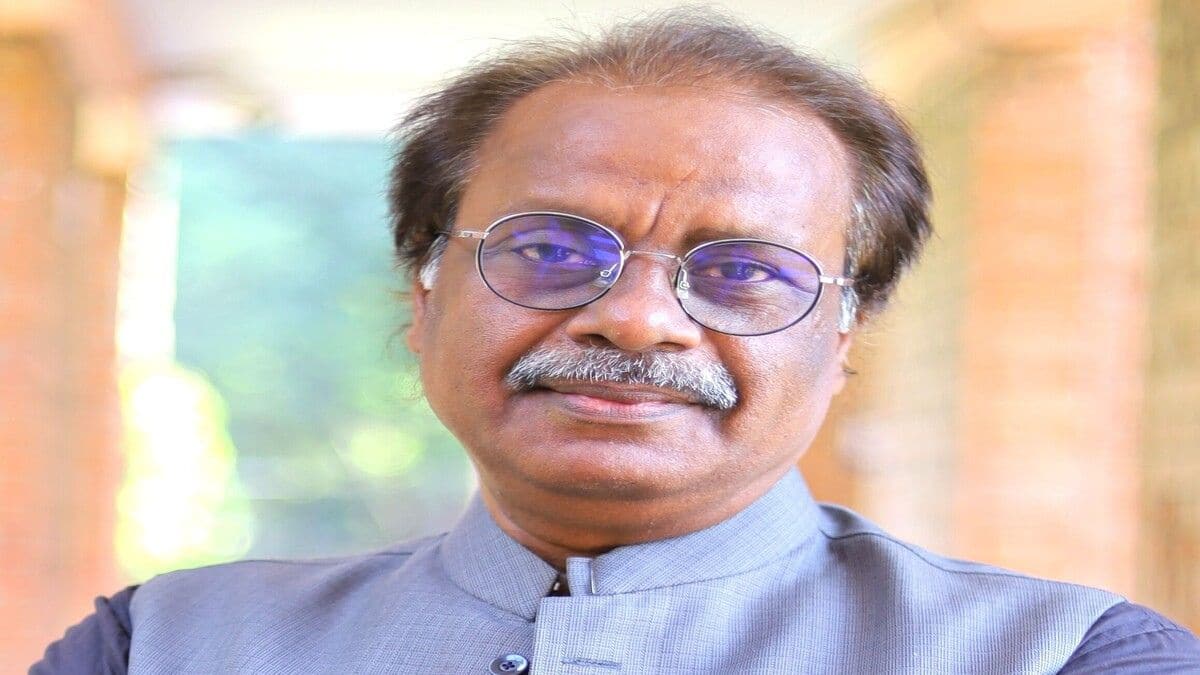
Management Development Institute (MDI) Gurgaon has been granted Category 1 Graded Autonomy by AICTE, a recognition that strengthens its academic independence, enabling it to onboard up to 20% foreign faculty and students and launch new programmes without prior approvals.
Avanish Kumar, dean, School of Public Policy & Governance and Accreditations & Rankings, and Co-Chairperson (New Initiatives), MDI Gurgaon, during a conversation with Careers360, explains what this milestone means for the institute – from greater academic freedom and innovation in curriculum design to its evolution into a multidisciplinary university. Edited excerpts:
Congratulations on the AICTE Category 1 recognition. How will this graded autonomy help MDI Gurgaon?
AICTE graded autonomy is both a recognition of responsibility and a matter of pride for MDI – for our faculty and the institution as a whole. This recognition reaffirms what MDI has been doing for decades – delivering quality education with consistency. It not only acknowledges our past achievements but also gives us the freedom to move ahead with greater responsibility.
Therefore, the AICTE recognition
- Reinforces MDI's self-accountability to set an example for many higher education institutions in pursuing quality education beyond compliance, and
- MDI AICTE Category 1 recognition is freedom with responsibility to continue towards our vision with possibilities of academic expansion from a standalone to a multidisciplinary higher education university.
If you look at the broader educational paradigm in India, it is rapidly evolving, especially after NEP 2020. During 2014-15 to 2020-21, on average, 59 universities were added annually. By 2035, the NEP 2020 target is to double enrolment in our higher education institutions from 4.33 crore to nearly nine crore (90 million) students. With extreme heterogeneity in India's education system and the aspiration to become Viksit Bharat, regulations are designed to ensure quality assurance through control and compliance.
In this context, MDI’s graded autonomy is a significant step forward. It allows us to make more responsible academic choices and set new benchmarks. It strengthens our accountability to deliver quality education beyond regulatory frameworks. It aligns with our and India's vision for evolution from a standalone management institute into a multidisciplinary higher education university.
Also read ‘IIM Ahmedabad aims to extend full or partial freeships to 40% of students’: Director
What does this “freedom” practically mean for MDI faculty and students?
That’s a good question, and I would say it’s slightly broad, but let me explain.
For students, this recognition doesn’t change our core values; it reinforces them. MDI already adheres to the highest global standards. Our accreditations, rankings, and recognitions, including those from international bodies and the NIRF, speak for our consistent quality. The graded autonomy is an added validation of that excellence. It allows us to make academic decisions more swiftly and design programmes that meet evolving global and industry needs, which will directly benefit our students. For example, with graded autonomy, an increase in the percentage of international students and faculty in the intake may broaden perspectives.
For the faculty, this autonomy brings recognition and reassurance. It affirms that the direction we’ve been working in is the right one. At MDI, we are not rule-driven; we are role-driven. Our motivation comes from academic purpose more than mere financial gain.
This freedom gives us room to innovate, to introduce new programmes and courses without being constrained by annual approval cycles. It empowers both faculty and the institution to expand academically with ease of administration while staying true to our vision of quality education.
How will this recognition help MDI attract international students and faculty?
Historically, Indian education attracted scholars from around the world – think of Nalanda and Takshila. MDI now looks forward to reviving that spirit. This graded autonomy, combined with India’s evolving global position, will enable us to attract more international students and faculty.
It encourages cross-fertilisation of knowledge and experience in an interconnected world. International students will be able to learn management and policy-making rooted in Indian values, ethics, and sustainability.
Our leadership is already proactively engaging global talent, including students and academics.
Also read ‘IIM Calcutta’s new programmes to include 40% AI-based content’: Director
MDI Gurgaon was already known for its interdisciplinary nature. What new schools are being planned as part of this transition to a multidisciplinary university?
You may recall the evolution of MDI since its inception, from capacity building to long-term programmes. In terms of Schools, MDI began its diversification in 2006 with the School of Public Policy and Governance, which offered programmes in energy management. Today, we also have the School of Management of Financial Institutions.
We are in the process of becoming a multidisciplinary university, aligned with NEP 2020. NEP requires standalone institutions to either evolve into multidisciplinary entities or join a cluster. In contrast, MDI, given its legacy and brand, prefers to expand organically into an interdisciplinary university by adopting courses on emerging technologies, liberal arts, and related subjects.
Upcoming schools may focus on liberal arts, entrepreneurship and technology (including AI and decision science), and innovation and data science. The aim is to integrate technology, sustainability, and values into business education. MDI Gurgaon aims to be a globally recognised management school through academic excellence and continuous innovation, nurturing responsible leaders to create sustainable alternatives.
Is there any plan to start programmes in healthcare management?
Not at present, but we do have faculty members researching areas such as neuroscience, decision-making, and marketing in the healthcare sector. As far as I know, any program requires a hospital and supporting infrastructure and facilities to operate for health-related degrees in India.
Healthcare is a specialised field with multiple dimensions, and we don’t intend to compete with medical institutions. Instead, we wish to supplement and complement, if in the future an opportunity arises to partner and may be designing management and leadership programmes in collaboration with healthcare and medical institutions.
After the AICTE recognition, how do you see MDI evolving?
MDI was among the first Indian institutions to launch a global exchange programme, the PGDM in International Business, in partnership with ESCP and EM Lyon (France).
We plan to expand such collaborations further. Graded autonomy allows more flexibility to design global curricula, create exchange programmes, and host international immersion experiences.
However, we must also note a systemic issue – while around 1.8 million Indians study abroad, only about 50,000 international students come to India each year (ICER 2021 data). We aim, along with the government's vision, to reverse that trend and make India once again a global education hub.
We also aim to attract global faculty, including members of the Indian academic diaspora abroad, to collaborate on research, training, and publications. For example, currently, every PhD candidate at MDI must have at least one international member on their Thesis Advisory Committee. Such practices already reflect our global mindset.
Yes, but few. We have students from medical and allied disciplines, including MBBS candidates and specialists such as psychiatrists, who join our MBA programmes. Some of them wish to transition into leadership roles in healthcare, pharmaceuticals, or research management. While they understand medicine, they may lack business acumen. MDI equips them with these competencies.
I understand the challenges young doctors face – long hours, limited pay, and career uncertainty – which push some to explore management as a route to balance service with sustainability. However, to the best of my knowledge, this subject requires you to delve further into the faculties of medical institutions and students' perspectives.
Also read CAT 2025: Four IIMs exit Common Admission Process to join JAP 2026, leave MBA aspirants confused
Any closing thoughts?
The recognition by AICTE is not just a milestone for MDI Gurgaon — it’s an affirmation of the Indian management education system’s maturity. We are ready to take on the role of a model institution that blends freedom with responsibility, technology with ethics, and Indian values with global relevance.
Our journey ahead is about expanding academically while staying true to our mission of responsible leadership and nation-building.
 Add as a preferred source on google
Follow us for the latest education news on colleges and universities, admission, courses, exams, research, education policies, study abroad and more..
To get in touch, write to us at news@careers360.com.
Next Story
]Latest Education News
]Related News
]NEET PG Counselling 2026 LIVE: MCC round 1 college reporting from October 26; MD, MS cutoffs
Kerala University VC says no move to ban student politics, stresses need to curb violence
NIIT University holds 16th convocation, announces 100% placements for 2026 graduates


