
Delhi University’s MAMC, UCMS draw NEET toppers but offer dead computers, lagging wi-fi, and delayed degrees
Shradha Chettri | June 30, 2026 | 03:01 PM IST | 6 mins read
MAMC’s library computers, swimming pool lie defunct, MBBS students battle staff shortage; UCMS lacks MRI machines, auditorium, its playground to a stalled construction project
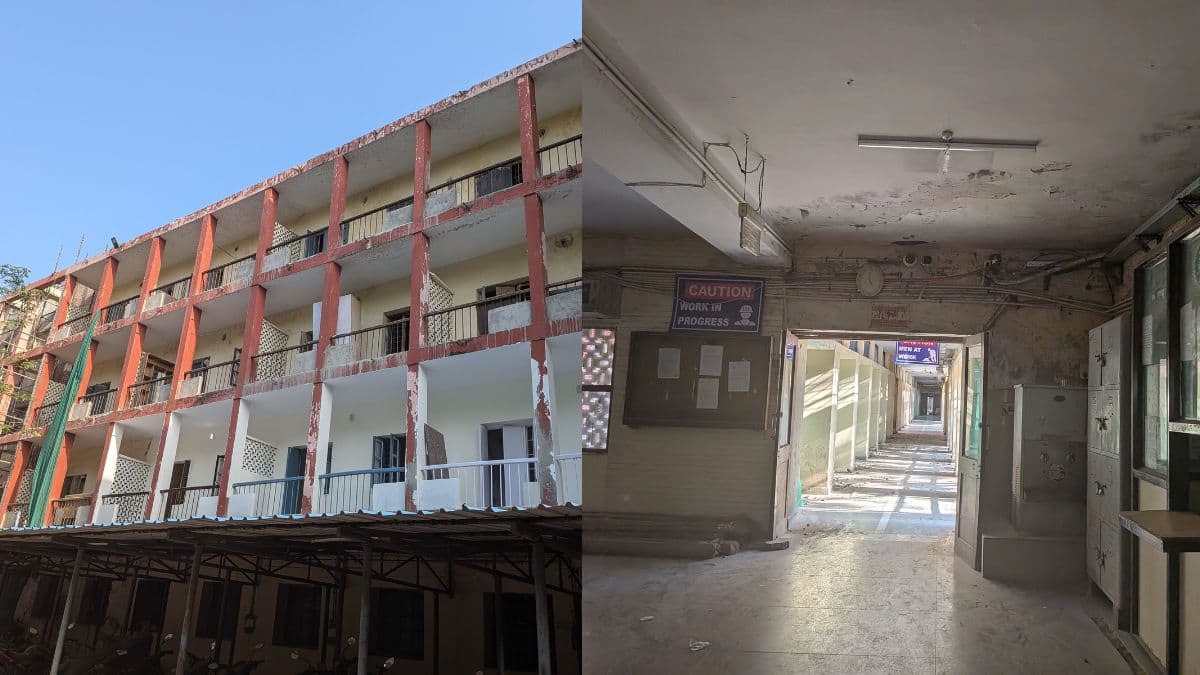
“India is digitising, but not us,” a final-year student at Maulana Azad Medical College (MAMC) puts it simply. In one of Delhi’s older and most competitive medical colleges – where National Eligibility Entrance Test (NEET) high scorers secure seats – the library computers are non-functional, there is no proper wi-fi, lecture halls are cramped, buildings are dilapidated, and the attached hospitals have outdated technology.
The University College of Medical Sciences (UCMS), on the other hand, is not directly under the control of the Delhi government; the associated hospital – Guru Tegh Bahadur Hospital – which the Delhi government manages is without upgraded technology. Students say they have never seen an MRI machine even though Delhi High Court has on several occasions issued orders and the number of seats have not increased since 2021. Earlier the intake was 150.
Both these colleges admit 85% of students who are residents of Delhi, the rest come from All India quota; and both are affiliated to Delhi University, which has over the years meant delayed degrees and physical forms for examinations.
In April this year, Lady Hardinge Medical College, the oldest medical college in the national capital saw protests by students over poor facilities. The college, however, is under the Ministry of Health and Family Welfare.
Students from these colleges feel that due to the degrading infrastructure, they are not able to keep up with the changing world; it has also affected their rankings.
MAMC, UCMS: NIRF ranking in last 5 years | |||||
|---|---|---|---|---|---|
Institute | 2021 | 2022 | 2023 | 2024 | 2025 |
MAMC | 17 | 23 | 32 | 24 | 26 |
UCMS | 30 | 28 | 36 | 32 | 38 |
MAMC infrastructure
MAMC, established in 1958, admits 250 undergraduate students every year. But its infrastructure, students say, has barely evolved since the college had an intake of 180 around 20 years ago.
A final year MBBS student told Careers360 anonymously: “There have been years where 10 students have shared one room, which meant there were no tables to sit and study. The washrooms are common, even for PG students who pay Rs 18,000 hostel fee.”
The only respite is that students can eat their meals from any of the five-six messes on campus. “Here too the administration decides the vendor and controls the menu.”
In April this year, as per a Times of India report, “Delhi government approved a comprehensive redevelopment plan for the 137-acre MAMC campus.” According to The Hindu, the government sanctioned Rs 573.41 crore for the construction of two new hostels.
When Careers360 visited MAMC, the renovation work of some hostels were underway. “This renovation has started after a really long time. Until the building actually comes up, it is difficult to believe the government,” said another student.
The lecture halls are also extremely cramped, said the student. “Not just lecture halls, even the faculty rooms are leaking. Even if the college files complaints, the Public Works Department (PWD) doesn’t take up the work in time. Our swimming pool has been closed since 2018,” said the student. Most students Careers360 spoke to requested to remain anonymous.
The library is meant for the 1,250 MBBS students and 750 PG medical students. But it can hardly fit even one-third of them at any given time. And the building that houses it is itself in visible disrepair.
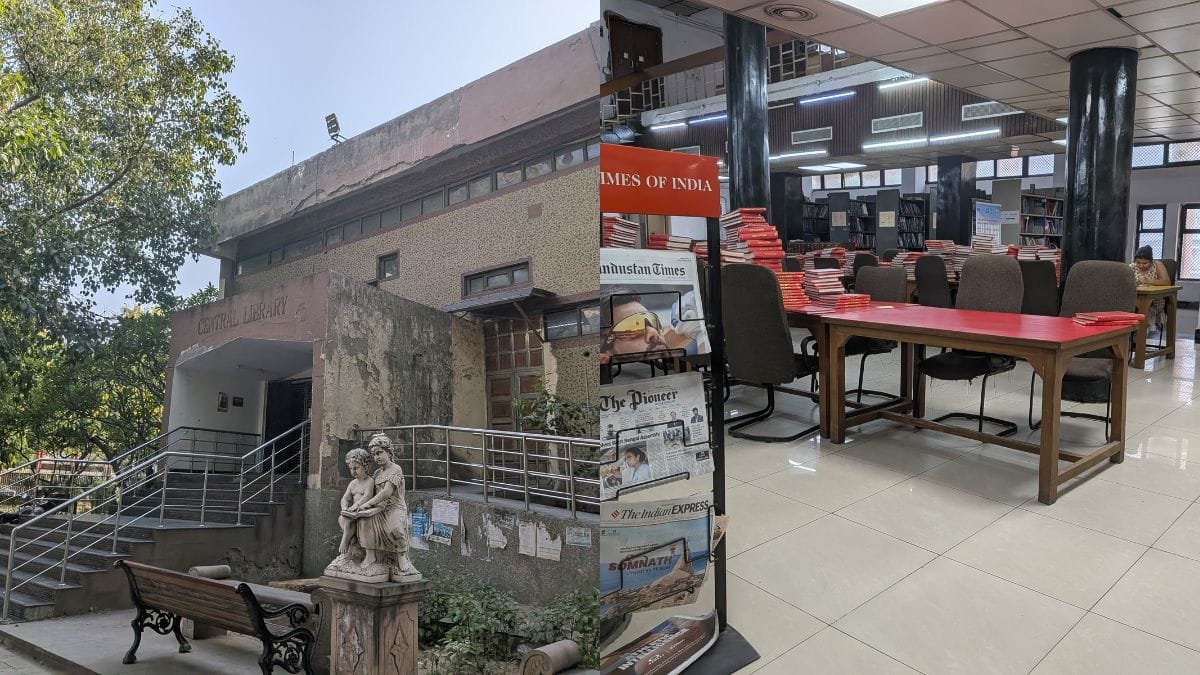 Central Library at MAMC. (Image: Careers360)
There is no wi-fi and students use their own internet to sit and study in the library. Even the faculty do not have official email-ids. The library attendant said, “Now the three very old computer systems which were working have also become non-functional.”
Also read NEET Exam: Why more women qualify, top the lists, but still can't make it to AIIMS
MAMC associated hospitals
MAMC students have to visit three hospitals – Lok Nayak Hospital, GB Pant Hospital, Guru Nanak Eye Centre and Maulana Azad Institute of Dental Sciences (MAIDS).
“The private hospitals have robotic technologies and now Artificial Intelligence is being integrated, but the hospitals we go to for our coursework are living in another era. Some of the NEET high rankers get admitted to MAMC but there are no new facilities being brought in,” said a student.
In January this year, as per Hindustan Times, “University of Delhi has given the requisite academic and regulatory approval for the establishment and operationalisation of the department of Medical Genetics at Maulana Azad Medical College and Lok Nayak Hospital.”
Students at UCMS also have similar problems with their associated GTB hospital. Abhinav Kumar Anand, the president of the student union at the college, told Careers360, “UCMS started BSc in radiography and BSc in medical laboratory science but students have not seen an MRI machine. We can read the reports but don’t know how it actually works.”
The hospital also does not have departments such as cardiology and other specialisations. Patients are referred to Rajiv Gandhi hospital. The hospital recently started a geriatric department but the outpatient department (OPD) works only on Sundays.
“We really have not seen real geriatric problems. PG students here are mostly doing clerical work due to shortage of staff. There is also a significant number of Senior Resident vacancies that remain unfilled,” said Anand.
UCMS: No auditorium, sports facility
While UCMS does not face the same degree of deterioration as the MAMC, it has its own set of persistent problems – irregular supply of drinking water, non-functional water coolers and hostel rooms without air conditioning through Delhi’s punishing summers.
The college lost its playground to a construction project that was subsequently stalled midway. “During the earlier government regime a three-storey building was being made with an oxygen facility on the ground. But there was an objection and the building has been left half-built ever since. It could have been used to open newer departments or expand the hospital. But no one has really cared about it,” added Anand.
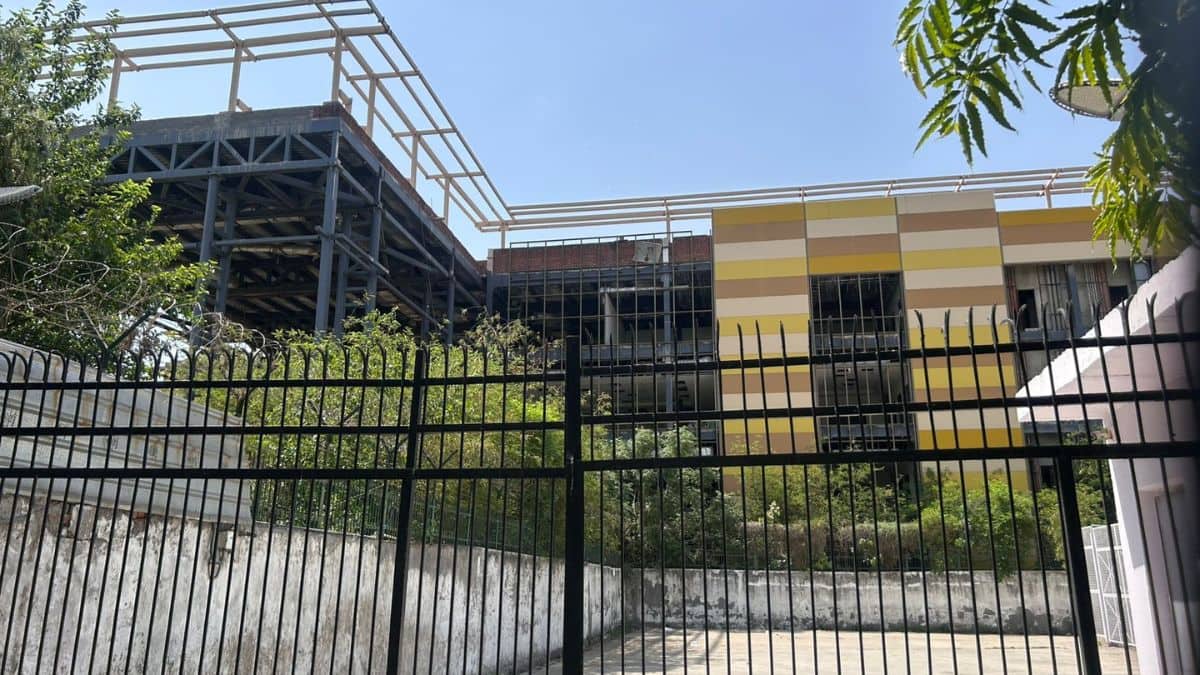 The half constructed building at UCMS. (Image: Careers360)
UCMS is affiliated to DU and receives funds through the UGC, while GTB hospital is under the Delhi government. In 2024 the Delhi government had announced plans to bring UCMS under its administration, but teachers moved court. The proposal has been in limbo leaving the college caught between two authorities.
Delhi University: Delayed degrees, physical forms
Both MAMC and UCMS are affiliated to the Delhi University which holds authority over their examinations and degree conferment. The introduction of the newer curriculum and courses in these colleges require approval from the executive council of the university.
A student at MAMC complained, “Even at this age and time we have to come to the college, collect the form and physically go and submit it at the examination department of the university. There is no provision of online payment of examination fees as well. But the examination fees, irrespectively, have been increasing.”
In case of UCMS, students have to fill the form physically but they can submit it at the college and pay fees online as well.
However, for both the college students, degrees come after almost one and half years of their graduation. “The delay started during COVID and it has continued since then. The degrees come to us almost one and half years after we have completed our internships,” said Anand.
Delhi University acknowledged that the form filling process for these medical colleges are still offline.
“There were meetings held to make the form filling process online, but due to some issues it hasn't been done. However, we are working on it,”said a senior official.
The delay in degree as per the official is because these colleges delay the submission of the completion certificate.
The Delhi government officials could not be reached for comment on the matter.
 Add as a preferred source on google
Follow us for the latest education news on colleges and universities, admission, courses, exams, research, education policies, study abroad and more..
To get in touch, write to us at news@careers360.com.
Next Story
]IIIT Allahabad fines B.Techs who accept campus placement offers and then take other jobs, allege students
IIIT Allahabad placement rules provide for penalties for failure to join after accepting job or internship offers. Some students call it harassment; other say it protects relationship with recruiters, opportunities for future batches
Sheena SachdevaLatest Education News
]Related News
]FT 2026 Rankings: IIM Bangalore takes 11th spot; SPJIMR, MDI, IMT join global top 25
CJP Protest: Delhi Police detain students, party leaders; some take shelter at Bangla Sahib
Delhi University facilitates financial support for faculty member's child with rare genetic disorder


