
‘Not fashion design’: JK Lakshmipat University focuses on design as tool to solve problems, says director
Pritha Roy Choudhury | June 22, 2026 | 12:32 PM IST | 6 mins read
‘Design is not about making things look attractive; it is a serious discipline focused on problem-solving,’ says JKLU Jaipur’s Institute of Design director
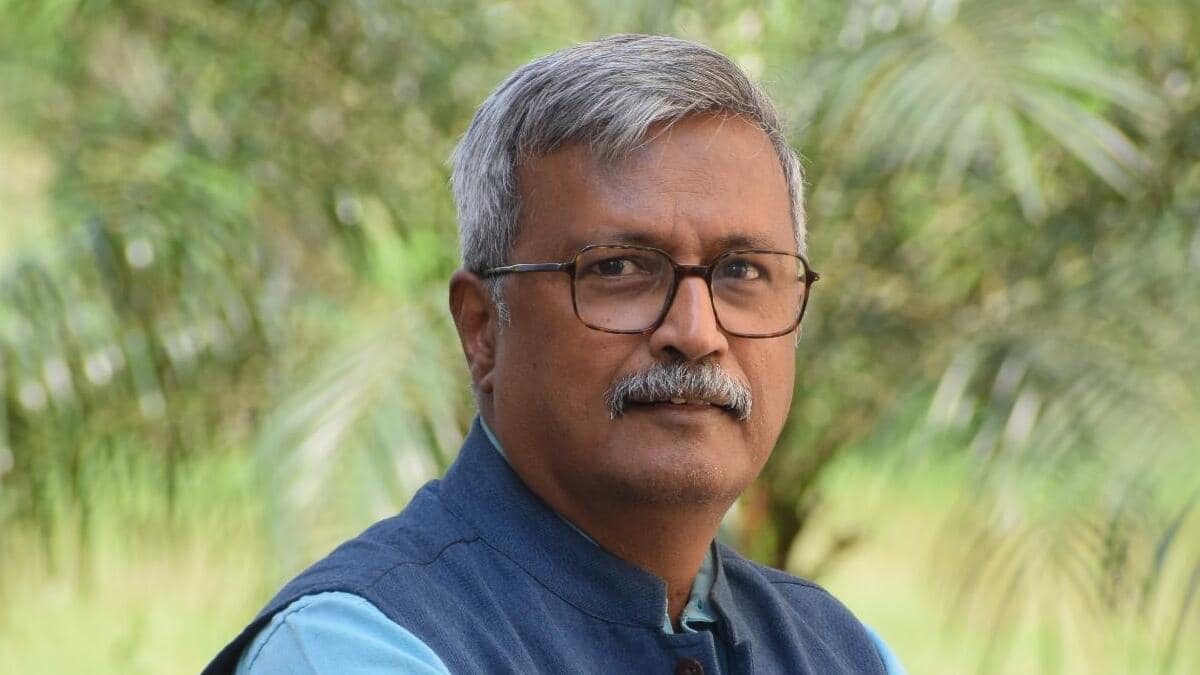
A Balasubramaniam has gone from designing products to shaping institutions. The founding dean and now director of the Institute of Design at JK Lakshmipat University (JKLU) Jaipur, has played a key role in shaping contemporary design education in India. In conversation with Careers360, he discusses the growing interest in design education, the role of artificial intelligence in design, the future of the profession, JKLU’s programmes, and why India needs many more designers to solve real-world problems.
Are you seeing increased interest in design programmes?
Yes. In fact, this year we have received the highest number of applications since the institute started [in 2018]. That shows a remarkable increase in student interest in design. More students now see design as a serious career option. This is encouraging. Young people are increasingly interested in solving problems creatively, and design offers that opportunity.
Design has always been interdisciplinary. The concept of design thinking is now applied across sectors and domains. A person can learn design thinking and apply it within their own field. Whether you are a tailor, engineer, entrepreneur or healthcare professional, design thinking helps you understand problems better and develop innovative solutions. That is why interest in design is growing among people from diverse backgrounds.
Also read NCERT teaching shame, not respect; blurring of Mohenjo-daro ‘Dancing Girl’ in book draws criticism
What were the first programmes introduced at the Institute of Design?
We started with product design, interdisciplinary design and interaction design. Later, we introduced integrated communication design. Interaction design goes beyond user interface or user experience (UI/UX). It focuses on how people interact with products and systems. For example, designing a washing machine interface that can be easily understood by different users is also interaction design.
One of our students designed an improved adult diaper solution for elderly care and secured design rights for it. Another worked on medical devices and hospital equipment. Healthcare is one of the sectors where design can make a significant difference.
Integrated communication design combines different forms of communication design, including animation, publication design, graphic design, film and video. Students learn both traditional and digital methods. Designing for print is different from designing for digital platforms, and our students learn both.
Also read Anna University students piece together BTech courses as faculty gaps lead to fragmented teaching
We offer a four-year Bachelor of Design (B.Des) programme for students after Class 12 and a two-year Master of Design (M.Des) programme for graduates from various disciplines. While B.Des students can pursue specialisations in product design, interaction design, interdisciplinary design and integrated communication design, M.Des specialisations include product design and interaction design.
What gap were you trying to address when you founded the institute?
Many design schools focus heavily on fashion design. We wanted to create something different. We wanted students to understand design as a tool for solving complex problems.
Design has evolved from products to systems and now to strategy. Today, organisations use design thinking to make management decisions and create business strategies. Design is not about making things look attractive; it is a serious discipline focused on problem-solving.
What do you look for while admitting students?
Creativity is the most important criterion. We look for students who are problem-solvers and can demonstrate original thinking. We evaluate portfolios carefully. A student does not necessarily need to be good at drawing. Someone who shows creativity through woodworking, model-making or any other medium can also be a strong candidate.
They should have creativity, empathy and curiosity.
Design is fundamentally about understanding people and solving their problems. We look for students who observe the world around them and are sensitive to challenges faced by others. Empathy is one of the most important traits of a designer.
Students from science, commerce and humanities backgrounds can all pursue design. We are more interested in talent and creative ability than academic streams. Product design may be easier for students of science background, but it is not mandatory.
How do you assess creativity during admissions?
We look for evidence of sustained creative engagement. Sometimes students surprise us with unusual examples. One applicant claimed that he knows 24 different ways of making eggs. Another had built a large social media following through original content. We look for talent that can be nurtured and developed further.
How does the institute ensure its curriculum remains globally relevant?
We continuously update our curriculum. Our institute received the Don Norman Design Award for its humanity-centred approach to design education. The jury specifically appreciated our curriculum and suggested it could serve as a model for others. We believe our programmes are aligned with international standards.
All students undergo a common foundation year. After that, they choose their preferred discipline based on their interests. We believe students should be allowed to make informed choices rather than being assigned disciplines solely based on grades.
Also read Across universities, 4th year of NEP’s FYUP more about confusion than research or practical training
What impact is artificial intelligence having on design education?
AI is transforming design. We treat it as a powerful tool rather than a threat. Last year, we made it compulsory for students to use AI in their projects. We conduct AI masterclasses and integrate AI into studio projects. Students are encouraged to experiment with AI tools and understand their capabilities. At the same time, they learn to use these tools critically rather than blindly accepting AI-generated outputs.
AI helps students generate multiple concepts quickly and explore possibilities they may not have considered otherwise. It allows them to work faster and more efficiently.
Some students worry AI may replace designers. What do you have to say?
No. AI will create opportunities rather than eliminate them. Designers still need critical thinking skills. AI can generate options, but it cannot decide which option is the most appropriate. Designers must define the problem, evaluate solutions and make informed decisions. Those human capabilities remain essential.
Also read IITs will test new JEE Advanced format on first-year BTech students this year: IIT Kanpur director
Why did you decide to establish a new design institute?
I was approached to create the institute by the JKLU leadership, who were keen to create a design school. I spent a year consulting industry leaders and designers. We wanted to build something contemporary rather than replicate models that had existed for decades. We deliberately chose not to offer fashion design and instead focused on areas where we believed there would be greater demand and impact.
What kind of industry exposure do students receive?
Students work on internships and graduation projects with organisations across different sectors. Over the years, we have collaborated with nearly 200 organisations. These experiences help students understand real-world challenges and improve their employability.
Also read Jamia Millia Islamia student’s project can help Delhi’s unauthorised colonies ride out a heat wave
What is the future of design education in India?
The opportunities are enormous. Almost every sector requires design intervention. From public services to healthcare, transportation and consumer products, there is immense scope for designers. India can easily absorb many more design professionals than it currently produces.
What has been your biggest design project?
This institute itself. Earlier, I designed products. Today, I design institutions. Building the Institute of Design has been a design project in itself, and seeing it grow and produce capable graduates has been deeply satisfying.
 Add as a preferred source on google
Follow us for the latest education news on colleges and universities, admission, courses, exams, research, education policies, study abroad and more..
To get in touch, write to us at news@careers360.com.
Next Story
]From farm work at 10 to Padma Shri at 70: Mahendra Nath Roy’s journey to become world’s top 2% scientist
From a West Bengal village boy who earned a PhD from North Bengal University to founding the Alipurduar University – Mahendra Nath Roy’s BSc to PhD journey in chemistry is a masterclass in choosing education over every easier option
Pritha Roy ChoudhuryLatest Education News
]Related News
]Delhi University 103rd convocation on Nov 20; 92,000 students to receive degrees, Amit Shah chief guest
IIT Hyderabad to organise international conference ‘PHOTONICS 2026’ in December
IIT Bombay Protest: Faculty question who authorised police to enter campus, detain students


