
No VC, no recruitment: NSOU in limbo for 2 years; new campus unused, students stuck in NEP transition
Pritha Roy Choudhury | January 10, 2026 | 01:46 PM IST | 7 mins read
Netaji Subhas Open University faculty say prolonged absence of a permanent VC has stalled teacher recruitment, research funding amid NEP implementation; NIRF ranking slips
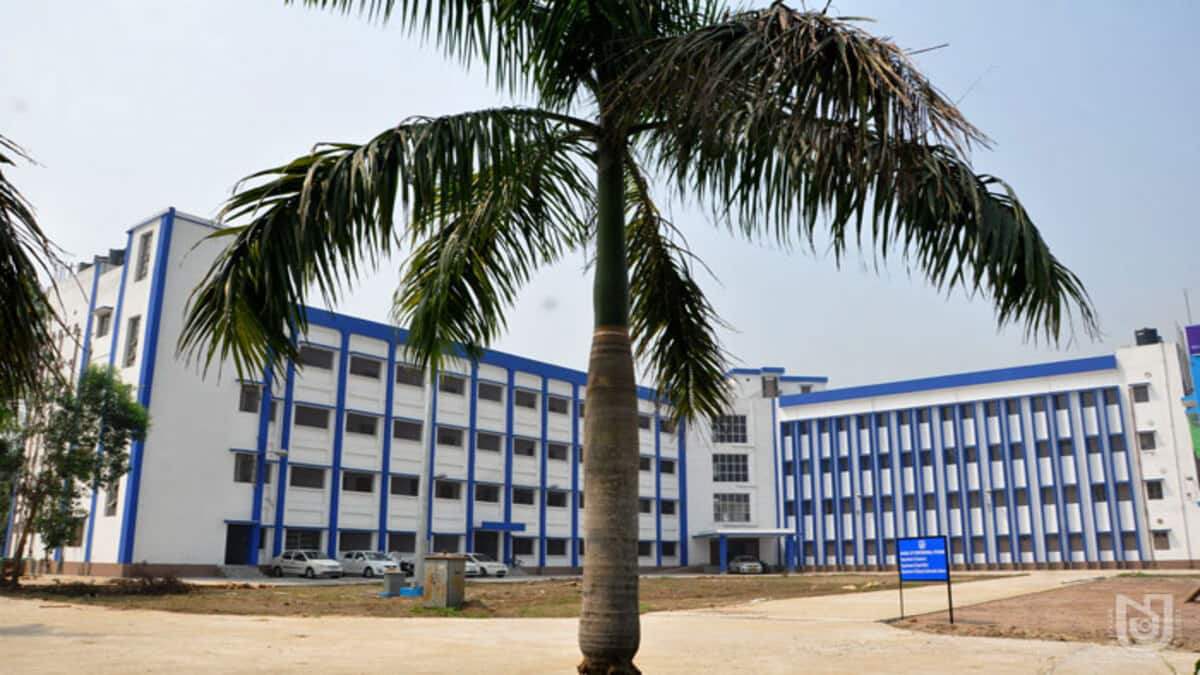
A fully-equipped state-of-the-art campus in Kolkata has stood vacant for two years – not for lack of funds, but for lack of leadership. At Netaji Subhas Open University (NSOU), West Bengal, the absence of a vice-chancellor has brought decision-making to a near standstill, leaving faculty unable to shift to the new integrated facility, students caught in policy transitions, and PhD courses in administrative limbo.
“The absence of a VC is really hampering us,” says Anirban Ghosh, professor of Zoology at NSOU. “Earlier too, we just had officiating VCs. They could only take care of routine matters, but not the larger policy decisions that the present moment demands.”
And the timing could not be worse. As the National Education Policy (NEP) 2020 aims to reshape higher education in India – demanding upgraded laboratories, industry collaborations and new curricular structure – NSOU finds itself unable to respond. Nearly every major decision requires approval from a vice-chancellor who does not exist.
NSOU headless, reforms stalled
The last permanent VC at NSOU, Professor Shubho Sankar Sarkar, completed his term in September 2022. Since then, the university has functioned without permanent leadership at the top. Even officiating arrangements have lapsed in recent months.
“Some universities have received VCs, or many have not. But without these changes being implemented at NSOU, we will not be able to cope with other universities across the country that have already aligned themselves with NEP,” Ghosh said.
Also read Governor as Chancellor: Colonial-era role being used to ‘choke’ universities in opposition states
The vacuum extends beyond the VC office. Key positions, including that of the registrar and finance officer, are being held in officiating capacities. “The administration understands the problem, they are unable to help. We cannot really blame individuals; the system itself is constrained,” added Ghosh.
“Because of this, long-term planning and decisive governance are simply not happening,” said Bornona Guhathakurta Banerjee, professor, Political Science at NSOU.
NEP implementation at critical juncture
West Bengal has begun implementing reforms under NEP 2020, and the policy’s impact is being felt most acutely by students enrolled in laboratory-based and practice-oriented programmes.
“The irony is that NEP is being implemented in West Bengal now, and all the policy-related changes are happening at this very moment,” Ghosh explains. “The maximum impact of NEP is being faced by students. This is not limited to science alone, but to any discipline that requires hands-on laboratory or practical training.”
Under NEP, the introduction of a four-year undergraduate structure and the reconfiguration of postgraduate programmes have placed new demands on universities. Practical-based subjects, internships, and research components now require upgraded laboratories, access to external facilities, and formal collaborations.
“As per NEP, the fourth year has been introduced, and in many cases undergraduate and postgraduate structures are being merged,” says Ghosh. “This means universities must provide enhanced laboratory infrastructure, sign MoUs with research institutes, collaborate with NGOs, and even engage with industry. But all of this requires institutional decision-making at the highest level.”
NSOU students caught in NEP transition
Despite challenges, NSOU continues to attract a diverse student base. “We have a large number of students enrolled in programmes such as Diploma in Medical Laboratory Technology (DMLT) and Medical Laboratory Technology (MLT), at both UG and PG levels,” Ghosh said. “Students increasingly prefer open universities because of the flexibility they offer. We have learners from across domains, and in many ways, we are at an advantage compared to traditional universities.”
That advantage, however, is at risk. “If the status of NSOU continues to be like this, we will start doing worse,” he cautions. “This needs to be looked into on priority. We need to hold on to the positive trend, but our well-qualified faculty is feeling increasingly demotivated.”
The consequences are particularly severe for students navigating the transition phase. “How will students deal with this overlap and transition?” Ghosh asks. “No one in the university is able to help them adequately, because every decision has to go through a process that is currently frozen.”
NSOU integrated campus: Built but unused
One of the most visible symbols of administrative paralysis is the integrated campus at New Town, Kolkata. Fully constructed and equipped, the facility was meant to bring academics, administration, finance, examinations, and laboratories under one roof. “Instead, everything is stalled, and faculty are forced to work in a disintegrated manner, which directly affects how we serve our students,” Ghosh explained.
It has remained unused for nearly two years. “It is because a proper handover process has not happened, solely due to the absence of a permanent VC,” Ghosh said.
For departments that depend heavily on laboratory access, the delay has had direct academic consequences. Niladri Sekhar Mondal, professor of Environmental Science at NSOU, said the crisis has been unfolding alongside the expansion of programmes.
“I was recruited in 2019,” Mondal says. “Our postgraduate course was introduced two years ago, and almost simultaneously the VC position became vacant. From that point, decision-making became a problem.”
The situation intensified when the department began offering doctoral programmes. “In 2025, we started PhD programmes as well,” he said. “For PG courses we need a well-established laboratory, and for PhD we require far more sophisticated research infrastructure. We are simply not getting access to those laboratories.”
The integrated campus, faculty members had hoped, would address this gap. “We are waiting for the campus to become functional,” Mondal says. “We hope to have a proper research laboratory there. Only when I have a lab can I apply for research funding. At the very least, we need minimum infrastructure.”
NSOU recruitment, research at standstill
The leadership vacuum has frozen recruitment across the board. Faculty hired in 2019 remain uncertain about their work locations and research facilities. No new appointments have been made since.
“There has been no recruitment after that,” Ghosh said. “Those who were recruited are still unsure where they are supposed to work, how they will access laboratories, and how they will conduct research. They are unable to teach students properly or pursue their own research.”
Funding approvals – whether from government grants, external agencies, or internal budgets – have become a major bottleneck. Even awarding PhD degrees requires formal processes and approvals that are now stuck.
“PhD students are doing their work and submitting their theses on time. But the processing of theses and subsequent actions are not happening because there is no VC to take those decisions,” Banerjee said.
The finance officer, currently on deputation, cannot take major financial decisions either. “So what continues is limited to teaching and conducting exams,” Banerjee adds.
Also read DU axe on Indian languages in BA Programme over empty seats; teachers blame CUET, vacancies
NIRF ranking slips
Faculty members point out that the leadership vacuum has begun to reflect in national assessments as well. NSOU had earlier performed strongly in the National Institutional Ranking Framework (NIRF), particularly among open universities.
“In 2024, Netaji Subhas Open University was placed just after IGNOU in the NIRF rankings,” said Banerjee. “We were in a very good position. Because of the absence of top administration, we are now lagging behind.”
“NIRF ranks only three open universities,” she explains. “Out of 16 open universities in the country — one central and the rest state universities – being placed in the top three is significant. Any slippage should therefore be seen as a serious warning sign.”
Also read With no VC, teachers or campus, Darjeeling Hills University is dying a slow death
NSOU regional centres, lab gaps
The impact is not limited to the NSOU main campus. Regional centres across West Bengal are also struggling with inadequate planning and infrastructure development. “Laboratories for subjects like Chemistry or Environmental Science at regional centres are still not being developed the way they should be,” Ghosh said.
In the meantime, departments are relying heavily on superannuated professors to keep courses running. “We are managing with retired faculty and doing our best so that students do not suffer,” he adds. “But this is not a sustainable solution.”
Banerjee echoes similar worries. “Since most of the important positions are filled by officiating staff, long-term planning and decisive governance are simply not happening.”
 Add as a preferred source on google
Follow us for the latest education news on colleges and universities, admission, courses, exams, research, education policies, study abroad and more..
To get in touch, write to us at news@careers360.com.
Next Story
]Latest Education News
]Related News
]Jamia protest latest update: Students enter campus after gates reopen, allege assault by security personnel
MICA collaborates with Aranya Sahay; announces creative fellowship for marginalised filmmakers
IIT-Kharagpur's solar-powered cart aims to make street vending more flexible


