
What changes with AP Draft Coaching Rules? 5-hour cap, fee refunds, district panels with ‘civil court powers’
Sheena Sachdeva | February 27, 2026 | 02:14 PM IST | 8 mins read
AP draft coaching rules bring junior colleges under purview, bans display of student ranks, mandate wellness cells, week offs; district committees can inspect without notice, initiate inquiries
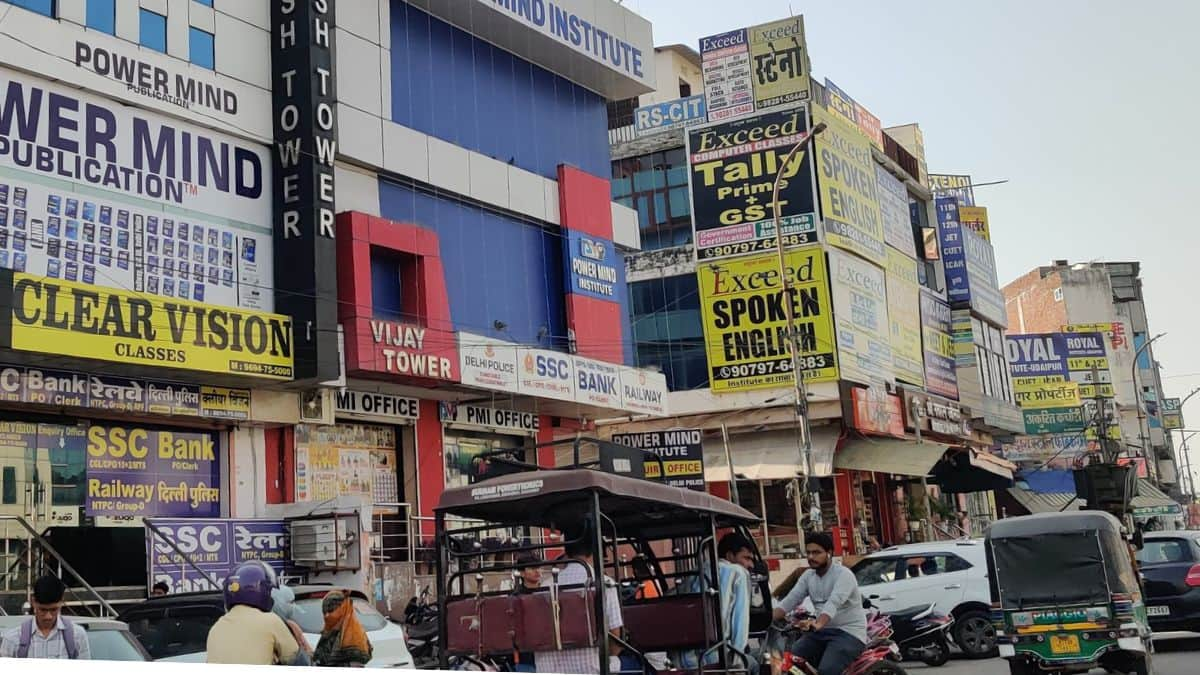
Andhra Pradesh’s draft rules to regulate coaching centres, released on Monday, hand district level monitoring committees (DLMC) sweeping quasi-judicial powers – including authority to summon records, conduct surprise inspections, and cancel registrations – while simultaneously introducing some of the strictest student protection norms – no public display of ranks, no classes during school hours, mandatory weekly offs, and a wellness cell in every institute.
The Andhra Pradesh Coaching Institutions (Regulation And Control) Rules, 2026, state that DLMC have “vested power” of a “civil court”.
Lokesh Nara, minister of human resources development, AP shared the draft rules through a social media post on Thursday afternoon inviting public suggestions. “The mental health, safety, and overall well-being of our students remain our highest priority. These proposed rules aim to create a stress-free, transparent, and supportive learning environment across coaching centres in the State,” he said in the post.
The AP draft rules are a significant departure from Rajasthan’s Coaching Centres (Control and Regulation) Act, 2025, passed last year, that vests primary regulatory powers in a state-notified competent authority with 24x7 student helpline and few other restrictions. The AP rules aims to regulate coaching institutes by decentralising enforcement, expanding the regulatory scope of the district-led body, and finally introducing legally enforceable compliance mechanisms, which haven't been done by any other guidelines or bills so far.
Also read Not Just JEE, NEET: Plans for IIT Kanpur - SATHEE go far beyond coaching to ‘routine school support’
AP Coaching Institute Rules: District collector as regulator
The regulatory powers of coaching institutes, as per the draft rules, lie in the district level, and not state-level bureaucracies, which has been usually a norm in other coaching institute bills. According to the draft rules, “a DLMC shall be constituted in every district,” with the district collector serving as the chairperson. The committee will include a superintendent of police, district education officer, district intermediate education officer, one advocate nominated by the district collector and one non-governmental organisation actively working in mental health or education, nominated by the district collector, among other members.
The rules position the DLMC as the main external grievance redressal body for students and stakeholders. “The DLMC shall act as the primary external repository for grievances, providing a safe harbour for complainants who fear institutional retaliation,” the rules add. This provision enables students, parents, or staff to approach district authorities directly rather than relying solely on internal institutional mechanisms.
The committee is authorised to initiate investigations independently. The draft rules state that “the committee shall have the power to initiate inquiries suo moto (on its own motion) based on media reports, police FIRs, or statistical anomalies in the annual compliance reports”. They also explicitly vest the DLMC as the competent authority “with the powers of a civil court”. This includes the authority to summon records, individuals, and third parties connected to coaching institutions, as per the rules.
The draft specifies that the DLMC can also summon “third parties”, including “wardens of associated hostels (even if third-party) where students reside.” The draft rules grant inspection powers to the DLMC or authorised officers.
Also read The other Kotas: Inside the new NEET, JEE coaching hubs
AP Coaching Centres: Study hours, wellness cells, fees, penalties
The draft AP rules prohibit coaching institutions from operating parallel to formal schools, stating that “no coaching institution shall conduct classes during the standard school/college hours that have been prescribed by affiliating or recognising authorities,” and that students enrolled in “regular junior colleges/schools shall not be permitted to attend coaching classes during these hours”.
Further, the academic load is also regulated, with provisions stating that “coaching hours shall not exceed five (5) hours per day,” and that “a mandatory weekly off (Sunday) must be granted to all students”.
The rules introduce strict confidentiality protections. It states that “no coaching institution shall display the marks, ranks, or names of students on public notice boards or websites,” and that “assessment results must be communicated privately to the student and their parents only.”
The rules also mandate institutions to maintain confidential details related to student’s mental health. “(Ensure) a separate, secure, and confidential record system for the mental health and psychological counselling of students… (and) any breach of confidentiality by a staff member… shall constitute ‘grave misconduct’ liable for immediate disciplinary action,” it states.
The draft rules mandate institutional support systems. “Every coaching institution will establish a ‘Wellness Cell’,” and prepare an “anonymised” “Monthly Wellness Report” and an “Annual Mental Health Audit Report” which shall be submitted to the DLMC, the draft rules state.
The draft rules also establish financial safeguards and penalties. It mandates that “the fee structure for tuition and hostel must be declared in the prospectus and website.” It adds: “If a student withdraws from the course midway, the institution shall refund the remaining fee on a pro-rata basis within 10 days”.
The draft rules also clarified that “withholding original academic certificates to enforce fee collection is strictly prohibited.” The draft rules also allow penalties for not following the rules including “fine up to Rs 50,000- Rs 1,00,000,” with cancellation of registration. The rules strictly clarifies that “in the event of a student suicide where institutional negligence… is established”, the registration of the institute shall be cancelled.
The draft rules also require the coaching institutes to constitute “Internal Complaints Committee (ICC)” to address grievances and mandate that complaints be handled in “a time-bound, confidential, and victim-sensitive manner”.
Coaching Centres: Definition, record keeping, disqualification
The draft rules significantly expand the scope of regulation by defining coaching institutions based on student intake, rather than institutional classification. It states that a coaching institution includes any entity enrolling “more than 30 students per day, for any study programme, competitive examination, or academic support.”
The rules clarify that “junior colleges shall come under the purview of coaching institutions under the definition of coaching institutes,” which formally extends regulatory authority to integrated junior college coaching models that have historically operated outside direct coaching regulation.
In order to expand the coverage of the coaching institutes, the rules impose strict compliance and record-keeping requirements on proprietors. It mandates that “every proprietor of a registered coaching institution shall maintain the records in physical or secure digital format, which shall be updated daily and produced immediately upon demand by the competent authority or district committee.”
The draft rules also introduce disqualification criteria stating that “no person shall be eligible to register or continue to operate a coaching institution if they have been convicted by a court of competent jurisdiction for any offence involving moral turpitude”. The disqualification provisions explicitly include convictions under specific criminal laws, stating that individuals convicted under “the Protection of Children from Sexual Offences (POCSO) Act, 2012, or the Narcotic Drugs and Psychotropic Substances (NDPS) Act, 1985” will be ineligible to operate coaching institutions.
Further, the rules extend accountability to prior institutional conduct. It specifies that disqualification applies if a person “has been previously the proprietor of a coaching institution whose registration was cancelled for severe violations of student safety norms within the last five years.” This provision links eligibility for future registration to past compliance and safety records, enabling authorities to prevent repeat violations by previously sanctioned operators.
Coaching Classes: Infra, student-teacher ratio, registration
The draft Andhra Pradesh Coaching Institutions (Regulation & Control) Rules, 2026, prescribe minimum academic, infrastructure, and registration requirements for coaching institutions, while linking operational eligibility to compliance with staffing, space, and disclosure norms.
Under academic eligibility, the rules state that “the institution must maintain a student-teacher ratio prescribed by the relevant accrediting or recognising bodies,” placing responsibility on institutions to ensure adequate teaching capacity. Infrastructure standards mandates “a minimum carpet area of one square meter per student per class/batch” to prevent overcrowding which is a key contributor to student anxiety and claustrophobia, as per the draft rules.
To bring in existing centres under regulation, the draft specifies that “all existing coaching institutions in Andhra Pradesh must apply for registration within three months from the date of notification,” warning that “institutions failing to apply within this window should be deemed illegal entities, liable for immediate closure and heavy penalties.”
The draft rules also mandate location-specific registration and state, “the certificate of registration granted to a coaching institution is valid only for the premises indicated in the application.”
The draft rules also introduce mandatory transparency requirements through a mandatory website of every institute displaying key information including “the academic qualification of every tutor/faculty member,” “the carpet area (in sq meters) per student in classrooms and hostels,” “the actual success rate (number of students enrolled vs. number selected) for the past 3 years to prevent misleading claims and the fee structure and refund policy.”
Also read ChatGPT for education? IIT Madras director on how Bodhan AI will work and what it can do
Coaching Centres: AP rules vs other guidelines, bills
Similar to AP’s coaching institutions draft rule, the education ministry guidelines formulated and introduced in 2024 also prohibit practices like public display of ranks, excessive coaching hours, and others. But all these are regulatory advisories but not law abiding rules.
Both the centre’s guidelines and Rajasthan bill primarily focus on coaching centres explicitly classified as coaching institutes, without clearly bringing integrated junior colleges under coaching regulation, unlike AP's draft rules that integrate junior-college under coaching regulations.
But the draft rules do not touch upon enrolment of young students – mentioned in both Rajasthan bill and centre’s guidelines.
 Add as a preferred source on google
Follow us for the latest education news on colleges and universities, admission, courses, exams, research, education policies, study abroad and more..
To get in touch, write to us at news@careers360.com.
Next Story
]Latest Education News
]Related News
]Nobel Peace Prize 2026: Indian-origin Navi Pillay honoured for work on peace, international law
Anne Carson wins Nobel Prize in Literature 2026 for ‘her bold, inventive oeuvre’
NMC tightens medical advertising norms; bans AI-generated testimonials, unverified claims


