
TSBIE-BSET merger, B.Ed minimum for teaching; filling faculty posts: Telangana Education Commission blueprint
K. Nitika Shivani | February 27, 2026 | 04:49 PM IST | 6 mins read
TEC also proposes 50% pass percentage for BA, BSc, BCom courses; English medium for nursery to PG; mid-day meal scheme till Class 12; and 18% of Telangana budget to education
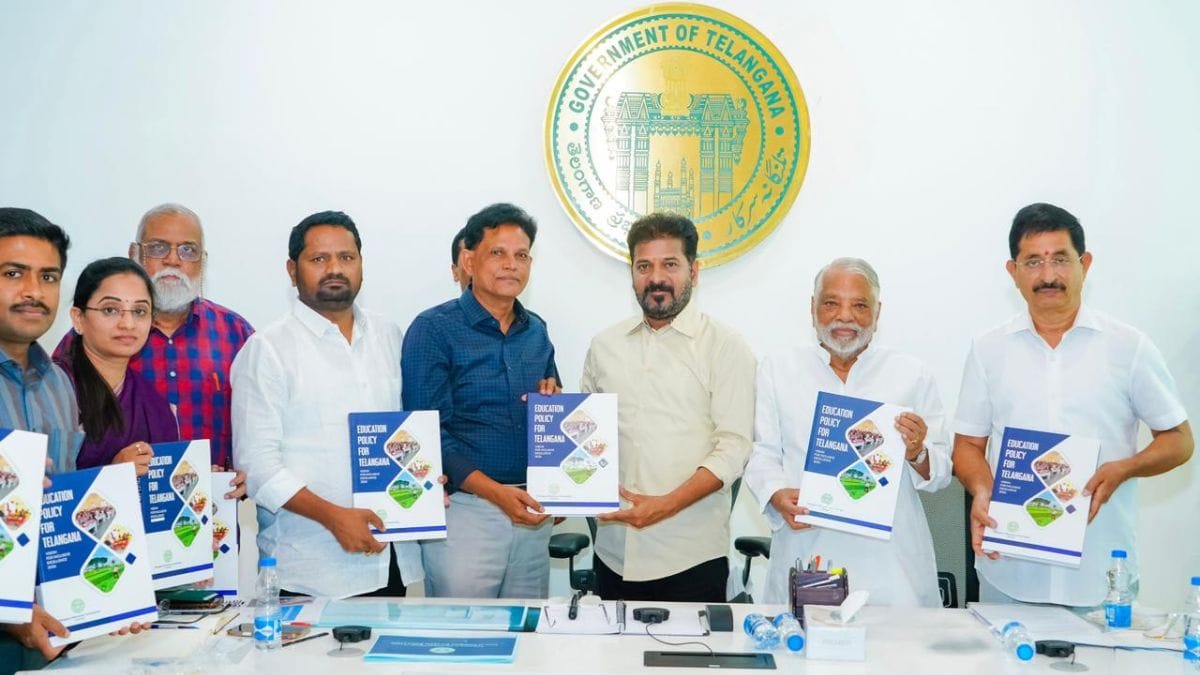
The Telangana Education Commission has recommended merging the Telangana Board of Intermediate Education (TSBIE) with the Board of Secondary Education Telangana (BSET); extending mid-day meals to students in Intermediate levels, Classes 11 and 12; a new body to help maintain quality, the Telangana Education Standards Authority (TESA); and a law for regulation of coaching.
These are among the proposals made by the TEC in its report, Education Policy for Telangana 2026: Vision for Inclusive Excellence, placed in the public domain for comment this week. Chaired by senior bureaucrat Akunuri Murali, the Telangana Education Commission was established in late 2024, in the wake of the implementation of the National Education Policy 2020.
The TEC report proposes major reforms in both school and higher education, aimed at improving retention and quality. It suggests giving the new statutory body, TESA, powers to monitor standards, both academic and infrastructural, across school and higher education.
To improve the quality of degree college graduates, the TEC recommends raising and fixing the pass percentage at 50% for BA, BSc, BCom and similar programmes across the board while retaining the three-year structure. It also sets a December 2026 target for Telangana government to fill all vacant posts in Government Degree Colleges and suggests that the government fully take over all aided colleges.
The commission recommends extending the benefits of the Right to Education Act 2009 to children aged three to 18 years – the RTE Act is a central law covering children aged six to 14 years – and establishing integrated public schools under a new law, the Telangana Public Schools Act.
Acknowledging that public funding has been inadequate or erratic, it has suggested increasing and streamlining funding – with a central bank account for mid-day meals, for example – and earmarking 18% of the state budget to education.
TEC: Telangana Public Schools for 33 lakh
The policy proposes the establishment of integrated Telangana Public Schools. Each mandal would have two to five school clusters, with at least one campus serving approximately 1,500 students from pre-primary to Grade 12.The integrated structure combines school education and Intermediate education. Proposed facilities include science laboratories, digital classrooms, libraries, sports infrastructure and Constitution Parks.
Each cluster campus would operate five buses under a public-community partnership framework. Local operators would receive 50% state subsidy and 40% institutional loan support to run transportation services. Across 632 mandals, the projected coverage is up to 33 lakh students.
English-medium from nursery to PG
While Telangana adopted English-medium instruction for schools in 2022-23, the report notes that the “system continues to encounter significant challenges”. The policy document, however, stands by the decision to adopt English statewide.
Going against the prescriptions of the NEP 2020 which favours mother-tongue as medium, the policy document says, “Telangana Education Commission strongly recommends that English be adopted as the medium of instruction across all levels of education in the state, from nursery to postgraduate studies”.
The commission also recommends making biometric attendance mandatory for teaching and non-teaching staff, with salary disbursal and leave management linked to recorded attendance.
The policy proposes replacing diploma-level teacher recruitment qualifications with stage-specific B.Ed. degrees and introducing English proficiency requirements.
It also recommends merging the Board of Secondary Education Telangana and the Telangana Board of Intermediate Education into a single exam body for Classes 9-12.
Mid-day Meals: Raise cost, include Inter classes
The policy proposes extending state-supported meals to Intermediate students in Classes 11 and 12. Payments to Women’s Self-Help Groups involved in meal preparation would be transferred through a centralised state bank account to ensure monthly disbursal.
The TEC also recommends raising the cost per midday meal, per student to better align with market rates. It also suggests a menu and eggs at least four times per week.
Students in Telangana Public Schools would receive breakfast, lunch and evening snacks.
Higher Education: Teacher vacancies, aided college takeover
The policy outlines a comprehensive reform plan for the higher education sector, covering infrastructure expansion, governance restructuring, academic evaluation changes and regulatory oversight.
Unlike the central policy which led to four-year undergraduate programmes (FYUP), the TEC suggests keeping the existing three-year undergraduate degree course in all non-technical conventional programmes but notes massive lacunae in infrastructure and quality in the institutions offering these programmes.
The report notes that nearly 80% of government degree colleges face infrastructure challenges and calls for dedicated state funding to address these gaps and prescribes infrastructure norms relating to minimum plot size, availability of washrooms, libraries, smart classrooms and laboratories.
The colleges also face acute teacher shortage with 2,606 posts vacant. The commission has said that the posts must be filled by December this year.
Government degree colleges are expected to expand to a minimum student strength of 1,000. The document also proposes establishing hostels attached to degree colleges with free accommodation and food facilities for students from disadvantaged backgrounds.
College governing bodies are to be reconstituted, with District Collectors designated as Chairpersons in place of the Commissioner of Collegiate Education. The Telangana Council of Higher Education (TGCHE) is tasked with streamlining the academic calendar and establishing a dedicated monitoring cell to ensure adherence to schedules across institutions.
The policy mandates the implementation of facial recognition and biometric attendance systems for both students and faculty by July 2026.
Telangana Higher Education: Academic reforms
In terms of academic reforms, it proposes increasing the minimum pass percentage in undergraduate programmes to 50% and restructuring evaluation patterns by allocating 30% of total marks to internal assessment components such as assignments, presentations and projects, with the remaining 70% based on end-semester examinations.
Colleges are directed to establish research cells, and the document proposes the creation of a State Academic Research Cloud to support digital and collaborative research initiatives. To strengthen employability outcomes, institutions are encouraged to introduce live skills training and finishing school modules within degree colleges. The policy also calls for adoption of the Apprenticeship Embedded Degree Programme by 2028.
Under the proposed regulatory framework, the Telangana Education Standards Authority (TESA) will monitor infrastructure compliance and academic standards across higher education institutions. For engineering colleges, the policy states that the name of the college must be printed on university-issued degree certificates and specifies that NRI quota seats must be filled through the EAPCET admission process.
Telangana Education Commission: New laws
The draft proposes three legislative frameworks.
The TEC proposes a Telangana Education Standards Authority Bill, 2026 to create an autonomous regulator overseeing institutions from pre-schools to universities. TESA will grade and rank institutions based on defined academic benchmarks. It would conduct summative assessments for students from Class 2 to 12 in state-run schools, with anonymised digital evaluation by teachers outside the student’s district.
The bill includes a provision allowing suspension of state-funded fee reimbursements for private institutions that underperform for two consecutive academic years. The governing board would include academic and industry experts and would not permit political party members to serve as chairperson.
The Private School Fee Regulatory and Monitoring Commission Bill, 2026 proposes district-level committees led by district collectors to approve upper limits on private school fees. Fee determination would consider infrastructure, teacher salaries, utilities and location. Schools would be required to publish approved fees, teacher qualifications and audited financial statements for the previous three years.
Cash payments would not be permitted. Violations would require refunding twice the excess fee to parents, along with fines of Rs. 5 lakh for a first offence and Rs. 10 lakh for a second offence. A third violation would result in withdrawal of affiliation.
The Telangana Public Schools (Establishment and Management) Bill provides statutory backing for the integrated campus model. It mandates unified pre-primary to Class 12 institutions and includes a provision preventing educational land from being leased, transferred or allotted to other departments or private entities. The bill formalises the cluster transport system and mandates mid-day meal provision up to Class 12. It also supports merging secondary and Intermediate boards.
 Add as a preferred source on google
Follow us for the latest education news on colleges and universities, admission, courses, exams, research, education policies, study abroad and more..
To get in touch, write to us at news@careers360.com.
Next Story
]Latest Education News
]Related News
]Maharashtra MBBS interns demand Rs 30,000 monthly stipend, warn of strike from November 2
J-K doubles MBBS, BDS interns' and FMGs' monthly stipend amid agitation
Medical interns in J-K restart agitation over stipend hike; allege government failed to honour assurance


