
Panel wants NTA CUET results on time, pen-paper tests; UGC recognition for Sonam Wangchuk’s HIAL
Shradha Chettri | December 8, 2025 | 04:15 PM IST | 9 mins read
Digvijaya Singh-led panel has also asked UGC to allow HEIs with NAAC grades below A+ to launch online, distance courses and NAAC to launch binary accreditation

CUET 2026 College Predictor
Use the CUET 2026 College Predictor to shortlist universities that match your performance based on expected scores.
Try Now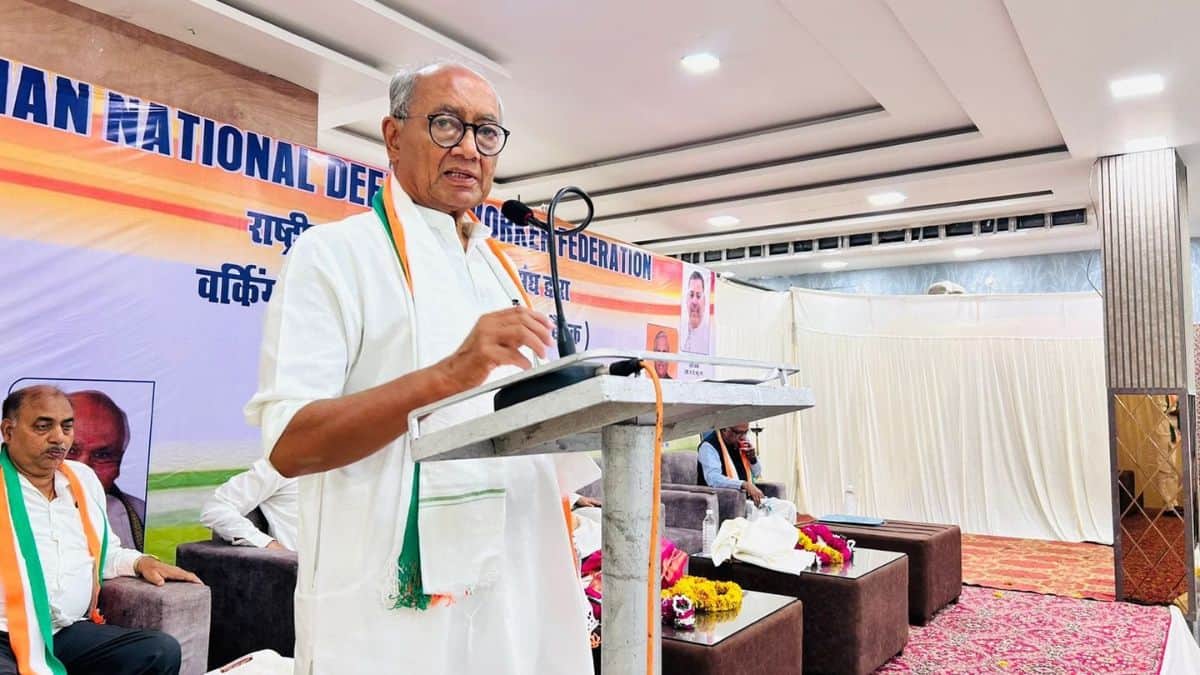
The parliamentary panel on education wants the National Testing Agency (NTA) to ensure that the Common University Entrance Test (CUET) results are declared on time so that they don’t disrupt university admission cycles. It has also suggested that the NTA explore having pen-and-paper exams, like those conducted by Union Public Service Commission (UPSC) and Central Board of Secondary Education (CBSE), and hold computer-based exams only in government and government-controlled ones.
New: CUET 2026 College Predictor | DU College 2026 Predictor
CUET UG 2026: Answer Key Download Link | Answer Key Objection Window Link
Admission Alert: UG Admissions Open @ Ahmedabad University. NAAC 'A' Grade
Reviewing the working of autonomous bodies under the ministry of education, it has asked the University Grants Commission (UGC) to recognised the Himalayan Institute of Alternatives (HIAL) – the institute run by Sonam Wangchuk, now jailed – and allow institutes without NAAC grade A+ to offer distance learning courses. It has recommended that the National Assessment and Accreditation Council (NAAC) immediately implements the binary accreditation model, which was due to be implemented in July 2024.
The body has also said that with the National Institutional Ranking Framework (NIRF), the “NAAC’s grading of institutions is extraneous”. It has also asked the UGC to ensure that teaching and non-teaching staff of UGC-funded institutions are brought under Unified Pension Scheme (UPS).
The standing committee on education, women, children, youth and sports, headed by Digvijaya Singh has also made recommendations on the draft UGC (Promotion of Equity in Higher Education Institutions) Regulations 2025 which replace regulations from 2012. It wants that the draft regulations explicitly include the harassment of students and others from the Other Backward Classes (OBCs) in its definition of caste-based harassment, include disability as an axis of discrimination and positively identify instances of discrimination.
The report was tabled in the Lok Sabha and presented to Rajya Sabha on Monday.
On NTA’s performance
The committee’s report says that the “NTA’s performance in the last year has not inspired much confidence”. It points out that in 2024 alone, of the 14 exams NTA is in charge of, five faced major issues and as a result, three – UGC NET, CSIR NET and NEET PG – had to be postponed. One, NEET UG, saw instances of paper leaks and one examination, CUET results were postponed.
The panel has also taken note of how during the Joint Entrance Examination (JEE) Main, held in January 2025, at least 12 questions had to be withdrawn due to errors in the final answer key.
“The committee observed that such instances do not inspire confidence of the examinees in the system. The committee therefore recommends that NTA needs to quickly get their act together so that such instances, which otherwise are fully avoidable, do not occur in future. The committee notes that in the last few years the results of CUET exams were not declared in time by the NTA. Such a delay is a cause of major concern,” says the report.
Also read Digvijaya Singh: ‘NEET paper leak shows how BJP functions…corrupt people chosen as VCs’
NTA Exams: Paper-based Vs CBT
The committee has also stated that most of its members supported a greater focus on pen and paper examinations, for securing the process.
“Given that there are several models of such examinations which have been leak-proof for several years – including the CBSE exams and the UPSC exams – the committee recommends that the NTA closely study these models and implement the same. Further in the case of computer based tests (CBT), the committee recommends that these exams be hosted only in government or government-controlled centers and never in private centers,” says the report.
The body also recommends that the department of higher education compile a nationwide list of blacklisted firms, along with persons or entities associated with them to prevent parties so tainted from securing future contracts.
“The Committee notes that several firms involved in paper setting, administration, and correction have been blacklisted by one organisation/state government but that this however, is not impeding their securing of contracts from other states or organisations,” it added. Referring to NTA’s profit of Rs 448 crore, made over six years, the panel suggests the agency to use that to either build capabilities for conducting exams itself or to strengthen regulatory and monitoring capabilities for its vendors.
It has also recommended that NTA should produce not just an audited statement but also an annual report clearly outlining its activities in detail and submit it to the Parliament.
Taking note of the rapid expansion of the coaching centers, the panel has recommended that the department work with the NTA to ensure that the papers set reinforce the curriculum of school examinations.
NEP vision needs reevaluation, UGC told
The panel points out that implementing the four-year undergraduate programme – FYUP – as prescribed in the National Education Policy 2020 requires more resources, both infrastructure and faculty.
“The UGC and the department’s recent measures to restrict funding for capital projects in HEIs poses a challenge to achieving the goals of the NEP. The committee is also concerned about the ability of the degree colleges to meet the requirements of the NEP and it feels that there exists a mismatch between the current status of these colleges and the vision of the NEP which needs a comprehensive evaluation and a concrete response,” the panel stated.
Similarly the committee has also observed that the universities need greater support in implementing multiple-entry multiple-exit and “drafting their curriculum to ensure that the one-year certificates and two-year diplomas issued under the entry-exit system provide students with marketable skills”.
It has strongly recommended that the UGC does not restrict the launch of distance education or online degree courses to only the institutions with NAAC A+ grade.
Also read HECI Bill 2025: Higher Education Commission of India won’t have UGC, AICTE’s funding powers
“The committee…notes that universities not having A+ NAAC accreditation are not allowed to offer new online courses or distance courses. The committee recommends that the UGC re-evaluate this decision, since NAAC ratings don’t exclusively check for the ability of an institute to offer distance and online education,” says the note.
UGC recognition to HIAL
Advocating for the recognition of the institute in Ladakh, the panel report describes it as “exemplary”, especially in its implementation of the NEP 2020, which calls for the sort of experiential and project-based learning, community engagement, and integration of Indian Knowledge Systems (IKS) that HIAL practises.
“The committee was concerned to learn that the UGC has not yet granted recognition to the Himalayan Institute of Alternatives and that the matter has been pending for many years now. The committee recommends that the UGC should consider granting recognition to HIAL,” the report stated.
It added that education regulators attempt to replicate HIAL’s model elsewhere through Centres of Innovation in Education.
‘Refer UGC draft regulations to CABE’
The committee was informed that at least 10 state governments have written to the UGC raising concerns and giving suggestions on the Draft UGC (Minimum Qualifications for Appointment and Promotion of Teachers and Academic Staff in Universities and Colleges and Measures for the Maintenance of Standards in Higher Education) Regulations, 2025.
The draft is still in review stage and has not been finalised.
“In this context, the Committee reiterates …that the UGC should discuss the draft regulations with the CABE (Central Advisory Board of Education) to ensure all stakeholders are involved in the consultation process,” the panel stated.
However, CABE, which includes stakeholders from various state governments, has not met since 2019.
Promotion regulations, UPS for all staff
Examining the recently-issued draft UGC (Promotion of Equity in Higher Education Institutions) Regulations 2025 which replace regulations from 2012, the committee has raised concern over the delay in finalising it.
“It was only lately that these draft regulations have been issued after the intervention of the Supreme Court,” it added.
It has said that the regulations must require an annual public disclosure of caste-based discrimination cases, mandatory sensitisation programmes for faculty and administrative staff, and adequate mental health support and legal aid in all higher education institutions.
“The committee recommends that annual admissions reports outlining gender, caste, social, ethnic, rural-urban, national, and class background of students be submitted by all centrally-funded institutions to the respective university’s academic and executive council,” it added.
The panel has also provided its own set of recommendations, which include:
- The draft regulations must explicitly include the harassment of students and other stakeholders from the Other Backward Classes (OBCs) in its definition of caste-based harassment, keeping with the Constitutional recognition of OBCs as Socially and Educational Backward Classes (SEBCs) under Articles 15(4) and 15(5) of the Indian Constitution.
- The draft must explicitly include disability as an axis of discrimination
- The Equity Committee has provisions for only one mandatory woman member and one mandatory member each from the SC and ST communities out of a strength of 10. This should be raised to correspond with the provision of 50% reservations for SCs, STs, and OBCs in faculty and student positions.
- The Equity Committee must also draw more than half of its composition from the SC, ST, and OBC communities;
- The draft regulations, unlike the 2012 regulations, must identify instances of discrimination. Without such detail, it will be left to the discretion of the institute to decide whether a complaint is genuine or false.
- Accordingly, the regulations must explicitly include a comprehensive list of discriminatory practices
Various student and teachers groups have also been demanding lists of discriminatory practices.
In another recommendation made with an eye to longstanding faculty demands, the panel has recommended that faculty and non-teaching positions at central universities and other UGC-funded institutions be included in the Unified Pension Scheme (UPS). It also suggests that newly-recruited faculty in UGC-funded institutions be provided seed grants for research as their counterparts in top technical institutions are.
Panel to NAAC: Implement Binary Accreditation
The binary accreditation model was recommended by the Radhakrishnan Committee. The panel hence notes that the model will be “simpler to implement, ease the bureaucratic process, and limit the scope for discretion in the NAAC’s grading”.
The committee stated that restoration of NAAC’s “credibility is of utmost importance”.
In February, the Central Bureau of Investigation (CBI) arrested 10 people, including members of a NAAC inspection committee, for seeking bribes from a private deemed-to-be university in Andhra Pradesh in exchange for higher NAAC grades. The scandal led to a pause in the accreditation process and major changes in the “standard operating
“The committee appreciates that the NAAC has taken some steps in the last few months to enhance transparency – such as the revision in the grading of about 200 institutions and the removal of about 900 peer assessors. We recommend that the NAAC issue full details that clearly outline the results of the investigations so far, the measures undertaken as a response, and the reasons why these measures were necessary,” it added.
It also wants the body to allow flexibility for institutes in tribal and rural areas which cannot be considered on the same scale as institutes in metropolitan cities.
As per the data shared by NAAC, since 2018-19 to 2024-25 a total of 8,853 institutions have been accredited, out of which 496 were universities and 8,357 colleges.
 Add as a preferred source on google
Follow us for the latest education news on colleges and universities, admission, courses, exams, research, education policies, study abroad and more..
To get in touch, write to us at news@careers360.com.
Next Story
]IIM Ahmedabad, Kozhikode, others see enrolment in PhD courses rise as students eye more faculty roles
Second-generation and newer institutes such as IIM Kashipur, Ranchi and Udaipur see the most expansion with significant growth in part-time ‘practice-track’ PhD courses, reveal NIRF data over 5 years
Shradha ChettriLatest Education News
]Related News
]JEE Main 2027 Registration LIVE: NTA January application shortly on jeemain.nta.nic.in; BTech session 1 dates
NEET PG Counselling 2026 LIVE: MCC registration for MD, MS admissions from tomorrow; closing ranks, cut-offs


