
‘PUMBA Pune has added AI, big data to MBA courses; making curriculum trendy’: HOD
Musab Qazi | December 13, 2025 | 12:07 PM IST | 6 mins read
SPPU’s Department of Management Sciences aims to modernise classrooms, revive student cells, integrate emerging technologies like ai, cloud computing in flagship courses
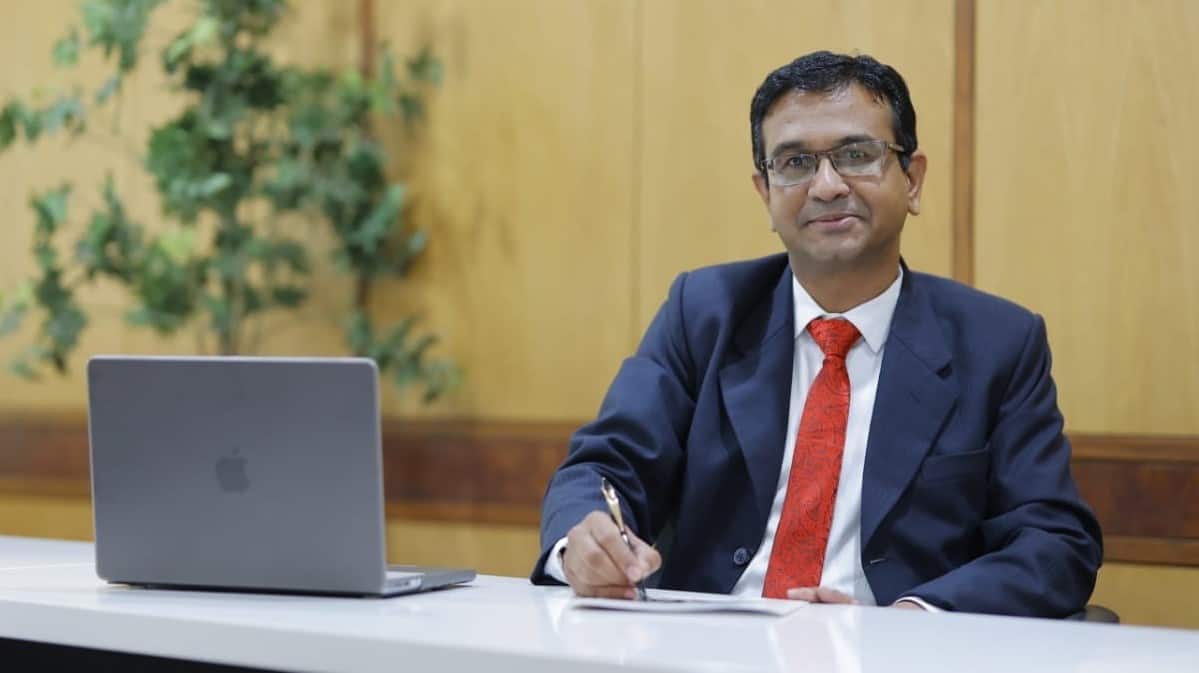
The Department of Management Sciences at Savitribai Phule Pune University (SPPU), branded as PUMBA, was established in 1971 and was accorded autonomy in 2004. Placed among the top B-schools in Maharashtra, the institute now offers a variety of undergraduate, postgraduate and doctoral programmes. Rajesh Pahurkar, who recently became the head of the department, spoke to Careers360 about rejuvenating the campus, changes in MBA curriculum and advantages of having a diverse student body. Edited excerpts:
What have been your priorities since you took charge at PUMBA?
I have initially focused on providing basic amenities at the department, like sanitation and fixing up the electric equipment. Going forward, we want to modernise the classrooms. I have done a primary survey of what facilities are needed at the department, such as smartboards.
The second priority would be to identify the problems at the many student-run cells, such as group discussion, placement and alumni cells. PUMBA is missing its pre-pandemic vibrancy when students would come early in the morning and remain busy till late in the evening. We used to have big events, providing a thrill and challenge to learners. But after Covid, things have come to a standstill, as the transition from senior batches to their junior peers has stopped.
We have now been inviting our alumni to tell the current cohort how vibrant things used to be at the department. Some of the flagship events are being restored.
Cell activities are very important, because classroom teaching is limited to imparting theoretical knowledge. It’s the events that the students learn everything from – planning to budget, dealing with vendors to marketing. The classroom learning about conflict management and communication is emulated in this experiential learning.
Are you looking at any changes in classroom lessons, too?
Absolutely. Dynamic learning is the new buzzword. We changed our syllabus in line with the National Education Policy (NEP) in 2023. One of the new components of the curriculum is ‘social projects’, which students are required to take up for half a credit in the second semester. This module aims to instill social sensitisation among students, going beyond the commercial pursuits. This social entrepreneurship initiative has them working with some organisations on a variety of issues, ranging from literacy to traffic management. They are expected to identify and provide solutions for these problems, and then discuss their findings.
In the third semester, they have the ‘summer project’ where they work on industrial problems with companies to hone their business knowledge. And in the fourth, they have an internship. Those who get placed join their employers early, while others look for opportunities elsewhere.
Also read 21 IIMs have less than 200 SC, ST, OBC teachers against 1,880 sanctioned posts despite quota law
Many of the things NEP talks about are already in place at the institute to some extent. We are trying to make our courses more trendy and meet the needs of the market. The emerging ABCs – artificial intelligence, big data and cloud computing – are being incorporated into our programmes. As proposed by NEP, we have added two ‘cafeteria’ courses and a Massive Open Online Course (MOOC) each in third and fourth semesters where students can pick subjects outside their specialisation.
Are these courses taught by the in-house faculty or visiting ones?
We engage both the industry people as well as the internal faculty for cafeteria courses. I myself had developed a course called ‘Experiencing the Entrepreneurial Motivation’ which was exclusively taught through simulation and games, and without any theoretical presentation. Others are teaching courses on topics such as analytics and Excel modelling.
We are also offering dual specialisations where a student takes up marketing as a major discipline and finance as minor. Earlier, we had a different variation where students could pursue a sector specialisation – a more specialised course within the broader stream – such as retail and banking. They could still avail themselves of that assortment using cafeteria programmes.
Would you then say that, going forward, MBA is going to be a more generalised course?
I wouldn’t say that, for we still have eight specialised courses, with 60% weightage for them.
How do you manage your human and infrastructure resources to cater to the wider range of choices available to students?
Most of the students end up going where the majority is. And there should be at least 15-20 students demanding a course for us to offer them.
While there's some shortage in the regular faculty, we compensate it through industry teachers. There can be resource constraints in all government setups, even at IIMs, but we take things positively. The shortfall, for instance, develops resourcefulness among students involved in campus activities. It brings out efficiency and positivity, and gives way to frugal innovation – a hallmark of our country. Hence, I believe some constraints should always be there.
Has the department introduced any new courses?
We earlier only had our flagship MBA programme. There was an MBA BioTech, too, which has now been transformed into MBA Pharma BioTech. Plus, there’s an evening course for executives. The first batch of another new addition, MBA Facility and Services Management, graduated recently. There are a few more in the pipeline.
PUMBA is one of the most affordable B-schools in the country.
Yes, we charge Rs 1.39 lakh per annum. A few days ago, a student from Bodh Gaya approached us for admission. When asked why he didn’t enrol in the IIM in his town he explained that while the salary packages on offer at the two institutes are almost the same, there’s a huge difference in the tuition fees. We provide one of the best returns on investment (ROI) around the country.
Having said that, while ROI can be a determinant, we want aspirants to think about other aspects of the institute, namely the social aspect. We have students from all strata of society – from those commuting on bicycle to those arriving in Mercedes. They become global leaders while rubbing shoulders with each other.
When students come from varied backgrounds, it leads to better social amalgamation. Our graduates can adjust anywhere. There’s another advantage: when it comes to industrial marketing, one’s required to interact with everyone from top bosses of the company to those much down the social ladder. Everyone comes here through merit, with a value system steeped in ethics.
Also read MBA Jobs: Capstone projects, case competitions become key placement tools amid hiring slowdown
Has the global slowdown affected MBA placements at PUMBA?
With the tariff issue, companies are sceptical about expanding. While private institutes have placement officers doing a lot of promotions, companies are bound to come to us due to our merit-based admissions, though there can be some impact of global trends.
Are you making any efforts to boost employability based on the evolving market needs?
Some of the things like communication skill development, group discussion and personal interview preparation are established practices of the placement cell. Students can gain experience through their social and commercial projects. Companies need students well-versed in technical tools such as enterprise resource planning (ERP) software and AI. Since most of the graduates are engineers they are already very savvy.
 Add as a preferred source on google
Follow us for the latest education news on colleges and universities, admission, courses, exams, research, education policies, study abroad and more..
To get in touch, write to us at news@careers360.com.
Next Story
]AIMA DG: ‘MAT exam now skill-focused; online MBA widens access as employers look for skills, not degrees’
Post-Covid-19 shift sees interest in online MBA courses surge as MAT exam introduces AI-human proctoring, plagiarism-safe assessments and mandatory seminars, says All India Management Association DG
Aeshwarya TiwariLatest Education News
]Related News
]Engineering College Dandiya event turns fatal; 3 arrested in Hyderabad
IIT Delhi opens applications online executive programme in managerial decision making, analytics
JNUSU ends 17-day hunger strike after admin agrees to withdraw FIRs, revoke rustication of students


