
AIMA DG: ‘MAT exam now skill-focused; online MBA widens access as employers look for skills, not degrees’
Aeshwarya Tiwari | December 12, 2025 | 01:00 PM IST | 5 mins read
Post-Covid shift sees interest in online MBA surge as AIMA MAT exam introduces AI-human proctoring, plagiarism-safe assessments and mandatory seminars, says DG

MAT Preparation Tips, Study Material & Mock Test
Candidates can download this eBook to check MAT 2026 section-wise preparation tips, latest exam pattern, previous year paper analysis & Important books.
Download EBook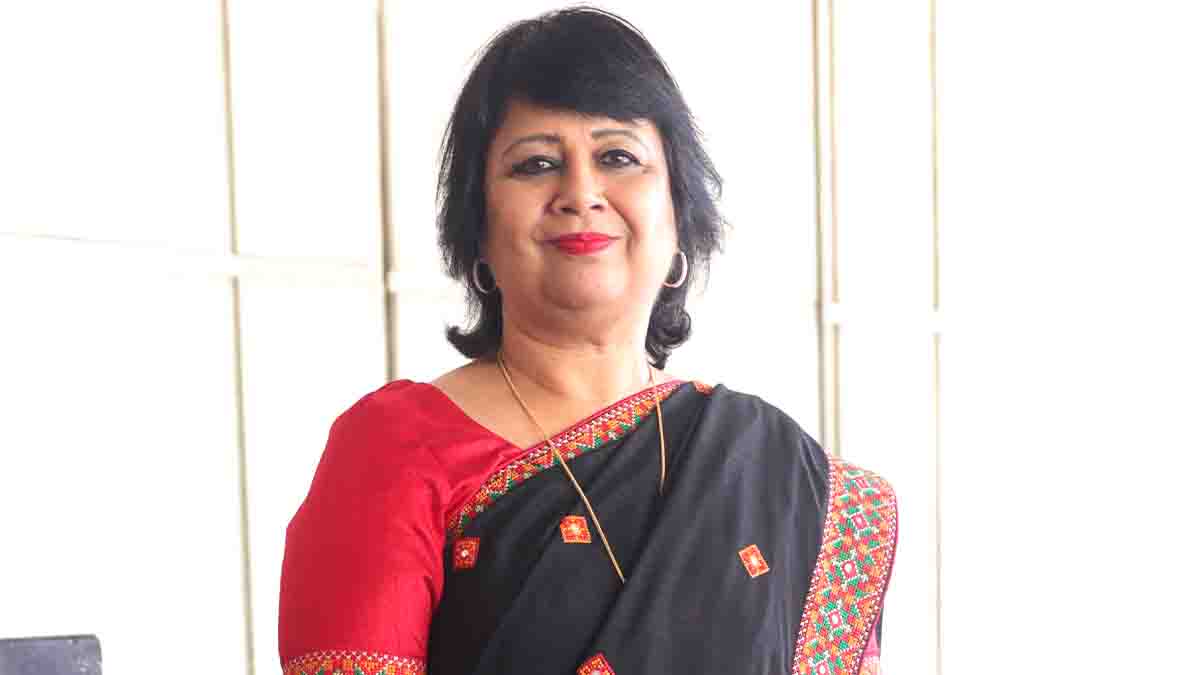
Rekha Sethi, director general of All India Management Association (AIMA), the apex body for management in India, in an email conversation with Careers360 talks about AIMA’s role in management education, MAT exam, online and distance education, curricula aligned with NEP and more. Edited excerpts:
Don't Miss: MAT Sample Papers | Mock Test Series | Study Material
New: MAT 2026 Critical Reasoning Sample Papers | IIM Comprehensive Guide
MAT 2026- GK Capsule Current Affairs & Static GK: June | July | August
Career Launcher: Race to 99%ile – 10-Hour CAT Masterclass | Open Mock: Experience Actual Exam
How is AIMA evolving to meet the changing needs of MBA students and the industry?
The economy and the business are changing fast and unpredictably, and AIMA is adapting its management education and leadership development programmes to keep Indian management ahead of the curve. It has made technology integral to all its management programmes and it continuously adds new specialisation programmes to allow students and executives to acquire the latest knowledge and know-how.
AIMA offers business simulations and games to test and train students and executives in the latest management techniques. In addition, AIMA holds conferences, retreats and overseas visits for executives and business owners to bring them up to speed with the newest business and technology innovations.
AIMA ensures that management students and industry leaders are equipped to deal with any ongoing or impending change.
What distinguishes Management Aptitude Test (MAT) from other entrance exams like CAT? How has it evolved to remain relevant?
MAT exam offers exceptional flexibility with multiple attempts and test modes, making it accessible to a wide range of candidates. The exam is conducted four times in a year (February, May, September, and December) and provides candidates multiple opportunities to attempt the test. It is conducted in two test modes – Computer-Based Test (CBT) and Paper-Based Test (PBT).
MAT was launched by AIMA in 1988 and it has been one of the most trusted and widely recognised management entrance exams for MBA/PGDM admissions in tier 1 and 2 cities. MAT scores are accepted by more than 600 B-schools across India, giving aspirants ample options for admission.
Recently, MAT has gone overseas with BITS Pilani, Dubai. The exam has played a pivotal role in helping institutions streamline their admission process and uphold standards of merit-based selection. The Ministry of Education approved MAT as a national-level entrance examination in 2003. During the COVID-19 pandemic, MAT pioneered the human & AI proctored Internet based test (IBT). Over the decades, more than 30 lakh MBA aspirants have taken the MAT.
MAT content and structure were refreshed in 2024 to accommodate the changing needs and priorities of both the institutes and the students. MAT 2.0 is positioned as a modern, skill-focused test, featuring a new section, ‘Economic & Business Environment’ that covers current economic trends and technological interventions in business. The streamlined format includes 30 questions in each of the five sections (total 150 questions) to be completed within 120 minutes.
Any tips for MAT exam aspirants?
The tips to ace MAT would include preparing well by understanding the exam structure and syllabus, building awareness about economic and business events and trends, working on the techniques to solve quantitative questions, and practicing time management. Staying calm and confident is often the key.
Post pandemic, there has been an increasing number of aspirants for online and distance MBAs. What are your views on this trend?
Employers now hire for skills and proof of performance, not seat time. Online formats widen access for working professionals and learners with light but tight programmes. Online and distance MBAs have become more credible with proctored exams (AI + human), mandatory synchronous seminars, case-labs with graded participation, capstones with external juries, online viva-voce and plagiarism-safe assessment design (projects, simulations, portfolios). Moreover, the introduction of industry-led and co-taught courses, frequent content revision and upgradation ensure relevance of online and distance education.
How is AIMA addressing the rising cost of management education and ensuring students from diverse backgrounds can access quality education?
AIMA has always focused on the access to quality MBA education at affordable costs. It supports need-based student applications through bank and financial institutions tie-ups. It offers opportunities to earn while learning through paid internships. To ease the financial burden on students, AIMA has a modular structure of fee payment.
Also read ISB fees high due to quality, 50% students should get some scholarship: Dean
How is AIMA influencing the implementation of NEP 2020 in B-Schools? What challenges and opportunities do you foresee in integrating interdisciplinary learning and skill-based education?
AIMA is designing and curating model curricula aligned with NEP (multidisciplinary, skill-centric), mapping programs to ABC, and standardising learning outcomes with assessment rubrics. AIMA is training the trainers through faculty development with interdisciplinary design, experiential learning, and assurance-of-learning. It also acts as a convener by creating and supporting industry councils to co-create micro-credentials and internship standards and offers credit portability through MoUs across universities.
How is AIMA integrating technology into its management curricula, and how do you foresee AI and digital tools shaping future business leaders?
AIMA is a fully digitalised organisation and offers technology-intensive management courses. It has started using AI for student services and teaching, and it encourages students to use AI assistants for research and writing while fact-checking AI generated output and avoiding plagiarism.
AI will change job profiles but it won’t eliminate the need for managers and leaders. Future managers will need to lead teams that include both people and AI systems. Leadership will become more nuanced and would involve balancing human aspirations with AI decision-making processes.
What are some of the key industries or sectors where management graduates from AIMA are most likely to find career opportunities? How does AIMA help bridge the gap between academic learning and employability?
AIMA has strong industry connects that create career opportunities in various high-demand sectors, such as banking and investment, financial services and fintech, IT/ITeS & SaaS, e-commerce, healthcare and pharma, manufacturing, supply chain, logistics, energy, FMCG, retail, consulting, PSUs, SMEs and startups.
AIMA bridges the gap between academic learning and employability by linking learning outcomes with industry requirements. AIMA education involves live industry projects with real data and capstones co-supervised by employers, and it embeds certification (Lean Six Sigma, PM, analytics, ERP modules) into credits. It provides career services at scale with role-specific interview banks, case clubs, assessment centres, and alumni mentorship. It also allows recruiters to access students’ verified body of work online.
Also read FORE Delhi director: ‘Indian B-schools have become overtly placement-driven’
How do you perceive the value of national accreditation, such as NBA, compared to international accreditations like AACSB? How relevant is national accreditation for Indian B-schools?
National Accreditation like NAAC and ranking frameworks like NIRF play a significant role in assuring stakeholders of education quality. National accreditation remains essential for Indian B-schools’ global legitimacy while international accreditation adds global comparability and allows international partnerships. The strongest schools have both. Triple accreditation AACSB/ EQUIS/ AMBA uses NBA data to bring regulatory fit and global benchmarking.
 Add as a preferred source on google
Follow us for the latest education news on colleges and universities, admission, courses, exams, research, education policies, study abroad and more..
To get in touch, write to us at news@careers360.com.
Next Story
]Kasturba Gandhi Balika Vidyalayas retain only 50% higher-class students despite improved enrolment: Govt data
Retention rate a healthier 84.2% in middle school while dropout rates improve across levels, but 370 Kasturba Gandhi Balika Vidyalayas still non-functional; Jharkhand has highest teacher-pupil ratio, education ministry tells Rajya Sabha
Shradha ChettriLatest Education News
]Related News
]JEE Main 2027 Application Form LIVE: January session registration soon, exams from January 22
GATE 2027 application correction window opens at gate2027.iitm.ac.in; edit form by October 31


