
Skill India Mission’s JSS scheme needs higher budget, infrastructure boost: Govt cites study in parliament
Shradha Chettri | February 2, 2026 | 05:44 PM IST | 3 mins read
MSDE said the third-party evaluation revealed that 55% covered under JSS scheme had education till Class 10; 73% beneficiaries SC, ST; PMKVY 4.0 also being studied
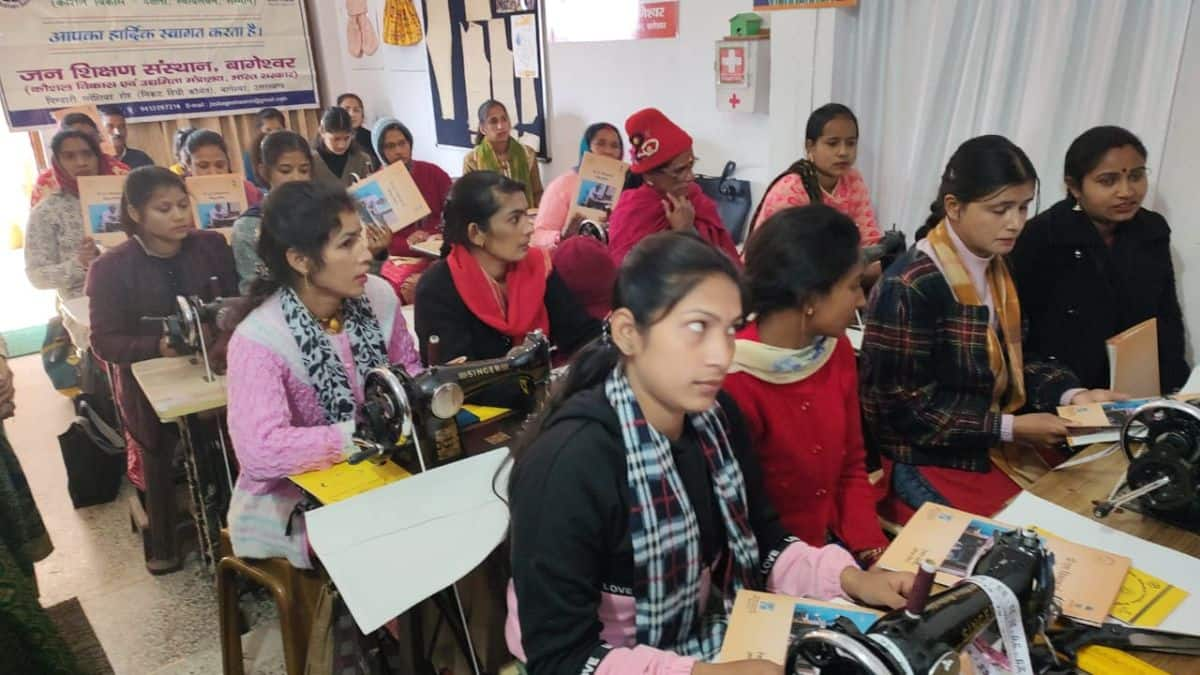
Skill Development: A third-party evaluation of the Jan Shiksha Sansthan (JSS) scheme has called for increased budgetary provisions, coverage expansion to remaining districts of the country and infrastructure upgrade at training centres. The study also found that more than half of those covered under the scheme have studied only up to Class 10.
In a written reply to the parliament on Monday, the Ministry of Skill Development and Entrepreneurship (MSDE) stated that the third-party evaluation was conducted by Arun Jaitley National Institute of Financial Management (AJNIFM), Faridabad in 2025.
JSS is a scheme under the Skill India Mission, which aims to impart vocational training in non-literates, neo-literates and the persons having a rudimentary level of education and school dropouts up to Class 12 in the age group of 15-45 years. Priority is given to women, SC, ST, OBC and minorities in the rural areas and urban low-income areas.
Skill India Scheme: 73% SC, ST beneficiaries
In a question raised by three Tamil Nadu MPs – DMK’s Selvam G, CN Annadurai and Indian Union Muslim Leagues’s Navaskani N – the minister of state for MSDE Jayant Chaudhary stated that since July 2018 to December 2025, a total of 34.14 lakh beneficiaries were covered under the scheme. The details are up to December 31, 2025.
The government had set a target of 2.81 million beneficiaries from 2022-23 to 2025-26. While those trained during the same period were around 2 million.
“The shortfall in the number of trained candidates against the target set is due to implementation of SIP in phases,” said Chaudhary in response to another question.
JSS Scheme: SC, ST, other beneficiaries | |
|---|---|
SC/ST | 73% |
OBC | 37% |
Women | 82% |
19-35 years | 66.8% |
Education up to 10th standard | 55% |
Non-earning individuals before the scheme | 60% |
Average income increase | From Rs.1,776 to Rs.8,440 per month |
The study conducted by the institute showed that from the financial year 2021-25 -94.3% were trained and 98.5% were certified.
Also read Education Budget 2026: OBC, ST scholarships get Rs 1,000 crore boost, minority scheme funds slashed
Skill Development: JSS scheme recommendations
The recommendations by the third-party evaluation shared in the written reply included:
To increase budgetary provision to the JSSs for reasonable infrastructure in-field training centres for quality training and branding
To include and cover all the remaining districts in the country.
Grant-in-Aid Enhancement: To meet the minimum standards for NSQF compliance
Augmentation of infrastructure, material and equipment at JSS and training centre levels to bring about quality change in the programme and activities.
In another reply by Chaudhary, he stated that at present 294 Jan Shikshan Sansthans are functioning across 26 States and seven UTs.
“These JSSs are registered as non-governmental organisations under the Societies Registration Act, 1860, for the purpose of running them,” said Chaudhary.
Among the states, Uttar Pradesh has the most number of centres (47) and has so far trained 6,18,416 beneficiaries. After UP, Madhya Pradesh (3,66,982), Odisha (3,11,556) had the maximum number of beneficiaries.
Also read Economic Survey 2026: Upgrade ITI diplomas to degrees to improve jobs, unify apprenticeship schemes
PMKVY 4.0 review
In another question by Congress MP from Mumbai Varsha Eknath Gaikwad, Chaudhary stated that an independent third-party impact evaluation of the PMKVY 4.0 was conducted by AJNIFM.
PMKVY 4.0 is a demand driven scheme and skill training centres are set up project wise based on the requirements received from state/ industry/ industry associations/ training providers.
“Under PMKVY 4.0, the focus is to empower trained candidates to choose their varied career path and they are suitably oriented for the same through On-Job Training (OJT) embedded industry relevant skill courses,” said Chaudhary.
The PMKVY4.0 evaluation was conducted across 12 states of the country. In the evaluation of the earlier versions of the scheme, the Comptroller and Auditor General of India had highlighted various anomalies and discrepancies.
The new evaluation, according to Chaudhary is, “To assess the effectiveness, efficiency, outcomes and impact of PMKVY at the national and state levels based on beneficiary surveys, stakeholder consultations and analysis of scheme data.”
If you want to share your experience at work, talk about hiring trends or discuss internships, write to us at theworkplace@careers360.com. To know more about The Workplace itself, here's a handy note: Let’s talk work…
 Add as a preferred source on google
Follow us for the latest education news on colleges and universities, admission, courses, exams, research, education policies, study abroad and more..
To get in touch, write to us at news@careers360.com.
Next Story
]Legal jobs boom with riders – master AI, intern longer, practise 3 years for judicial services
Law internships and PPOs trump campus placements; corporate firms multiply legal jobs, but Supreme Court’s 3-year practice mandate for judicial officers pushes LLB students towards LLM, litigation
Musab QaziLatest Education News
]Related News
]Uttarakhand police recruitment for 1600 vacant posts soon: CM Dhami
Bihar cabinet approves establishment of Patna's first tech park, expects 5,000 jobs


