
From CBSE to IB Board: DPS International principal on why parents want a curriculum beyond rote learning
Aeshwarya Tiwari | March 5, 2026 | 02:57 PM IST | 8 mins read
DPS International, which started with just 40 students, now runs all four IB courses – PYP, MYP, DP, and CP. Its principal talks about NEP, CBSE vs international boards, AI policies, and more
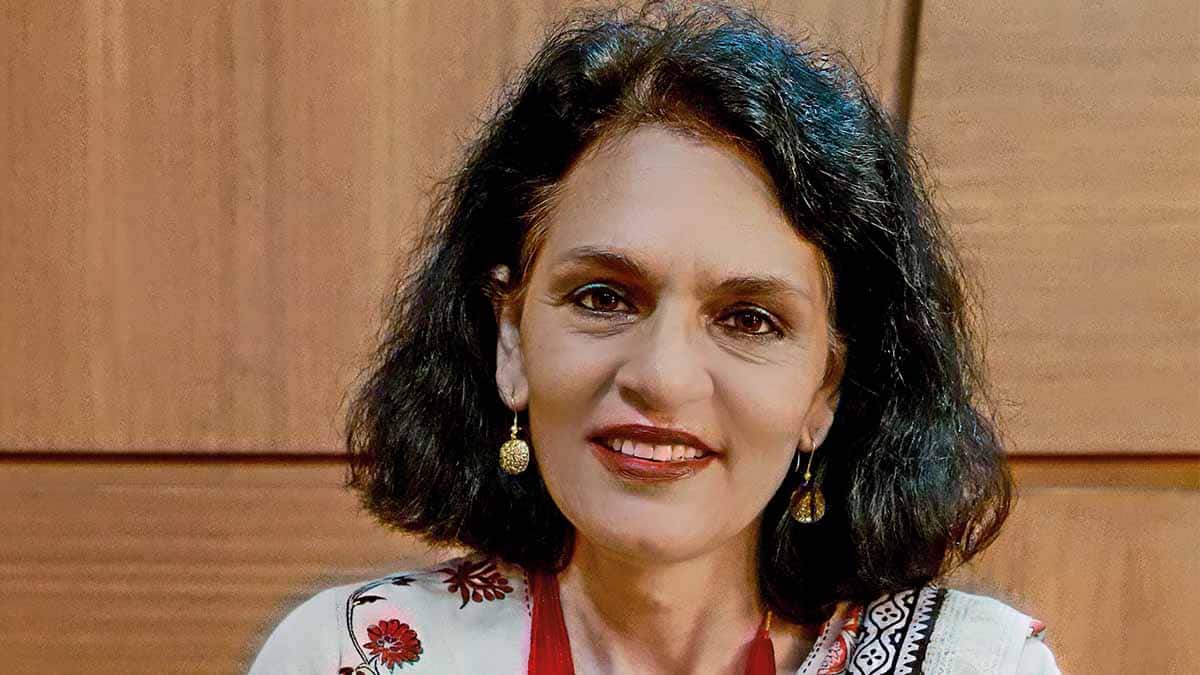
Rima Singh, head of school at DPS International Gurugram, the region’s first pure International Baccalaureate (IB) school speaks to Careers360 about her perspectives on key aspects of international curricula, the role of AI in education, comparisons between CBSE and international boards, as well as issues of affordability and accessibility in global education. Edited excerpts:
How has your school evolved since its founding, and what defines the learning experience today?
Started in 2014 with just 40 students, the school has grown into a thriving IB continuum institution with over thousand learners, while consciously preserving small class sizes and a 1:12 student-teacher ratio to ensure individual attention. We offer all four IB programmes – PYP, MYP, DP, and the recently authorised CP. Central to this growth is strong teacher development through global exposure and continuous training. The learning experience itself is holistic: academics are seamlessly integrated with arts, music, dance, and sports.
You come from a CBSE background. When you transitioned to the IB curriculum, what differences stood out to you the most?
When I began my journey with the IB as a Grade 4 teacher, the biggest shift for me was the absence of a single prescribed textbook. We had access to multiple resources-books, videos, guest speakers, field trips-and we were encouraged to curate our own teaching materials.
Coming from a traditional CBSE setup, I was used to a structured format – one textbook, fixed question-answer patterns, unit tests, and exams based strictly on what was taught in class. In IB, the focus was on engagement. Teachers were expected to “hook” the students’ interest – starting a lesson with a video, a real-life experience, or even a field trip – before moving into deeper learning.
Also read CBSE wants international boards reined in; letter to education ministry seeks directions for AIU
How does this approach impact the way concepts are taught in the classroom?
The IB approach is strongly application-based. Instead of theoretical explanations alone, concepts are connected to real-life situations. For example, when teaching negative numbers, rather than drawing a number line on the board, teachers might stand near an elevator and explain how basement levels represent negative numbers. When students realise they are already using these concepts in daily life, learning becomes more relevant and engaging.
How does this method influence lesson planning and skill development?
Teachers are trained to plan lessons by first establishing real-life relevance. Whether it’s teaching percentages through shopping discounts or integrating mathematics into science through graphs, subjects are seamlessly connected. In the primary years, teachers are equipped to teach multiple subjects, allowing for smooth interdisciplinary integration.
While this approach requires more effort and planning, it significantly enhances skill-building. Students learn not just content, but how to apply knowledge across subjects and situations. With access to multiple books, digital tools, and online resources, classrooms become richer learning environments focused on curiosity, understanding, and practical application.
Parents usually prefer schools close to home. How do you attract families from across the city?
While proximity does matter to many, we have students coming from across Delhi as well, supported by our transport facilities. Most parents choose our school for two key reasons.
First, there is the strong legacy of DPS. Many of our parents are themselves DPS alumni, and are looking for something more contemporary and global. Second, we are the first DPS to offer the IB curriculum along with a full IB continuum. While there are international schools nearby offering IGCSE or A Levels, being the first DPS to introduce IB has worked strongly in our favour. Parents trust the DPS name, but they also want a curriculum that moves beyond rote learning and traditional classroom structures.
How has the growing acceptance of the IB curriculum influenced parent choices?
The popularity of IB has increased significantly over the last few years. This shift is also aligned with the National Education Policy (NEP), which incorporates many practices inspired by international curricula. In that sense, IB schools already have a head start, as we’ve been implementing these approaches for years.
How does the school ensure it keeps pace with the changing student needs?
Adapting to each new generation of learners requires constant upskilling, especially for teachers. We invest heavily in teacher training, and IB mandates regular professional development to ensure educators stay current and responsive.
Our management is extremely supportive in this regard. Keeping teachers future-ready is essential to providing students with an education that is relevant, engaging, and effective.
With AI increasingly being integrated into school curricula, what is your perspective on its role in education?
AI is here to stay. The approach is clear – we should not outsource our thinking to AI, but we can certainly use it as a supporting tool. IB introduced clear policies early on, and we invested heavily in teacher training. We conducted extensive in-house sessions and invited experts to guide teachers on using AI effectively.
Teachers are encouraged to use AI to reduce administrative workload and support lesson and unit planning. However, many aspects of teaching require independent thinking and professional judgment. AI, therefore, is positioned strictly as a tool, not a replacement.
How do you address concerns around academic integrity, especially with students using AI tools?
Academic integrity is a cornerstone of the IB philosophy. Students are taught that any information sourced from the internet or digital tools must be properly cited, with references and bibliographies clearly mentioned. We also use plagiarism-detection software to review student work. All students sign a responsible-use undertaking, and there are strict policies in place.
With so many international boards now available in India, what makes your school stand out?
I genuinely believe that every board has its strengths. CBSE, for instance, has a very strong curriculum – we are all products of it, and it served the needs of its time exceptionally well. The key today is not about which board is “better”, but which one is right for a particular child.
When parents approach us, we focus on helping them make an informed decision rather than selling a curriculum. We encourage families to experience the school first-hand through what we call taster days, where a child spends a full day with us to understand our learning environment.
For senior students, we also facilitate meetings with our career counsellors. If a student’s primary goal is highly exam-focused preparation, such as medical or IIT entrance pathways, we guide families to carefully consider whether our approach aligns with their expectations, as our programme is not designed around exam-centric coaching.
Despite changing trends, many parents still prefer engineering or medicine for their children.
That is not necessarily the case with the parents who approach us. Most of them want their children to develop a broad set of skills – self-management, time management, critical thinking, and adaptability – along with strong academics.
One reason for this shift is the flexibility the IB curriculum offers, particularly in Grades 11 and 12. Students can choose from multiple subject combinations and are not limited to a single career pathway. Areas such as sustainability, policy development, and interdisciplinary studies open up diverse academic and professional opportunities.
Screen time is unavoidable in today’s digital era, but many parents worry that handwriting, reading habits, and deep learning are being lost. How do you strike a balance between technology and traditional learning?
At our school, Grade 10 assessments are conducted entirely online, and up to Grade 5 there are no formal assessments at all. Technology is very much part of the learning journey, but it is carefully structured and balanced.
For instance, laptops are introduced gradually. In the primary school years, teachers may bring laptop trolleys into classrooms for research-based activities. From Grade 6 onwards, each student has their own laptop because digital literacy, typing speed, and research skills are essential – especially as students prepare for IB assessments and board examinations.
That said, handwriting cannot and should not disappear. While IB assessments in Grades 11 and 12 are currently written, the system is gradually moving online, with a full transition expected by 2030. To ensure students are prepared for both formats, we make it mandatory for them to maintain handwritten journals.
How do you ensure digital safety and responsible usage among students?
Digital safety is our top priority. We have strong cyber safety and digital citizenship policies in place because we are aware that students are still children, and misuse can happen. The school operates with secure firewalls, monitored IP systems, and regular checks for unusual online activity. We also conduct frequent parent-awareness sessions.
But international curricula are often seen as premium offerings.
It’s true that international programmes like the IB are positioned at a premium level, largely because of the quality they demand. The fees reflect the investment required to deliver the programme effectively.
Affordability is an important conversation, and schools must be transparent about what families are paying for. What we offer is not just a curriculum, but an entire ecosystem designed to support holistic learning, skill development, and global readiness.
How does your school address affordability and accessibility for students from economically weaker sections (EWS), especially compared to CBSE or other boards?
We do have an EWS category in our admissions, but in practice, very few apply. For example, we had one case from about 18 km away, outside our usual vicinity. When we explained that from Grade 6 onwards a laptop is mandatory and that students also participate in overseas trips, the family ultimately did not pursue admission.
So, while the category exists, the number of students availing it is practically zero. The reality is that international programmes like IB require significant parental investment, and fully subsidized admissions remain challenging within the structure of international programmes.
 Add as a preferred source on google
Follow us for the latest education news on colleges and universities, admission, courses, exams, research, education policies, study abroad and more..
To get in touch, write to us at news@careers360.com.
Next Story
]DPS Mathura Road principal: School board exams life’s easiest tests; CBSE no less than international boards
DPS Mathura Road principal on why CBSE is as good as Cambridge, IB, IGCSE; how the two board exam system will give students relief, the coaching centre trap, AI in schools, and much more
Aeshwarya TiwariLatest Education News
]Related News
]CBSE Date Sheet 2027 Live: Class 10, 12 board exam timetable soon at cbse.gov.in; LOC dates, passing mark
Odisha government inks pact with strategic partners to boost skill training
NIOS Date Sheet 2026 LIVE: Class 10, 12 October exam schedule soon at nios.ac.in, latest update


