
‘Mini Sikkim’: This CM Shri school bets on merit, mountains, and morning yoga to build future leaders
Shradha Chettri | March 6, 2026 | 12:33 PM IST | 7 mins read
The fully-residential CM Model School in Sikkim is blending vocational training and NEP ideals with AI, VR, industrial visits, ITI workshops; aims to be state’s largest school
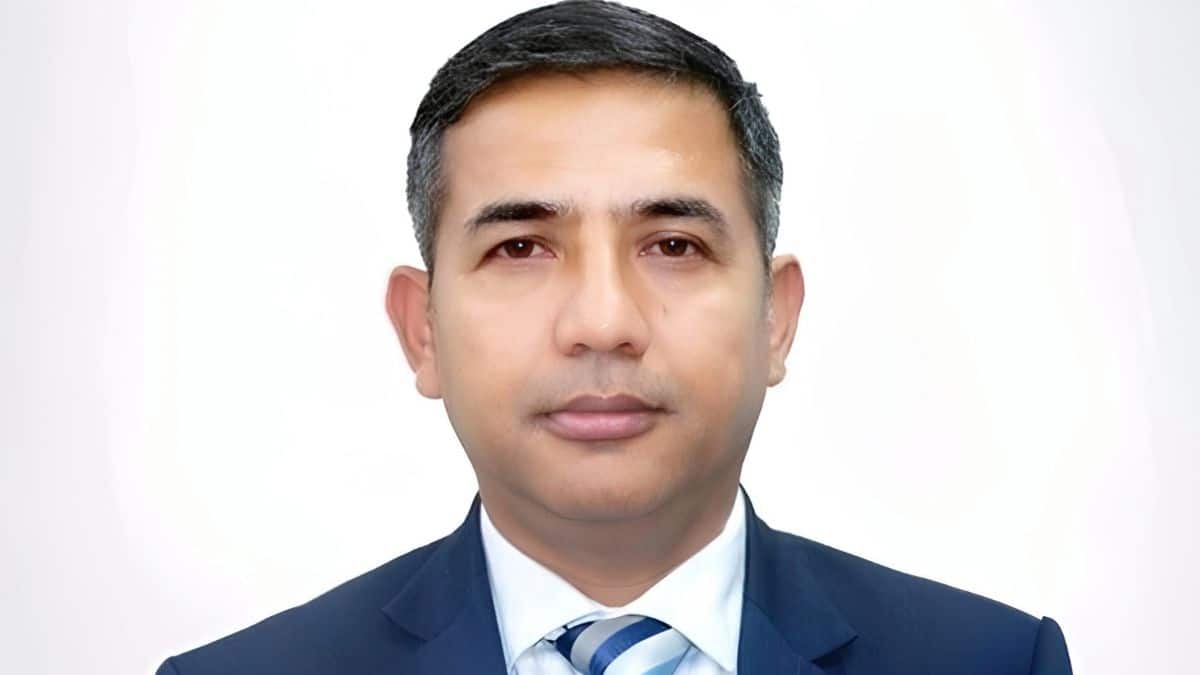
With the legislation of Model School Act 2025, the Sikkim government started the Chief Minister’s Model School at Assam Lingzey in east Sikkim. It has been a year since the pilot project was launched. The government-funded fully residential school, which starts from Class 6, is working to provide “holistic education”. Its director, Colonel Ujjwal Khatiwada shared with Careers360 how the school is working to create future leaders and become a “lighthouse” for other government schools and why it is set to become the largest one in Sikkim. Edited excerpts:
Various states have in the past also opened such model government schools. What was the vision behind the CM Model School, Sikkim?
The vision is to nurture future leaders by integrating education with sustainability, culture and innovation in the heart of Sikkim. It is mandated to create a centre of excellence within the government setup that nurtures meritorious students selected singularly on scholastic skills. They are put through a meritorious scholarship examination and the academically bright are sent to us. We add value addition in terms of discipline, punctuality, physical fitness, routine, soft skills, teacher mentorship, student guardianship, where we are also incorporating concepts like peer learning.
We are trying to transform into something that will stand out and can be a lighthouse for other schools to emulate.
Students who top in government schools are selected to take the selection test. However, does this not take away chances from other students who may not be academically bright, but have other talents?
This particular criteria of selecting meritorious students is the very essence and purpose of this entire programme. The bright sparks are being given a platform. One can perceive that healthy competition is being promoted from Class I to V, where students are being given the opportunity to appear for this exam and excel.
What is the enrollment cap in the CM Model School?
The CM meritorious scholarship examination has been in place since 2010. Out of the total who appeared, 75 were selected and sent to various other schools across India. In the inaugural batch, 10 were sent to Scindia Kanya Vidyalaya and five to Tashi Namgyal Academy. The remaining 60 were to be admitted to CM Model School. One child boarded out due to medical reasons.
In terms of enrollment we have 32 girls and 26 boys, clearly indicating girls are doing better like in any other competitive exams.
There is reservation across community lines. There are students purely on merit and rest are meritorious within their community. It is also region specific, where students from extreme north Sikkim have also got reservation. CM Model School is a mini Sikkim.
Also read Private NGOs are revamping anganwadis into proper preschools, but funding and fairness gap persists
How does a day typically look for students enrolled in this school?
Students’ day starts at 5:30 am. At 6 am they go for physical training, which is a mix of yoga and scientifically designed curriculum in consultation with the sports department. After the physical training, we have a hydration drill wherein students are made to drink water. People in the hills drink less water. We started this exercise after we noticed students were falling sick due to dehydration.
Then there is breakfast after which they go to their classrooms. After class, there is rest time. Following that students indulge in games and then students get a two-hour study period in the evening. Then dinner. They have self-study and library time for about 40 minutes. They retire by 9 pm.
Every Wednesday and Saturday, they can engage in their choice of hobbies. We encourage students to take up one game and one vocational subject. We have vocations like carpentry, electrician trade and thanka painting also.
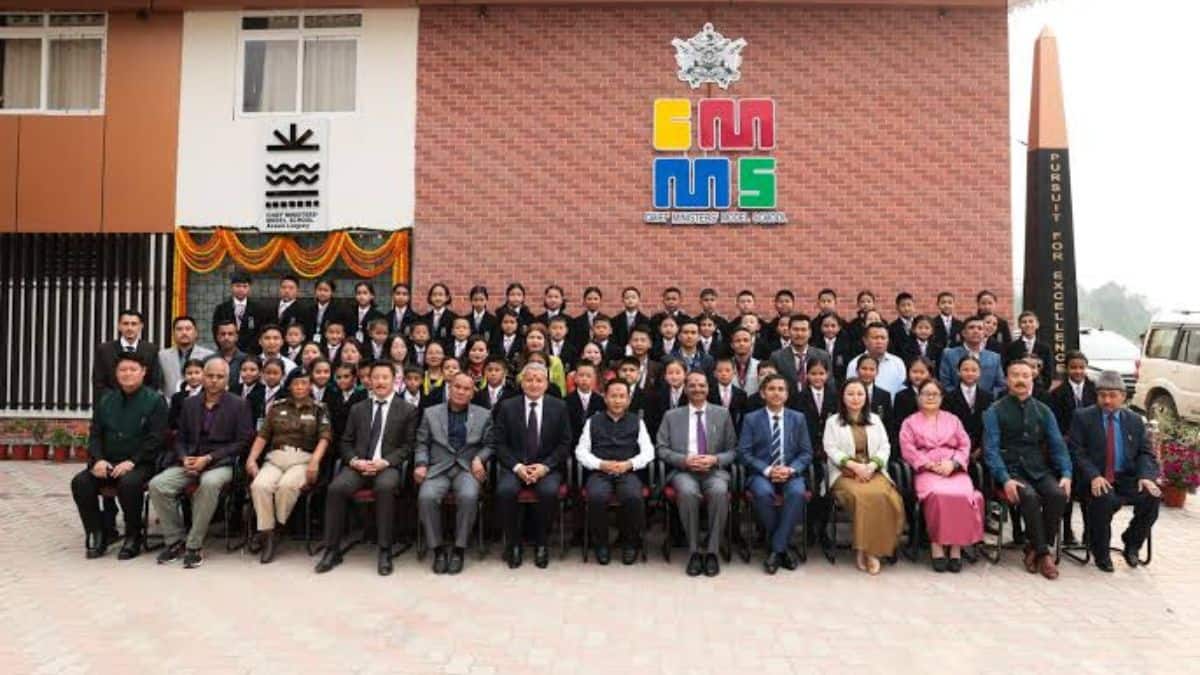 First batch of students at CM Model School, Sikkim (Image: Special Arrangement)
What are the hobbies being offered to students?
They have AI and VR, computer, drama, debate, dance, music, craft and others. The state government is planning to introduce coding as well. We will be introducing cooking, bakery and pottery also. We are also trying to bring in STEM education. We are trying to imbibe National Education Policy (NEP) and bring in the best practices in school.
If you could elaborate on the best practices?
If you talk about vocation, our teaching goes beyond the classroom. We have industrial visits. To give an example, most of our students come from rural backgrounds. All their life they have seen cow milk as the only dairy product. We thought it would be prudent to take them to the state-run Sikkim milk union.
For other vocations, we have workshops in schools. We got in touch with ITIs and sent our students for a workshop there. We are trying to put the child through this vocation for the next seven years and be empowered as a diploma holder in the end.
We are trying to impart financial literacy as well. Every child here has a bank account. To promote digital literacy they have email ids and that is how they communicate.
We also have teacher mentorship and enhancement classes.
We are just a year old but our students are already enrolled into Olympiads. There are 17 out of the 59 who have been put through Olympiads.
All students have been enrolled in Scouts and Guides. This will instill discipline, patriotism, and self -reliance in them.
We are also working on their spiritual disposition. The first batch was put through Utkarsh yoga with Art of Living, where they learnt pranayam, meditation. We have already enrolled the second batch as well.
Also read Ekalavya Model Residential Schools: 229 sanctioned EMRS yet to open, budget slashed by up to 60%
We have the concept of a buddy pair. We are also trying to instill responsibility wherein we have been telling the first batch – who would be senior now – that they have to groom the next batch. They will be the ones teaching them table manners, mess etiquettes, etc.
In terms of teacher pool, were they freshly recruited or government school teachers were roped in?
We have a selected pool wherein volunteers were sought to serve in the school. Those who came forward were put through a selection process. They were appointed on deputation. Capacity building of these teachers have also been undertaken.
To give an example, our mathematics teacher got in touch with the ITI and then collaborated with them to draw the lesson plan. For hands-on training, we had to seek help from professionals. Initially for trades like carpentry, we used to call an expert from the village. Subsequently, we are calling professionals and giving them honorarium. We don't have appointees as such. As of now we have 10 teachers.
If you could throw some light on the infrastructure of the school?
The school currently is spread over 3.5 acres. We have an academic-administrative block, a 450-capacity auditorium, and hostels for girls and boys. In the next two years we are going to be spread over an area of 14 acres. We are in the process of creating a shooting range, swimming pool, and an astro turf ground. There is also going to be a five-storey multi-sports complex. In the next two years we are looking at being the biggest school in Sikkim.
It was a pilot school that started in 2025. Are there plans to increase the numbers?
There is supposed to be one school per district in line with the pilot project. Those are in the pipeline but too premature to discuss right now.
There is a general concern that such model schools are creating a strata within the government school system. What are your thoughts?
The concern is understandable, but model schools need not be seen as fragmentation of the government schools. On the contrary, if we view it in the right perspective, these schools strengthen and elevate the entire public education system. These model schools can act as incubators and models for best practices. This is actually the beginning of education reform.
As an army officer how did you get associated with the school and how has the experience been?
There is a provision of officers going to various departments, primarily with the Government of India. However, some of us are also on deputation with the state government, depending on the requirement. The Chief Minister Model School was to be started and when they asked me, the response was in affirmative. I will be on deputation for a minimum of two years, extendable up to five years.
After 25-26 years in the army and before that 9 years of training and 26 years of professional life, the change has been positive. The transition was rough as it is a different ball game altogether. As far as core competence of imparting education per say is concerned, the faculty is always there to support me. But value addition is done by giving them a conducive environment and facilitating everything between the state government and the school.
 Add as a preferred source on google
Follow us for the latest education news on colleges and universities, admission, courses, exams, research, education policies, study abroad and more..
To get in touch, write to us at news@careers360.com.
Next Story
]What changes with AP Draft Coaching Rules? 5-hour cap, fee refunds, district panels with ‘civil court powers’
Andhra Pradesh draft coaching rules bring junior colleges under purview, ban public display of student ranks, mandate wellness cells, week offs; district committees can inspect without notice, initiate suo motu inquiries
Sheena SachdevaLatest Education News
]Related News
]Board Exam Timetable 2027: UPMSP, BIEAP, Maharashtra, MPBSE, Karnataka 10th, 12th date sheets; CBSE soon
CBSE Date Sheet 2027 LIVE: Class 10, 12 board exam schedule soon; passing marks, paper pattern


