
Calcutta University’s celebrated departments in faculty crisis; 40% posts vacant, teachers double as lab tech
Pritha Roy Choudhury | November 20, 2025 | 12:51 PM IST | 8 mins read
CU Kolkata: Applied physics department has century-old infra; in botany, an ‘entire line of work’ at risk of collapse; Bengali has lost its creative atmosphere
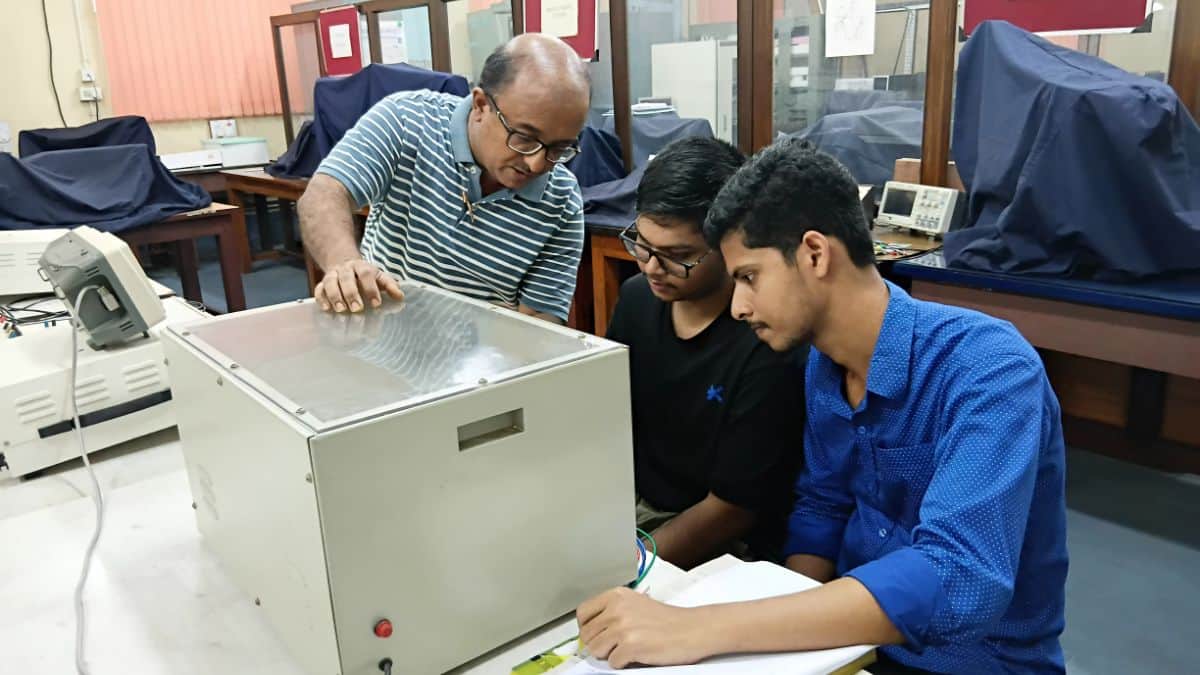
KOLKATA: “Our department has completed 101 years, but the infrastructure we have in 2025 is the same as that in 1925,” said Chanchal De, head of applied physics department at Calcutta University. De’s feelings sum up a crisis that has gripped one of India’s oldest centres of learning for over a decade.
In some of CU Kolkata’s departments, more than half of sanctioned teaching posts lie vacant. Across departments – from science and engineering to humanities – a growing shortage in both teaching and non-teaching staff is stretching its resources to a breaking point. Teachers are shouldering double the workload, having to abandon one-on-one mentoring, while working late into the night to complete the curricula. Many have blamed this for CU’s dropping over 20 places on NIRF Ranking 2025.
The effect is most visible in core departments like applied physics, physics, Bengali, economics, history and business management. At several, including botany, Bengali and history, more than half the posts are vacant, as the table below shows.
| CU Teaching Vacancies: Sanctioned and vacant posts | ||
|---|---|---|
| Department | Sanctioned | Vacant |
| Applied Physics | 20 | 8 |
| Physics | 25 | 10 |
| Photonics and Optics | 10 | 7 |
| Botany | 33 | 21 |
| Bengali language & Literature | 15 | 9 |
| Economics | 22 | 10 |
| History | 25 | 17 |
Source: Various departments
However, the appointment of Ashutosh Ghosh as the new vice-chancellor has sparked some optimism. Ghosh was the interim VC in 2016-2017 and headed the chemistry department from 2011 to 2013.
“The new VC is very accommodative. We hope faculty recruitment will start soon,” said Mahalaya Chatterjee, professor in the economics department.
CU Applied Physics: Legacy with shrinking faculty
The department of applied physics, established a century ago in 1925, was the first of its kind in the country. The department has two sections – instrumentation engineering and electrical engineering – but the faculty shortage has left it in a dire state.
Of the ten sanctioned posts in instrumentation engineering – nine regular and one chair professor – six are vacant and by November 2026, another professor will retire. Two posts are vacant in electrical engineering. The last recruitment was held nine years ago, in 2016. “We are also supposed to have chair professors, but none of those posts are filled,” De said.
The department currently runs one BTech and two MTech programmes, one for regular students and another for working professionals, classes for which extend from 6 pm to 9 pm.
“We are not supposed to work so late, but we do because students need us,” he said. “They are cooperative, and many of them go abroad for higher studies. But it’s difficult for us.”
The lack of demonstrators and technical assistants makes the situation worse. “When I take classes, I also have to play the role of a demonstrator,” he explained. “That means I can only teach five students at a time while the others wait. It’s unfair to them.”
The department relies heavily on guest faculty – eight in the instrumentation section and two in electrical – many of whom are former students. “They come because of their affection for the department, not because of financial incentive,” De said. Guest lecturers are paid a meagre Rs 500 per lecture.
While the optics and photonics department moved to the Salt Lake campus in 2005, applied physics was left behind because of fragile instruments installed during the British period. “If we uproot them, they may not even work again,” he said.
Also read Delhi University: For many UG students, fourth year a ‘bitter experience’
CU Kolkata: Funding crisis, infrastructure
Over the years, the applied physics department has received equipment worth Rs 10-20 lakh under the World Bank’s TechEd programme – once in 2005 and again around 2015. But lack of funds for maintenance has left many instruments dysfunctional. “Maintaining or upgrading them is impossible without proper support,” said De.
He believes a structural change could help. “We want a separate instrumentation engineering department and electrical engineering department, but it will take time,” he said, adding: “At Jadavpur University, the focus is on engineering. Here, applied physics still carries the legacy name. That has limited our visibility and opportunities for students.”
Also read IIT Placements 2025-2026: Many reject PPOs despite 20% rise in offers, bet on final phase
CU Physics Dept: Glorious past, uncertain future
The physics department of Calcutta University – once home to CV Raman, Satyendranath Bose, and Meghnad Saha – now battles faculty shortages, outdated infrastructure, and shrinking research funds.
“There are 25 sanctioned posts, but only 15 are filled,” said Sudipto Bandyopadhyay, professor. “The pressure on existing teachers is rising, though we are still better off than some other departments.”
Funding remains the biggest obstacle. “Physics research requires very costly instruments, often running into crores,” Bandyopadhyay explained. “Without steady funding, we can neither upgrade nor maintain what we have. The state’s funds are limited, and central support has declined. It was good when Manmohan Singh was prime minister.”
To bridge the gap, alumni and research experts from other institutes often step in to teach for short durations. “They don’t come for the money, but because they are attached to the university, most of them being alumni,” said Bandyopadhyay.
Few departments in India can boast such a distinguished history. “Raman used to travel from here to the Indian Association for the Cultivation of Science (IACS),” said Bandyopadhyay. “Saha, on the other hand, was an extremely enterprising scientist who set up the Saha Institute of Nuclear Physics (SINP) from this very department.”
Until recently, the department even preserved its old cyclotron machine, later moved to a museum. “It’s a reminder of what this place once was,” he added.
The department’s later years were shaped by teachers such as Manoranjan Saha, Amitabha Roy Choudhury — a Bhatnagar Awardee – and Shubinoy Das Gupta, who retired recently. “Professor Roy Choudhury taught 140 students in a single class and inspired several students to win the Bhatnagar Award themselves,” said Bandyopadhyay.
Also read Ambani, Tata, Birla chairpersons among new INSA fellows
Botany Department: Decline in research
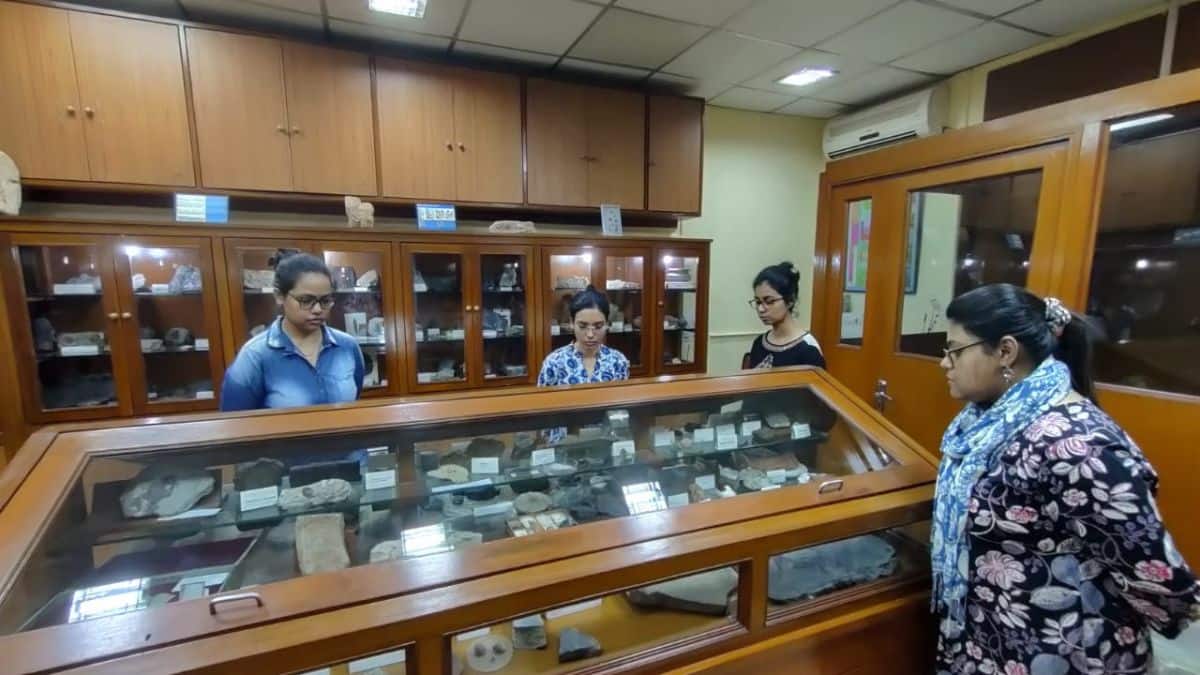 Calcutta University’s botany department has a paleobotany museum. Subir Bera, the professor who set it up, worries about its future (Image: By special arrangement)
In the Botany department, the number of teachers has fallen sharply – from 33 sanctioned posts to just 12 – following years of retirements and no fresh recruitment. “We are somehow managing, but a research-intensive department like ours cannot sustain growth without adequate faculty,” said professor Subir Bera.
He explained that the department’s strength lies in specialised fields such as phycology and paleobotany, which depend on years of lab-based research and mentoring.
“When a professor who has built a research school over decades retires and no one replaces him, the entire line of work collapses,” he said. Bera, who teaches paleobotany and has developed a museum in the department, worries about its future after his retirement.
There are many similar specialised fields in the department where work has and is being done.
Bengali Dept: Overcrowded classrooms
The student strength is high with hundreds joining through each cycle of Calcutta University PG admissions.
Of the Bengali Language and Literature department’s 15 sanctioned posts, nine are vacant. The department has 450 students per batch, divided into three sections of 150 each.
“It’s very difficult to manage such large batches,” said a professor who spoke on condition of anonymity. “We are only six teachers, and to complete the syllabus, we have to work extended hours and depend on guest lecturers.” Guest lecturers, however, are not always available.
The department has produced some of Bengal’s most celebrated figures — novelists like Shirshendu Mukherjee, Samaresh Majumdar, former West Bengal chief minister Buddhadeb Bhattacharjee, and current education minister Bratya Basu – all alumni of Calcutta University.
“Earlier, there was a sense of creative energy in the department,” said the professor. “Now, we spend most of our time just trying to cover the syllabus. The passion is still there among students, but teachers are too few.”
He added that the shortage extends across other language departments as well. Linguistics has only three teachers as does Hindi; several more are similarly understaffed, including the business management department.
Calcutta University Economics: Declining placements
The economics department faces similar challenges. Out of 22 sanctioned posts, only 12 are filled. “Next year, three of us, including me, will retire,” said Mahalaya Chatterjee. “If recruitment doesn’t happen soon, it will be very difficult for the remaining nine teachers.”
The department admits about 220 students each year, with around 180 completing the programme. It offers two postgraduate courses, a traditional two-year programme and a new one-year NEP-based course. Running both simultaneously has increased the workload.
“We have no problem with research, and our infrastructure is reasonably good,” said Chatterjee. “We have two computer labs, one with 60 computers and another with 30, but maintenance is an issue.”
Placement numbers have also fallen with the market slowdown. “We placed 75 students in 2021; now we manage about 40 a year,” she said. “Around 25 to 30 go for higher studies, but the rest are finding it hard to get suitable jobs.”
CU Faculty Shortage: Impact on students
Once a Centre for Advanced Study, the history department was known for its strong faculty and research tradition. “This department has a golden past,” said Shouvik Mukherjee, professor in the department. This one too is struggling.
The sanctioned post strength is 25 but only eight permanent teachers are in place.
“When I joined in 2008, we were 19. Since then, many have retired, and no new appointments have been made. Only three chair professors were appointed. By 2028, we may have only six faculty members left,” Mukherjee said.
The department admits about 193 students each year, but only 145-150 appear for the final exams. “Many drop out midway,” he added. “Students have lost interest in higher studies. They tell us, ‘Why spend four years on a degree when we can earn through Swiggy or Uber?’”
The decline in teaching jobs has worsened the situation. Most history graduates traditionally joined schools or colleges, but with the School Service Commission’s (SSC) teacher recruitment exams not being held for several years, opportunities have dried up. “From 1998 to 2010, our students regularly cleared the SSC and joined higher secondary schools,” he said.
Research funding has also declined. “We were part of the Centre for Advanced Study, but that funding stopped,” said Mukherjee. “Not just for us, universities across India lost that support.”
 Add as a preferred source on google
Follow us for the latest education news on colleges and universities, admission, courses, exams, research, education policies, study abroad and more..
To get in touch, write to us at news@careers360.com.
Next Story
]Latest Education News
]Related News
]Muzaffarnagar inter college principal arrested for alleged sexual harassment of Class 11 student
JNU sexual harassment complainants slam ABVP for politicising case, breaching confidentiality
Venomous snake found in RTU hostel; students end protest after VC's assurance on campus safety


