
‘What is our life?’: Transgender Bill 2026 ‘returns us to the 1880s,’ says Kerala’s first trans lawyer
Sheena Sachdeva | March 18, 2026 | 03:40 PM IST | 10 mins read
If the draft bill, which drops self-identification of gender, passes, Kerala’s first transgender advocate will no longer be trans. She explains how the question of identity will further exclude the groups from education, employment
The ministry of social justice and empowerment’s Transgender Persons (Protection of Rights) Amendment Bill, 2026, introduced in the Lok Sabha last week, has stunned the community and set off a wave of protests. The Bill seeks to drop a core principle of the existing legal framework for transgender persons – the right to self-identify gender. If voted into law, the Bill will set the community’s progress back decades.
All major legal developments toward the inclusion of transgender persons – some of the most marginalised in the country – have happened in the last 20 years. In 2014, in a public-interest litigation filed by the National Legal Services Authority, the Supreme Court pronounced the landmark NALSA judgement which affirmed the right to self-identify gender and recommended reservations in education and employment for transgender persons. Five years and much campaigning later, the The Transgender Persons (Protection of Rights) Act, 2019 came, prohibiting discrimination against transgender persons in education, employment, healthcare, housing and public services. However, it did not provide for reservation. In between, in 2018, the SC struck down Section 377 of a criminal law that criminalised same-sex relations.
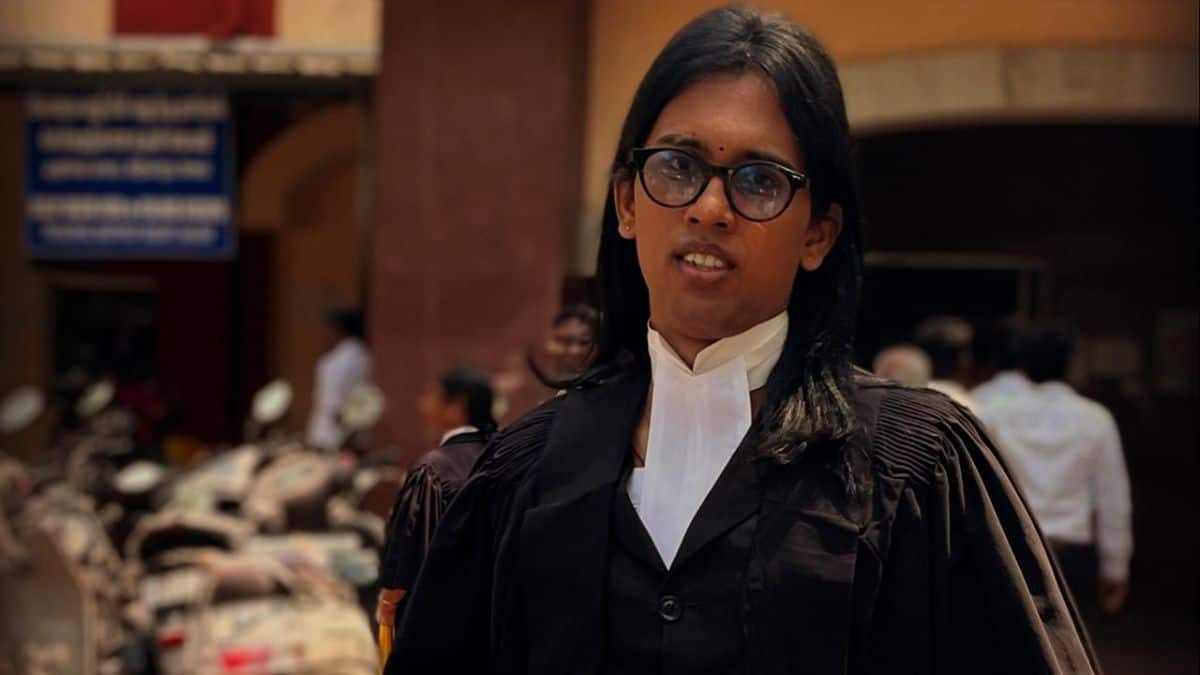
The draft amendment not only does nothing to advance the cause of this community, its altering the definition will strip many sub-groups of their rights and cause further exclusion of a marginalised group from education and employment, explains Padma Laxmi, Kerala’s first transgender advocate who, if MSJE’s amendment goes through, will no longer be trans in the eyes of the law.
Edited excerpts from a conversation below.
Q. The draft bill replaces self-identification with the authority of a medical board. What impact will this have?
This is a complete violation of natural justice. In NALSA v. Union of India (2014) judgement, the Supreme Court upheld the right to self-determine gender as a part of personal liberty. Even in the Puttaswamy judgement in 2017, the apex court declared that the right to choose one's own identity is an essential part of the Right to Privacy. Both these judgements clearly said that it is a right of a person. So, the right to privacy must be protected.
After this bill is implemented, if I am applying for a transgender identity card, I need to face one medical examination under a medical board and appear in front of a judicial magistrate. After that, if the judicial magistrate doubts me on my identity or this person may fluctuate from their identity, then I need to appear before another medical board. This will exclude so many marginalised people from this community. This is abuse of the fundamental right.
Q. How does removal of the provision on self-perceived gender identity affect trans youth seeking education?
The removal of the self-identification clause has excluded all the trans men, trans women, non-binary and queer people from the definition. No clause of inclusion is left.
On the ground, it will create different types of issues. Under this bill, a transgender is identified as only a few socio-cultural communities including, Kinner and others. We need to understand transgenders are people whose gender does not match with the gender assigned at birth. The draft bill has removed this definition completely and excluded trans men, trans women, people who have undergone sex reassignment surgery, hormone therapy, laser therapy, or such other therapy as gender affirming care for gender dysphoria. This step will invalidate the identities of everyone in the community.
The NALSA judgment recommended recognising transgender people as a socially and educationally backward class. While this has not been included in the draft bill, what are the larger consequences of lack of reservations for trans youth in education and public employment?
The NALSA judgment has not yet been fully implemented, even in Kerala. I am currently appearing for transgender women who are petitioning the government to secure horizontal reservation, but it has yet to be realized. To date, only Karnataka, Tamil Nadu, and West Bengal have implemented the NALSA mandate.
The draft bill remains silent on the issue of reservation. This draft is still not addressing any of the core problems faced by this community.
Q. Why do states ignore the NALSA judgment for introducing horizontal reservation?
It is a political problem. In Kerala, the state is led by the Marxists. The court has ordered the implementation of the judgment, but the government has repeatedly asked the court for more time. Now that the election date has been announced, implementation will not be possible; it means the next government will have to introduce horizontal reservation. Furthermore, the Muslim league is continuously harassing this community.
In other states as well, politics remains the primary problem. In Maharashtra and Delhi, they are simply not willing. Governments are avoiding their responsibility to the community because of political calculations.
Also read Diversity and inclusion ‘all on paper’, writes a transgender activist on experience at work
Q. Why do you think the draft bill doesn't include the reservation clause for the transgender community?
The Central Government is not ready to implement any meaningful measures for this community. They have failed to act because transgender persons are still not considered a part of society. Recently, an affidavit was submitted by the central government that gay or transgender persons cannot donate blood. But trans men or women’s blood will not cause any problem. Gender dysphoria does not cause disease and cannot be spread through blood. It is a psychological and identity-based stigma.
The central government is continuously harassing the LGBTQA+ community and has systematically excluded transgender people. Therefore, achieving horizontal reservation will be impossible under this BJP government. I have no hope in them. Even in the Supriyo v. Union of India case, the government's stance was clear. We have no hope in this administration. We live in constant fear within our own country.
This is the true reason why this bill has been introduced. It is a tool of non-acceptance.
From my perspective, I see a contradiction in the current ideology of the current government: in Hindu tradition, gender diversity is sacred. Lord Krishna himself took a transgender form. If our heritage recognises this, why does this government refuse to?
Q. The Bill restricts transgender definition to specific socio-cultural groups (Kinner, for example) and intersex variations. How will this impact the excluded trans communities?
This is the question we are arguing. We are asking, what will be our path? What will be our future after this bill is implemented? What is our identity? A trans man is facing this reality. He is not a man in the traditional sense, and he is not a woman; he is a trans man. My identity is my gender. By excluding trans men, trans women, non-binary people, and queer people from this definition, it leads to one fundamental question: what is our life?
Since 1817, we have faced a black law in Section 377. Many years after that, the Supreme Court finally apologised to the marginalised community for this black law, and it was repealed and stripped down. Therefore, as a lawyer and as a transgender woman, I say that if this bill is passed or receives assent from the President, the court will definitely strike it down because we believe in the constitution. Our constitution will protect every transgender person in India.
Q. Will this lead to more trans students dropping out due to the sheer complexity of the process?
Definitely, it will lead to dropping out of trans children from school and higher education, which is already worse in our community. I would like to share the real-life story of one trans girl. She is studying in Class 9 and is facing a high degree of gender dysphoria. She is facing questions in terms of how to study and how to live her life. She is a self-identified trans woman. How will she overcome these problems or pursue a career with such a law?
There are criteria that lead to major consequences like dropping out and forced identity revelation; such activities definitely will push more trans youth towards poverty or even suicide.
Q. Transgender students face extremely high dropout rates due to stigma, bullying, harassment and exclusion. Does the bill address any of this?
No, the draft bill doesn’t. In progressive states like Kerala, only two universities, Mahatma Gandhi University and Cochin University of Science and Technology (CUSAT), provide two seats to trans students. But no such clause is in schools or colleges.
In schools and colleges it is difficult for any transgender child to study. Kerala has a 100% literacy rate but they are still not ready to accept us as a part of the society. Hence, most transgender children, after attaining 18 years of age, do not get any job.
If this bill is implemented, it will definitely create lots of problems. For instance, intersex persons definitely will get admission, but trans men and trans women are excluded from the definition, so they cannot claim the reservation or any rights of a transgender person. Trans men and trans women cannot because they are excluded from the transgender definition.
Also read Why transgender students are taking law schools to court
Q. Companies are advised to have equal opportunity policies. However, if a trans person cannot get the new government certificate, can a company legally refuse to hire them?
This community is facing a job problem with a very high degree of job scarcity. Even highly-educated people from the transgender community face different kinds of discrimination. For some companies, the fact that they find it difficult to address the issue of documents of a transgender person is the first problem.
The second problem is that even if they change all these documents, private institutions are not ready to provide any shelter. Even hostels or rented houses are not provided to transgender people. So, providing or surviving a job becomes a very difficult task. In this scenario, if this bill is introduced, it will definitely adversely affect this community.
I am a self-identified person. My gender is a trans woman. After this bill, I would need to appear before a magistrate. The magistrate will definitely reject my application. So, I will definitely not get the certificate as per the new terms and conditions of the central government. In society, people will then ask: 'Who are you?
Trans women are not recognised as a third gender by the new terms and conditions of the central government. My gender is not recognised under this bill. Therefore, I have to face the consequences: I have to face questions regarding my citizenship, rental accommodation, and other fundamental rights like insurance, health insurance, and the right to marriage. This entire scenario will be under question. This bill is definitely inhuman in nature and an immature bill from the minister.
Q. Why do you think the definition is being narrowed?
The government essentially reduces the number of people who can claim reservation or scholarship benefits. This is politics. This government is facing a high degree of transphobia. They are not ready to provide any reservation, any shelter, or any insurance to this community. Instead, they are only ready to provide for the Kinner, Jogta, and Aravani, the specific cultural communities that already exist in our society.
The BJP government has a vested interest in avoiding the presence of people from the broader transgender community. If the recognised number is smaller, they do not have to provide reservation to this community. By narrowing the definition, they are effectively erasing the many trans men and trans women who do not belong to those specific cultural groups.
Q. How far back does this draft take us?
I think it takes us back to 1857. It returns us to the 1880s, the colonial days. As a progressive India, we are supposed to be thinking and acting progressively. Our science is changing. Our health sector is improving. We are achieving more in every field.
Yet, this draft bill drastically pushes us back into the colonial period. I must say one thing: this bill will not be allowed to happen, it will not be passed because, as a lawyer and as a transgender woman, I will definitely fight against it. I will definitely appeal to the Supreme Court to squash this bill. We will definitely fight. We may struggle, and we may even die, but we have no problem with that. We will protest for the entire community and for all those who are coming out.
 Add as a preferred source on google
Follow us for the latest education news on colleges and universities, admission, courses, exams, research, education policies, study abroad and more..
To get in touch, write to us at news@careers360.com.
Next Story
]Degrees Without Jobs: 40% of graduates in India can’t find work, fewer get salaried employment, finds report
State of Working India 2026 report finds more women enrolling in higher education but face stagnant salaries; rising MBBS, BTech fees, poor vocational training and deteriorating ITI quality deepen crisis
Shradha ChettriLatest Education News
]Related News
]PM-SETU Scheme: Centre approves over Rs 1,000 crore for five ITI clusters in Maharashtra, Odisha, J&K
Madhya Pradesh government releases Rs 502 crore as RTE fee reimbursement to 20,456 private schools
Nobel Peace Prize 2026: Indian-origin Navi Pillay honoured for work on peace, international law


