
Fix PMKVY, hold PM-SETU until foolproof; set up national skill board to rationalise schemes: Panel
Shradha Chettri | March 17, 2026 | 06:28 PM IST | 4 mins read
With just 14% budget utilised under PMKVY 4.0 and no SPVs under PM-SETU, panel urges MSDE for independent evaluation, overhaul of flagship schemes
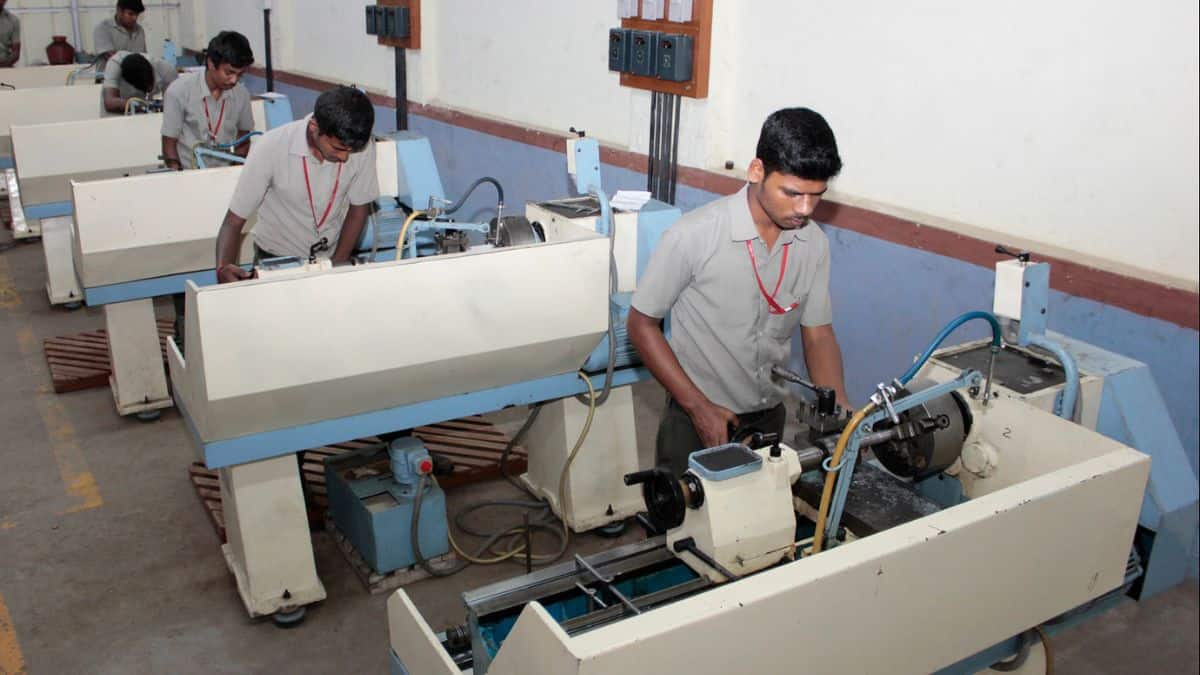
The parliamentary standing committee on skill development has recommended a “National Level Skill Board” with all states participating for the effective implementation of schemes under the ministry of skill development and entrepreneurship (MSDE). It has also stated that the MSDE should just focus on a few flagship skilling schemes and let states handle the others, as there has been only “limited success”.
The panel, headed by BJP MP Basavaraj Bommai, while examining the ministry’s demand of grants, expressed concern over the poor utilisation of the budget in two key schemes – the Prime Minister Kaushal Vikas Yojana (PMKVY) and Pradhan Mantri Skilling and Employability Transformation through upgraded ITIs (PM SETU).
The PMKVY, an important component of the Skill India Programme (SIP), has utilised just 14% of the allocated budget in the 4.0 version. PM-SETU utilised 0.63% of the budget allocation.
The total budget utilisation for SIP was 49.79%. In the 2026-27 budget, the scheme has been allocated Rs 2,800 crore.
Skill Development: National Level Skill Board
The panel’s recommendation follows its observation that the ministry is short of personnel in both technical and administrative areas to implement the various schemes and also to coordinate with the state governments.
“The committee feels that contribution and commitment by all the states in the effective implementation of the schemes are significant and therefore, the share of state governments has to be a part of all the important schemes of the ministry,” the report stated.
It also observed that the permanent institutionalisation of Skill Development Centres is also highly essential to boost skilling among youth.
Focus on flagship schemes: Panel to MSDE
The committee has bluntly stated that the ministry’s multiplicity of schemes and collaborations with different institutions for implementation have met with “limited success”.
“The primary objective of developing skills across various sectors should not be lost sight of and the approach of the ministry towards skilling needs to be simplified and focused to achieve the desired results. The committee is of the view that reducing the number of schemes of the ministry would provide focused attention to the core issue of skilling for livelihood opportunities and economic development,” the panel report states.
The committee recommended proper rationalisation of schemes and focusing on few flagship programmes.
“While the rest should be left to the states which possess the ‘native intelligence’ relating to the local skilling requirement. Simplified guidelines may be issued to the states and the central government should take on the role of a regulator/consultant providing support, wherever needed,” the report added.
The committee has expressed concern over the high budgetary projections the ministry has made without full preparation or capacity to implement the schemes, particularly new ones and utilize the funds effectively.
“An analysis of the budgetary allocations of MSDE during the last three fiscal years has shown significant increases of 28.50%, 34.95% and 62.05 % in the BE for FYs 2024-25, 2025-26 and 2026-27 respectively. However, shortfall in the actual expenditure persists even though the BE allocations were slashed down at the RE stage,” added the report.
PMKVY: Missed targets, poor budget utilisation
The committee expressed concern that many candidates trained under PMKVY 4.0 have failed to meet the required competencies “leaving a question mark on their chance of finding employment. …unless corrective measures are taken, the very purpose of the scheme would be defeated,” the report added.
Careers360 had reported how PMKVY 4.0 had completed 15% of the target of meeting the beneficiaries.
The panel recommends an independent evaluation of the efficacy of the training imparted under the scheme.
“The committee emphasises that it should be conducted without delay to know whether dropouts under the training programme and failure in assessment indicate systemic failure, poor quality of training imparted or lack of focus on employment outcomes,” it added.
It has also asked the ministry to address the various shortcomings before it launches the 5.0 version of the scheme, for which the ministry is waiting approval. PMKVY 4.0 ends on March 31, 2026.
Launch PM-SETU ‘only when foolproof’
The committee has recommended that new or revised schemes should be launched only when they are “foolproof” and all the stakeholders are onboard, to avoid delays in approval, implementation and utilisation of funds.
“Funds sought for the new schemes should be realistic, starting with smaller budgets based on physical and financial targets fixed,” the report added.
The allocation for PM SETU stands at Rs 6,140.50 crore in BE 2026-27. It was formulated and appraised in the financial year 2024-25, however the cabinet approved the scheme only on June 7, 2025.
“The committee observed that no Special Purpose Vehicles (SPVs) which form the core implementation mechanism of the PM-SETU scheme, have been formed so far due to procedural constraints being faced by PSUs/industry partners in joining SPVs,” the report said.
The cabinet has approved 25 Hub-and-Spoke ITI clusters for the initial pilot rollout under the PM-SETU scheme during FY 2026-27 and 78 clusters comprising 427 ITIs (78 Hub and 349 Spoke ITIs) have been identified across the country.
Further in regard to the working of ITIs the committee has expressed concern over the low enrolment rate of candidates in government ITIs.
“The committee is concerned at this unhealthy trend and urges the Ministry to address these issues in coordination with the state governments and other stakeholders. The Committee are also of the considered view that upgradation of ITIs and improving the quality of training provided in these institutes should be taken up on priority,” the report added.
 Add as a preferred source on google
Follow us for the latest education news on colleges and universities, admission, courses, exams, research, education policies, study abroad and more..
To get in touch, write to us at news@careers360.com.
Next Story
]Operation Kayakalp: ‘Jarjar’ schools in UP a blind spot – with crumbling buildings and children left behind
Uttar Pradesh’s most dilapidated schools needed Operation Kayakalp’s infra boost but were bypassed. Now, these are most vulnerable to closure. Plus, with low funds, maintenance is a struggle
Sheena SachdevaLatest Education News
]Related News
]West Bengal approves 14,454 govt posts, Rs 50,000 scheme for unmarried women pursuing higher education
NPTEL says MoE funding continues, clarifies survey was to ‘seek learner feedback’


