
CBSE: APAAR ID must for LOC registration from 2026-27 session; two-level Class 10 exams from 2028
Shradha Chettri | February 19, 2026 | 06:38 PM IST | 3 mins read
Under 50% students in CBSE schools had APAAR IDS by 2025-26; two-level curricula for maths, social science and science will be introduced from 2026
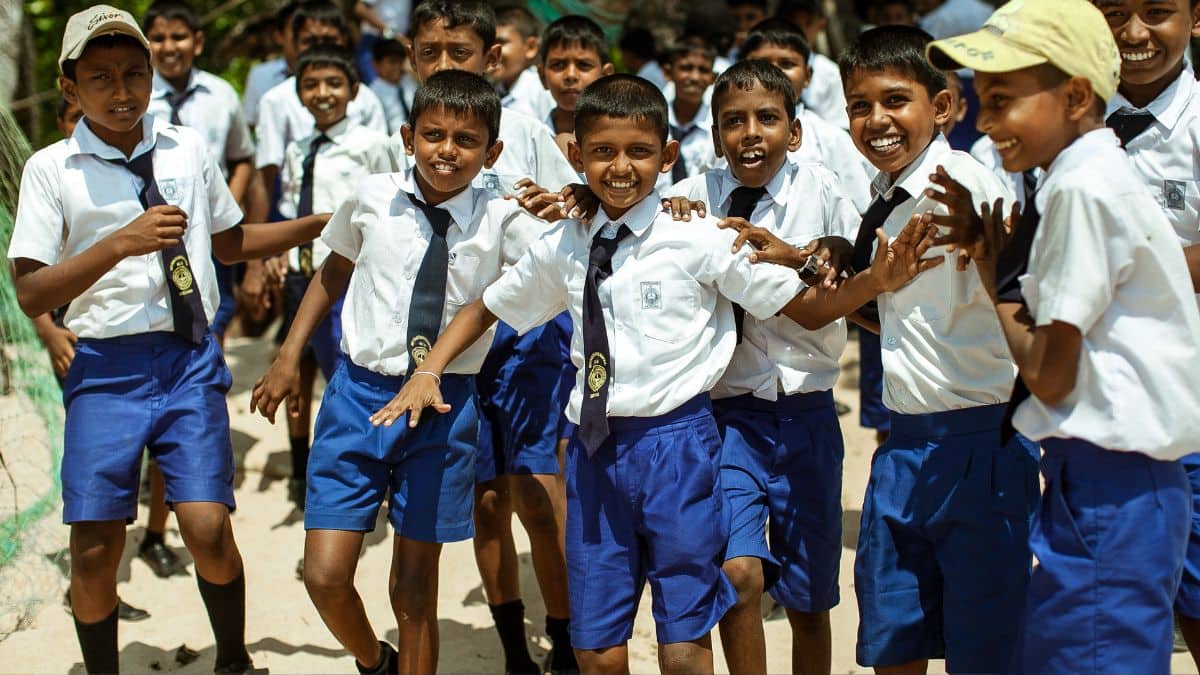
CBSE Board Exams: From the 2026-27 academic session, the Central Board of Secondary Education (CBSE) will make having APAAR IDs mandatory for filling the CBSE exam registration forms. The decision follows the board’s discovery that by 2025-26, under 50% students in affiliated schools had Automated Permanent Academic Account Registry IDs.
In the governing body meeting of the board held in December, the board also decided that the two levels of examination for mathematics, science and social science in Class 10 will begin from the 2028 academic session.
These decisions came along with new rules on the use of unfair means in CBSE board exams and ones on computing and AI curriculum and grading of schools.
APAAR IDs in Classes 9, 10
The APAAR ID is intended to be a unified digital identity for every student.
“To operationalize this initiative, CBSE has integrated the process of APAAR ID linking with the registration and list of candidates (LOC) modules for Classes 9 to 12. This integration ensures that every student registered with the board has a verifiable and unique academic identifier, facilitating data consistency and lifelong record management,” the minutes of the meeting stated.
In August, 2025 the board had asked schools to be ready with APAAR IDs of the students whose data is to be filled in registration and LOC of Classes 9 to 12. As per the board, some states, especially Haryana and West Bengal, faced difficulty in creating APAAR IDs and requested relaxation while registering students to the CBSE 2026 board exams.
Also read ChatGPT for education? IIT Madras director on how Bodhan AI will work and what it can do
The board's data showed that in West Bengal, just 9.01% of students had APAAR IDs and for Class 11, it was 17.83%. Haryana, also behind other states, was still ahead of West Bengal with 54.42% enrolment in Class 9 and 54.80% in Class 11.
Like West Bengal, Gujarat’s ID creation is low at 27.59% for Class 9 and 19.94% for Class 11. For Bihar too, the number stands at 23.59% and 26.01% for Classes 9 and 11, respectively.
“APAAR ID to be a mandatory field for filling of Registration and LOC Data for 2026-2027. CBSE to initiate communication and hand-hold schools in states where there was a problem in creation of APAAR ID.The committee and the house were hopeful of better results next year with efforts from the board,” the minutes of the meeting stated.
CBSE board exams at two levels from 2028
In 2024, the board cleared the proposal of introducing two levels of curriculum for mathematics, science and social science in Class 9. At present the board has two levels only for mathematics, basic and standard, for students to choose from.
Called “standard” and “advanced”, the two levels will be introduced from the 2026-27 academic session. The board will also conduct capacity-building sessions and orientation for this.
“The board examination at two levels of these subjects will be conducted for the year 2028, after adequate preparatory time for schools,” the document says. Plus, that will also give the National Council of Educational Research and Training (NCERT) to develop textbooks. NCERT books for Classes 9-12 that are aligned with National Curriculum Framework for School Education 2023 are still awaited and the previous curriculum and syllabi will be continued for the 2026-27 academic year as well.
 Add as a preferred source on google
Follow us for the latest education news on colleges and universities, admission, courses, exams, research, education policies, study abroad and more..
To get in touch, write to us at news@careers360.com.
Next Story
]CBSE Plans: Compulsory computing, AI in Classes 9, 10 syllabus; more skill subjects; 25% EWS quota review
CBSE plans major overhaul with new grading system for Kendriya Vidyalayas, JNVs, and EMRS, introduction of semiconductor tech, additional languages; seeks NCERT help on subject placement for Classes 9,10
Shradha ChettriLatest Education News
]Related News
]J-K doubles MBBS, BDS interns' and FMGs' monthly stipend amid agitation
Medical interns in J-K restart agitation over stipend hike; allege government failed to honour assurance
'Spare India from anarchy': Indian-origin students, academicians condemn anti-EC protests


