
Experts propose 7 spots for university townships in education ministry’s post-budget webinar
Shradha Chettri | March 9, 2026 | 04:36 PM IST | 4 mins read
The 7 towns across 6 states are also industrial hubs; experts against ‘JEE mechanism’ for admissions. Addressing the opening session, PM Modi spoke for stronger education-economy links
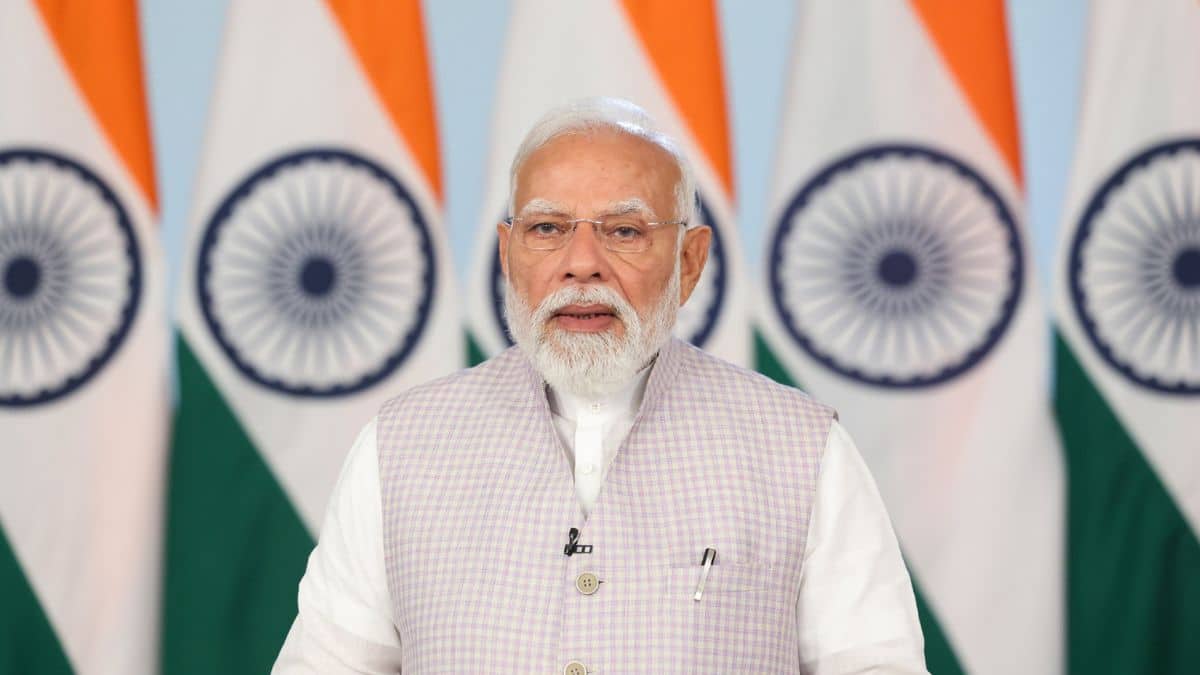
The five university townships proposed in the union budget for 2026-27 should be built as satellite towns, close to already-developed cities, built on a cluster model with research and development facilities for industries in it and a different admission model for students – these were among the recommendations made at a post-budget webinar organised by the ministry of education on Monday, March 9.
Other than the university townships, the education ministry’s webinar included discussions on other major budget 2026 proposals – hostels for girls in STEM programmes and skilling.
While for the girls hostel scheme, participants suggested identifying locations where such a hostel can become a “fulcrum” connected to the university and research parks, enabling women to pursue research and innovation.
The webinar started with an address by Prime Minister Narendra Modi who spoke on the theme, “Sabka Saath Sabka Vikas-Fulfilling Aspirations of People”
Budget Webinar: University townships
The session moderated by Indian Institute of Science (IISc) director Govinda Rangarajan deliberated on the modalities and infrastructure requirements for the university townships.
Arvind Panagariya, the first vice-chairman of the government think-tank Niti Aayog and chairman of the Finance Commission, highlighted that with the limited funds for the scheme, it was important to use them for building the universities.
“Each of the towns should be treated as a satellite town of a bigger city. In order to attract talented students and faculty, minimum requirements are essential…and being in the vicinity of a large city will be very helpful,” said Panagariya.
All participants agreed that building the townships would require active participation of states. Usha Padhee, additional chief secretary in the department of housing and urban affairs, government of Odisha, highlighted how her state, with a strong ease-of-doing-business policy, could be an important centre for building such townships.
While BS Murthy, director, Indian Institute of Technology (IIT) Hyderabad pointed out that like the model at Stanford, it was important that industry research and development labs be present at the townships.
Murthy also added, “Who should be admitted in these universities is another important question. We need to come out of a mechanism like the JEE and find other models. India is known for being service-oriented, it should work towards becoming technology-oriented. The criteria of selection to give a degree should focus on building capability.” This comes as the IITs are themselves rethinking the JEE Advanced and testing other forms of selection.
Among the locations suggested for the university townships were the following:
- Amravati and Vishakhapatnam, Andhra Pradesh
- Gautam Budhhnagar, Uttar Pradesh
- Coimbatore, Tamil Nadu
- Dholera, Gujarat
- Hubli, Karnataka
- Jagiraod, Assam
Women in STEM: Girls’ hostels
The budget had also proposed a hostel for girls pursuing science, technology, engineering or maths (STEM) in every district.
Discussing the proposal in a session moderated by Suchi Sinha, associate professor at Indian Institute of Technology (IIT) Delhi, Sharmila Mary Joseph, principal secretary, higher education, government of Kerala, said that with support from central government, it would be a great help towards promoting women in STEM education.
“The state govt will work in close collaboration with the central government. Hostels which will come up should be a fulcrum – how hostels connect the researcher with universities and research parks. We need to look at backward linkages, meaning how we link the scheme with colleges, scholarships and various schemes run by the DST and others. The other [aspect is] forward linkage, with labs, research parks and others.”
Ujwala Chakradeo, professor and vice-chancellor of SNDT Women's University, Mumbai, talked about newer infrastructure requirements, such as alarms in every room for emergencies and a formal mechanism to voice concerns.
As an intervenor two vice chancellors, one from Sri Padmavati Mahila Vishwavidylayam, Tirupati and Bastar University, Chhattisgarh shared their state specific concerns.
V Uma, from Sri Padmavati Mahila Vishwavidylayam, Tirupati, said: “A survey conducted in the state in collaboration with the British Council had shown that there is a dropout after Class 12 of girl students. It will be important to look at these aspects and build hostels with the cluster concept.”
Manoj Kumar Srivastava of Bastar University added, “Distance is a big barrier for women students as we do not have enough hostel facilities. Our university caters mostly to tribal students. It will be important that funds are provided to every college to build hostels or let the hostels come up in cluster models.”
Education-economy link: PM Modi
PM Modi addressed the first, open session and advocated for stronger links between education and the economy.
“We must further accelerate the process of linking our education system with the real-world economy. We need to increase our focus on subjects such as artificial intelligence and automation, digital economy, and design-driven manufacturing,” said Modi.
He also expressed pride that the number of women in STEM education has been increasing over the years.
But added, “As we prepare for futuristic technologies today, it is crucial that no daughter is held back due to a lack of opportunities.”
Discussing the nexus between education, employment, and enterprise, PM highlighted the promotion of the AVGC (animation, visual effects, gaming, and comics) sector.
“India is moving towards an innovation-driven economy, it is important that academic institutions transform their campuses into hubs of industry collaboration and research-driven learning to provide students with essential real-world exposure. I would urge you that in this webinar, there must be a brainstorm on developing your campuses as centers of industry collaboration and research-driven learning,” said Modi.
 Add as a preferred source on google
Follow us for the latest education news on colleges and universities, admission, courses, exams, research, education policies, study abroad and more..
To get in touch, write to us at news@careers360.com.
Next Story
]Latest Education News
]Related News
]Maharashtra MBBS interns demand Rs 30,000 monthly stipend, warn of strike from November 2
J-K doubles MBBS, BDS interns' and FMGs' monthly stipend amid agitation
Medical interns in J-K restart agitation over stipend hike; allege government failed to honour assurance


