
CBSE Plans: Compulsory computing, AI in Classes 9, 10 syllabus; more skill subjects; 25% EWS quota review
Shradha Chettri | February 19, 2026 | 09:10 AM IST | 5 mins read
CBSE plans new grading system for KVs, JNVs, and EMRS, semiconductor tech and language expansion; seeks NCERT help on subject placement for Classes 9,10
50+ Entrance Exams after 12th
Download this ebook to explore 50+ entrance exams after Class 12 for admission into top undergraduate colleges across engineering, management, law & more.
Download Now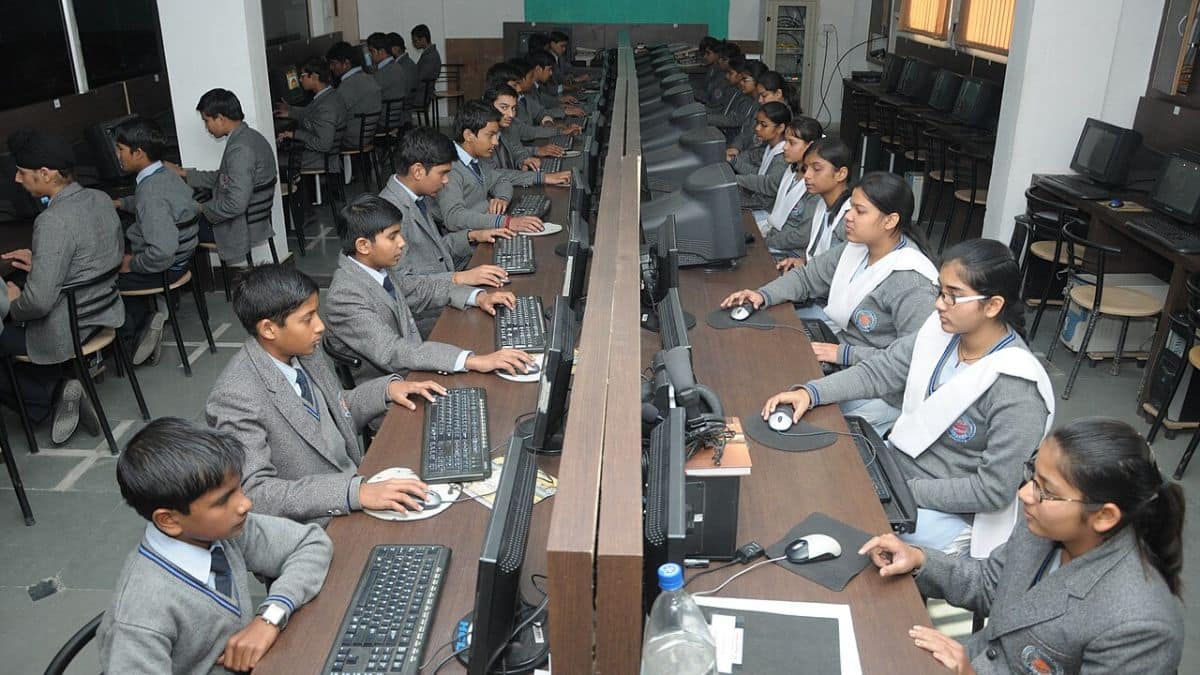
The Central Board of Secondary Education (CBSE) will be developing competency-based assessments for their skill subjects as per the Programme for International Student Assessment (PISA) standards. The body will also introduce semi-conductor technology as a skill subject for students of Classes 8-12. The artificial intelligence course from Class 3 onwards will be launched in the 2026-27 academic year itself. These were among the decisions taken at the board’s last governing body meeting.
Live Updates: CBSE Board Exams 2026
IMP. Ques & PYQ's: Physics | Chemistry | Maths | Biology | English
Formula Sheet & PYQ's: Physics | Chemistry | Maths | PYQ's (All Subjects)
Also See: Foreign Universities in India | Liverpool | York | Bristol | Victoria
Free Study Material for Class 12th: Boards & JEE | Boards & NEET
The board will also pilot a grading system for central schools – the Kendriya Vidyalayas (KV), Jawahar Navodaya Vidyalayas (JNV) and Eklavya Model Residential Schools (EMRS) – and review the implementation of Section 12 (1)(C) of the Right to Education Act 2009. That section provides for 25% reservation for EWS and disadvantaged groups at the entry level in private schools.
Further, with the board introducing two board examinations for Class 10, it will also develop new marksheets and change approach toward the use of unfair means in exams.
Also read CBSE 2026: Board tightens rules on cheating, makes it harder to pass; Class 10 gets new marksheets
CBSE: Assessment for skill subjects
The board had received a proposal from the Organization for Economic Co-operation and Development (OECD) for developing strategies for competence-based assessment of skill subjects and strengthening skill development in secondary education.
The proposal for the strengthening includes:
- Linking current assessment framework with PISA
- Comparative analysis between SAFAL and PISA-aligned school reports.
- Mapping CBSE learners onto global PISA scales
- OECD support in interpretation and improvement strategies.
- Training on developing assessment items
- OECD-led in-person training on PISA-style item construction for skill subjects.
- Increasing flexibility in programme design, for instance through modular approaches that make it easier for young people to upskill and reskill.
- Studying, analyzing and proposing learnings from international models such as South Africa's General Education Certificate.
Semi-conductor tech, AI in syllabus from 2026
In a push for vocational education, CBSE has also proposed introducing semi-conductor technology as a skill subject for students from Classes 8 to 12.
“The Semiconductors for Youth programme is designed as a structured 24-hour learning module covering three progressive levels. To build early interest, strengthen STEM competencies, and expose students to future-ready career pathways in the semiconductor sector, it was proposed to introduce a structured learning programme on semiconductor technology,” the minutes of the GB meeting state.
The subject Computational Thinking (CT) and Understanding Artificial Intelligence (Al) for Classes 3-8, set to start from 2026-27, is undergoing vetting by the National Council of Educational Research and Training (NCERT).
On how the subject would be introduced the CBSE states that the foundational CT will be integrated with mathematics and ‘The World Around Us' for Classes 3-5 through worksheet-based activities.
“Advanced CT along with introductory, pen-and-paper-based Al literacy and interdisciplinary projects for Classes 6-8; and future placement of CT/Al as a compulsory subject in Classes 9-10 and as elective/skill courses in Classes 11-12” is how the board is envisioning AI integration into the school curriculum.
The board has also urged NCERT to coordinate decisions on subject placement for Classes 9 and 10.
Grading system for schools
For central government-run schools, the CBSE is considering a grading system that “emphasises real-time, on-site evaluations and integrates academic performance with broader indicators such as teacher development, governance, infrastructure adequacy, inclusivity, and student well-being”.
The meeting minutes say: “The aim is to enable data-driven analysis, ensure accountability, and provide structured support for continuous improvement across CBSE-affiliated schools. The initiative involves external inspections, expert field validations, and multi-domain assessments,” it added.
The project will be rolled out in a phased manner, beginning with 500 selected schools. This pilot phase will be supported by a dedicated cadre of inspection specialists and an ongoing process of refinement based on data and field evidence.
The CBSE already had a School Quality Assessment and Assurance (SQAA) framework, originally intended for government schools and later extended to private schools as well. That is being revised into “SQAA Plus Framework” with the help of consultants and will be piloted in 40-50 schools to begin with.
“The framework will provide categorical ratings (A+, A, B+, etc.) with clearly identified gaps and improvement pathways to enhance quality assurance more effectively,” the document says.
Also readIndia saw 93,000 schools shut down over last 10 years; MP, UP lead closures, govt tells Lok Sabha
CBSE to review 25% EWS quota use
The Section 12(1)(c) of the RTE Act mandates all private unaided non-minority schools to reserve at least 25% of their entry-level seats for children from economically weaker sections (EWS) and disadvantaged groups (DG), up to Class 8
“Despite research on the implementation of Section 12(1)(c), significant gaps remain in children's actual experiences, socio-emotional growth, and learning potential in blended classrooms. There has been limited systematic exploration of how students internalize challenges of a blended classroom, such as anxiety from linguistic transitions, stigma from peer comparisons, emotional resilience, self-perception, or identity negotiation in socio-economically diverse settings,” the minutes state.
The board will hire an NGO to conduct the study.
Languages in schools
The board has been working on a capacity building programme on Gujarati language for CBSE teachers teaching the language at secondary and senior secondary levels.
“The programme aims to equip teachers with a deeper understanding of linguistic pedagogy, curriculum alignment, and the integration of cultural and literary heritage of the Gujarati language into classroom practice. It also seeks to promote multilingualism and the use of regional languages as envisaged in NEP 2020,” the minutes stated.
The board has also proposed to introduce Konkani, Dogri, Maithili and Santhali as electives, with schools using state textbooks until NCERT’s are ready.
“The curriculum committee recommended for approval the agenda to introduce these languages as elective subjects in Class 9 from 2026-27. Existing State Board/SCERT textbooks and or TLM will be used until NCERT textbooks are available,” the minutes stated.
 Add as a preferred source on google
Follow us for the latest education news on colleges and universities, admission, courses, exams, research, education policies, study abroad and more..
To get in touch, write to us at news@careers360.com.
Next Story
]Latest Education News
]Related News
]CBSE Date Sheet 2027 Live: Class 10, 12 exam dates soon on cbse.gov.in; private candidate form, LOC submission
CBSE Date Sheet 2027 LIVE: 10th, 12th board exam schedule soon; simple papers, passing marks
CBSE Date Sheet 2027 LIVE: Class 10, 12 board exam schedule soon; passing marks, paper pattern


