
Health ministry discusses nursing reforms, competency-based curriculum on day 2 of experience sharing workshop
Vikas Kumar Pandit | November 13, 2025 | 10:11 PM IST | 2 mins read
The second day of the workshop focused on innovations in nursing education and workforce development. Participants highlighted simulation-based training, digital learning platforms, and strategies to address faculty and professional growth gaps.
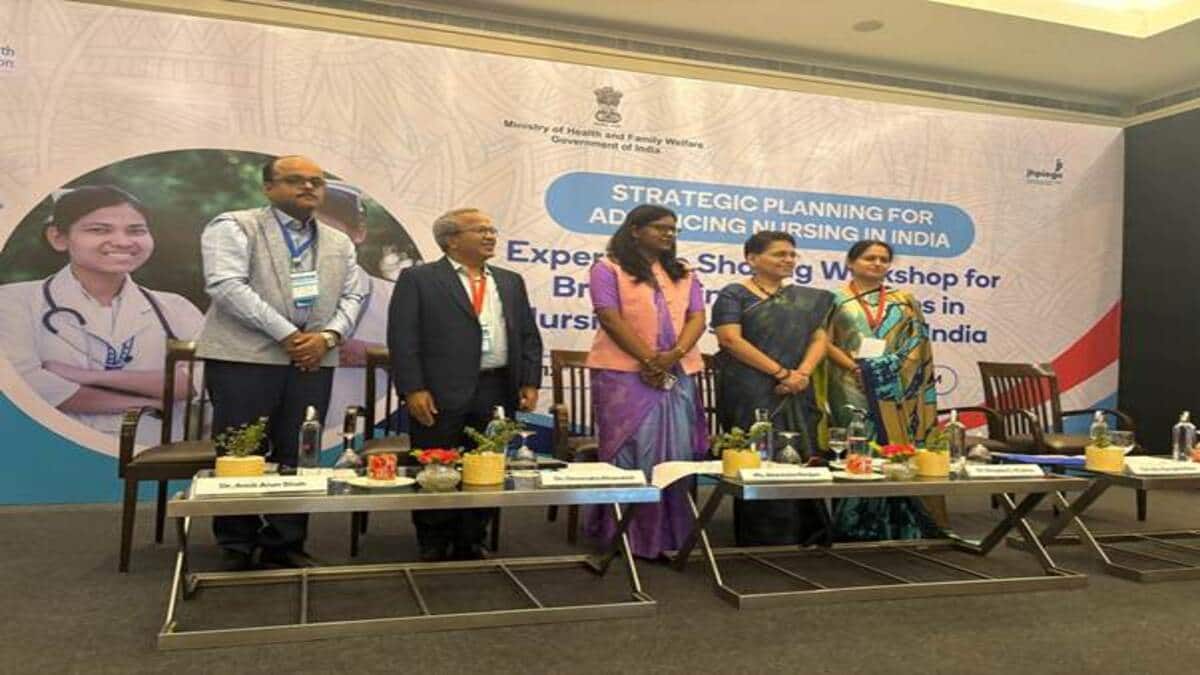
Union Ministry of Health and Family Welfare, in collaboration with Jhpiego and the World Health Organisation (WHO), continued the three-day Experience Sharing Workshop on Best Practices in the Nursing Ecosystem Across India in New Delhi on November 13, 2025.
The workshop, which began on November 12, brings together officials from central and state governments, nursing leaders, academicians, and development partners to discuss strategies for strengthening nursing education, workforce, and governance systems.
The second day focused on sharing experiences and innovations from states, institutions, and professional associations. Participants presented models including competency-based curricula, simulation labs for clinical training, state-level accreditation reforms, digital platforms for continuing education, and structured continuing nursing education programmes.
Focus on nursing leadership and quality assurance
Discussions also covered nursing leadership, quality assurance, and partnerships with private institutions. The sessions included plenary talks, thematic panels, and breakout groups, allowing state representatives to share local challenges and solutions. Key gaps identified included faculty development, regulatory oversight, and opportunities for professional growth.
“Group sessions were structured to systematically capture lessons, enabling participants to identify scalable innovations and develop concrete recommendations. The deliberations not only highlighted success stories but also identified gaps such as the need for faculty development, improved regulatory oversight, and expanded opportunities for professional growth,” the official press release said.
Also readTelangana NEET PG 2025 round 1 merit list out; 285 ineligible, cut-off between 664 and 235
First Day Focus: Nursing education and workforce reforms
Deepika Khakha, Director General of Health Services (DGHS), Ministry of Health and Family Welfare, noted the collaborative approach in policy formulation, involving multiple stakeholders to inform future nursing policies.
Akansha Ranjan, Deputy Secretary (Nursing and Dental), highlighted the importance of coordination between national and state systems to implement policies effectively and outlined the shared vision of strengthening the nursing and midwifery ecosystem.
On the first day, discussions focused on reforms in nursing education and workforce strengthening. Participants highlighted the need to transform the structure and processes of nursing education to develop a workforce capable of meeting global standards. They agreed that nursing education should aim to produce graduates who can contribute effectively to healthcare systems both within India and internationally.
 Add as a preferred source on google
Follow us for the latest education news on colleges and universities, admission, courses, exams, research, education policies, study abroad and more..
To get in touch, write to us at news@careers360.com.
Next Story
]Latest Education News
]Related News
]NEET PG Counselling 2026 LIVE: MCC round 1 college reporting from October 26; MD, MS cutoffs
Kerala University VC says no move to ban student politics, stresses need to curb violence
NIIT University holds 16th convocation, announces 100% placements for 2026 graduates


