
IIM Kozhikode, Mumbai, Kashipur, Jammu: How satellite campuses are drawing working professionals and revenue
Shradha Chettri | November 27, 2026 | 01:30 PM IST | 9 mins read
Pioneered by IIM Lucknow, the satellite campus model is now being adopted by IIM Kozhikode, Calcutta, Mumbai, Indore and more with an aim to strengthen industry access, incubation
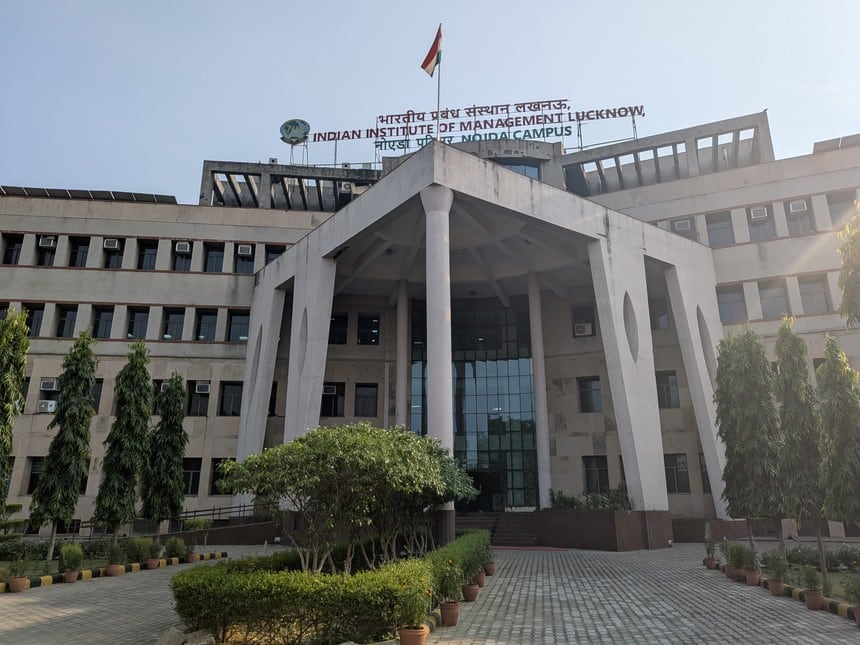
Expanding beyond the cities where they were established has been on the agenda of almost every Indian Institute of Management. Of the 22 IIMs, 11 have announced satellite campuses, some are already running and others are in the process of establishment. Set up mostly within the same state as their main campus, satellite campuses have become important for revenue generation, as have the one-year executive education programmes – full-time and weekend – they offer.
In most cases, cities identified as the commercial capital and corporate headquarters have been picked. This allows students better opportunities for direct interaction with industry, varied exposure and importantly, building alumni networks, they say.
IIM Lucknow was the pioneer of this expansion with its 20-acre campus in Noida Sector 62, set up in 2005. Now, IIM Kashipur is building one in Dehardun and IIM Jammu, in Leh. IIM Mumbai has submitted a proposal for a second campus within the city to the Maharashtra government.
The newer campuses are also looking at shifting beyond executive education to the undergraduate programmes. Both IIMs Jammu and Mumbai have announced such plans.
Also read ‘IIM Shillong to embed AI in all MBA courses; to weigh IIT JEE, CUET for UG ones,’ says director
MBA for working professionals
A key constituency for the satellite campuses are working professionals.
“In the early 2000s we saw a clear gap. Many experienced professionals wanted serious management education, but they couldn’t leave their careers and move to Lucknow for two years,” explained Satyabhushan Dash, dean, IIM Lucknow Noida campus. “Most of them were in the National Capital Region, close to corporate headquarters and the policy world. IIM Lucknow chose to take its education to them.”
The campuses flagship programmes are the International Programme in Management for Executives (IPMX) and the two-year Post Graduate Programme in Management for Working Executives (PGPWE).
Dash added, “After that, the portfolio grew as new needs came up. Sustainability led to the PGP in Sustainable Management in 2015. We added an executive doctoral programme in 2012-13 and now an MBA in Family Business (2027-28) and a strong set of management development programmes. Every programme goes through the institute’s academic governance process with input from industry, alumni and faculty.”
Set up in 2013, IIM Kozhikode’s Kochi campus too has an executive education focus.
“IIM Kozhikode was already offering its executive MBA through an interactive online learning model across multiple centres,” said Debashis Chatterjee, director, IIMK. “We recognised a growing need among professionals for a more immersive, face-to-face classroom experience. The Kochi campus was established to fulfil this need and create an environment where experienced professionals could learn, exchange perspectives and enrich their managerial capabilities through direct interaction with faculty and peers.” The Urban Learning Centre at Kalamassery was inaugurated this year.
IIM Kashipur, the newest entrant in this expansion, laid the foundation stone for the campus at Sudhowala, Dehradun, on September 23, 2026.
“A dedicated campus will provide an institutional base for the effective conduct of academic activities, executive education programmes and management development programmes (MDPs). Through MDPs for officials and professionals from state government departments, we aim to contribute to managerial capability, institutional effectiveness and responsive public service,” said Kunal Ganguly, dean (development), IIM Kashipur.
The initial phase comprises a prefabricated facility with classrooms and office spaces on approximately five acres at Sudhowala.
The oldest, IIM Calcutta, had secured land at New Town, Rajarhat, from the West Bengal government for a satellite campus in 2020. However, there’s no word on when the campus will start functioning.
Also read Critical Management Studies: New field challenging B-school ‘managerialism’ has an IIM Calcutta link
IIM Kozhikode, Kashipur, Lucknow: Business environment
IIM Kozhikode wanted their next phase of growth to remain rooted in Kerala.
“Kochi, Kerala’s commercial capital, has a vibrant business environment, a strong concentration of IT and other professionals, and excellent connectivity. These advantages offered an ecosystem that complemented the strengths of our Kozhikode campus while providing greater accessibility for working executives and industry professionalism” said Chatterjee.
In case of IIM Kashipur, the choice of Dehradun was the improved connectivity and the growing importance of the city as an academic and industry hub.
“Improved connectivity between Kashipur and Dehradun is expected to facilitate academic coordination and collaboration across the two locations. As the campus develops, further academic initiatives may be considered in accordance with the institute’s academic priorities and the needs of the region,” said Neeraj Dwivedi, director, IIM Kashipur.
For IIM Lucknow, Noida was a no-brainer.
“NCR has India’s largest concentration of corporate offices, MNC regional headquarters, government bodies and startups, so it is where our target participants live and work,” said Dash. “We also needed land in an institutional area with good connectivity. Being close to Delhi helps with visiting practitioners and guest faculty, consulting and research partnerships, and international links.”
Also read ABV IIITM Gwalior sees MBA placement rates plummet after opening management programme to non-BTechs
IIMs close to students
These campus locations have also made it easy for students to pick the institutes.
Shelly Goel is from Delhi and had worked for about seven years when she wanted a shift towards a leadership role. The Noida campus made all the sense.
“With the brand of IIM Lucknow I am getting to live closer to home, so with closed eyes I have made the choice. NCR being the hub, industry leaders come to our campus. Face to face interaction is much better than virtual ones. We are also not losing out on the campus experience as faculty from IIM Lucknow regularly come and teach us. We are already getting the best of both worlds,” said Goel, enrolled in the IPMX programme.
The Noida campus students also spent some time at the Lucknow campus as part of the programme, along with a three-and-half weeks exchange with IESEG School of Management, Paris.
Shepali, another student who has come back to study after 15 years of work added, “It is also important to highlight that the Noida campus provides us with all the basic amenities and facilities, which are there the Lucknow campus. Alumni connection, networks are another important facet of the Noida campus.”
Also read IMI CEO on revamped PGDM: ‘Future manager must be AI-fluent, distinctly human in approach’
IIM Ranchi, Indore, Sambalpur: Beyond the home state
However, there are many IIMs who have moved beyond their home state.
IIM Ranchi’s satellite campus for the Executive Education Programme (EEP) Division is at the National Institute of Micro, Small and Medium Enterprises (NIMSME) Hyderabad. IIM Indore is in Navi Mumbai. Set up in 2021, it offers the flagship MBA and executive programmes.
Meanwhile, IIM Sambalpur in Odisha, established a campus in Delhi, over 1,300 kilometres away, to strengthen innovation and corporate engagement.
“Delhi offers access to modern industries and companies working in emerging areas such as AI and business analytics. We wanted to collaborate with these organisations, develop new ideas and encourage innovation. The centre is not merely intended to offer a degree programme. It is also meant to function as a hub for ideas and help solve problems using technology and analytics,” said Mahadeo Jaiswal, director IIM Sambalpur.
IIM Satellite Campuses: Source of revenue
The satellite campuses are also a critical source of funds for the IIMs.
“Financially, executive programmes and MDPs give us a diversified revenue base,” said Dash. “That supports faculty hiring, research and investment in both campuses, and it reduces how much we depend on a single programme.”
In consequence, these programmes cost more than the flagship MBAs at the main campuses. The IPMX course fee for one year is Rs. 27 lakh, including food and stay. The weekend executive education costs about Rs. 11 lakh. The new MBA in Family Business, starting at Noida from 2027, will come with a price tag of over Rs. 28 lakh without a global immersion programme and Rs. 35 lakh with it.
In contrast, the two-year PGP at IIM Lucknow costs a little over Rs 20 lakh.
A two year PGP course at IIM Kozhikode’s main campus costs about Rs. 23.5 lakh. The fees for the weekend executive MBA at Kochi ranges from Rs 13.5 lakh to Rs 16 lakh.
At IIM Indore the two year MBA programme fee is Rs. 21,85,800, while the one-year executive programme at IIM Indore’s Mumbai campus costs Rs. 26,76,800.
IIM K also has started an undergraduate programme.
“This was not a shift away from executive education, but a deliberate effort to address the needs of a different audience — young, aspiring individuals who have the potential to become future leaders and managers. We believe that management education can create value at different stages of an individual’s professional journey,” said Chatterjee.
The fees for the UG programme at Kochi is about Rs. 28 lakh for four years. A four-year UG programme in Bachelor of Science (BS) in Artificial Intelligence and Business Analytics at IIM Lucknow costs Rs.20 lakh.
Consulting, innovation, incubation
Most IIMs add that the satellites also give faculty access to consulting projects, case writing and research with organisations based in these commercial cities. Several of them have also established innovation and incubation centres.
IIM Lucknow’s Enterprise Incubation Centre (EIC) was moved to the Noida campus in 2017-18. It has supported over 700 ventures since it was established in 2013.
Kashipur has also stated that its Dehradun campus will support activities of the Foundation for Innovation and Entrepreneurship Development (FIED).
Also read 21 IIMs have less than 200 SC, ST, OBC teachers against 1,880 sanctioned posts despite quota law
The IIM Sambalpur Delhi dispute
But some of the campuses have seen some hiccups as well.
The first batch of IIM Sambalpur’s new Delhi campus, who joined the MBA in Business Analytics in 2025, had expected the satellite campus to operate like a standard IIMs.
Once they joined, they discovered the campus occupied a few rooms at the Institute for Studies in Industrial Development (ISID) at Vasant Kunj, in South Delhi. The canteen was shared with ISID, as were other open spaces. Students alleged there were no dedicated libraries nor other extra-curricular facilities like the main campus.
“It was advertised as a residential campus. In fact, even now, the various advertising materials call it a residential course. But the reality was different. We were at first accommodated in PGs in the Kishangarh area. On top of the Rs 18.2 lakh programme fee, we paid Rs 70,000 each trimester for accommodation. The commute was extra,” said one of the students.
Students demanded a refund or shift to the main Sambalpur campus but got no relief. In July, one section moved the Delhi High Court. During the court case, students faced difficulty with placements and it was settled that placements would be handed by a third party agency.
However the institute maintains that the Delhi centre is non-residential with an intake capacity of 50 students per batch, or approximately 100 students across the two-year programme. “It has classrooms, academic facilities and sports facilities, but no hostel accommodation. We have no plans to establish hostel facilities there. The concerns were raised by a few students who wanted to shift to the Sambalpur campus. However, this is not feasible and we have made our position clear,” said Jaiswal.
 Add as a preferred source on google
Follow us for the latest education news on colleges and universities, admission, courses, exams, research, education policies, study abroad and more..
To get in touch, write to us at news@careers360.com.
Next Story
]Doctors back Karnataka’s mandatory gynaecological check-up plan in schools; rural teachers ask ‘Who’ll do it?
Doctors welcome early intervention on teenage pregnancies, STIs but warn screening without treatment, follow-ups will be problematic; teachers flag medic shortage, safety concerns, lack of private spaces in rural areas
K. Nitika ShivaniLatest Education News
]Related News
]‘Tough’ IIT placements 2026? Fewer Big Tech roles, tighter criteria, more startups, as AI reshapes hiring
GITAM University offers free AI workshops for Class 11, 12 students across India; Rs 20 lakh prize pool
Tamil Nadu Governor urges CM Vijay to include UGC nominee in VC search committees


