
Reels, Gaming, Burnout: How schools, parents are drawing India’s smartphone generation back to books, sports
K. Nitika Shivani | February 23, 2026 | 12:56 PM IST | 9 mins read
Covid-19 handed students smartphones as classrooms. Years later, parents, teachers try to reverse the physical, behavioural damage done by excessive screen time
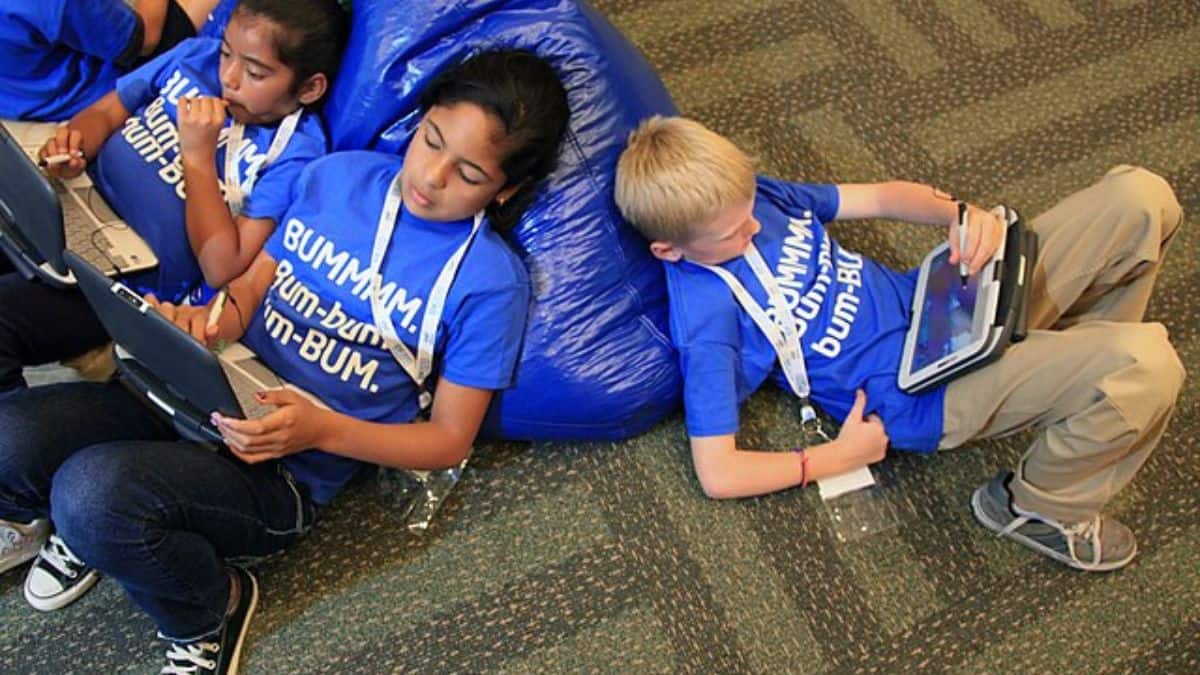
In a government higher secondary school in Pudukottai, Tamil Nadu, a chemistry class dissolved into confrontation over a vibration. A Class 10 student had hidden his phone in his uniform pocket. A gaming notification lit up the screen. The teacher noticed. The reprimand was routine. The reaction was not.
“He flared up immediately,” recalls R Neela, who has taught at the school for nearly two decades. “Earlier, children would feel embarrassed. Now they react defensively. There is less pause between trigger and response.”
Across India, from government schools in rural districts to private campuses, educators are describing a similar shift, that being shorter attention spans, heightened irritability, declining stamina and a growing reluctance to participate in physical activity.
The change accelerated during the pandemic, when smartphones became classrooms. But teachers say the behavioural imprint has lasted far longer than lockdowns. So pervasive is the problem that the Economic Survey 2025-26 has devoted a major part of its health section to it and “gaming disorder”.
For children, it recommends "offline youth hubs", "moderated online safe spaces", "device-free hours" and crucially, making "platforms...responsible for enforcing age verification and age-appropriate defaults". In December 2025, Australia became the first country to ban social media use among children under 16 years of age.
India lacks a clear national policy but on the ground, schools, parents and communities are already testing whether the playground can reclaim ground lost to the screen.
Screen Time and Classrooms: Teachers see a shift
In Tirunelveli district, physical education teacher S Aravind says he has watched the shift unfold gradually over 12 years — and then suddenly accelerate after 2020.
“Before 2018, sports period was the most awaited class of the week,” he says, standing near the edge of a sun-baked ground marked faintly for kabaddi. “Children would finish lunch early and come asking, ‘Sir, are we playing today?’ Even if they were tired, they wanted to run.” Now, he says, the dynamic has altered.
“I hear things I never heard before — ‘Sir, I have a headache,’ ‘Sir, can I just sit today?’ Some genuinely struggle with stamina. Some are simply not used to physical exertion anymore. During lockdown, many got used to sitting for long hours with a phone. That habit did not disappear when schools reopened.”
He pauses before adding, “One boy here represented us at district-level cricket. Beautiful timing. Calm under pressure. During lockdown he became deeply absorbed in online gaming tournaments. When practice resumed, he would get breathless after a few overs. His reflexes were still sharp, but endurance had gone down. Slowly, attendance dropped. Talent did not disappear. Discipline did.”
In Thanjavur district, mathematics teacher K Balamurugan describes a quieter but equally-troubling change among academically-gifted students.
“I had a boy who won inter-school chess competitions. He could calculate three or four moves ahead,” he says. “Chess demands long stretches of silence and mental stamina. Off late, I noticed he was fidgeting more. He would check his phone between rounds in tournaments. He once told me he finds long matches ‘too slow’ now.”
Balamurugan says the influence of short-form content is unmistakable. “Reels are designed for instant engagement. Chess is designed for sustained thinking. When the brain gets trained for constant switching, deep focus becomes uncomfortable.”
Also read CBSE: APAAR ID must for LOC registration from 2026-27 session; two-level Class 10 exams from 2028
The concern is echoed in Andhra Pradesh. In a government high school in Guntur district, English teacher P Lakshmi says she has had to restructure her teaching methods.
“Students today are incredibly aware,” she says. “They can talk about international football leagues, global elections, even cryptocurrency trends. Access to information has widened their horizons. But when I ask them to read a three-page passage carefully and analyse it, I see their attention fragment. After five or six minutes, their eyes drift. Some instinctively reach into their pockets.”
Lakshmi says classroom discipline has not collapsed, but the emotional texture has changed. “There is more impatience. If corrected, some students react defensively. We spend more time rebuilding attention than delivering content. She also added, “We invested heavily in computer labs and smart boards,” she says. “We want our students to be technologically competent. But we also discovered that during lab hours, some students attempt to bypass restrictions to log into personal social media accounts or gaming sites. We are now conducting structured workshops on responsible technology use. We tell them technology is a tool, not an escape.”
Smartphone Generation: ‘Hyper-aware but under-focused’
At a government senior secondary school in Pune, there is no open playground. The campus is vertical, squeezed between busy roads and residential blocks. Football or cricket are not options. Even assembling students outdoors requires planning.
“We don’t have the luxury of large grounds,” says Anjana Sharma (name changed), a senior civics teacher with over two decades of experience. “So our issue is not just phones. It is space, fatigue, and constant stimulation.” She describes her students as “hyper-aware but under-focused.”
“They know every trend within minutes — political debates, viral videos, cricket scores,” she says. “They are exposed to far more information than students a decade ago. But ask them to sit through a 40-minute civics discussion on constitutional principles, and focus starts breaking after 10 or 15 minutes.”
Even without phones in hand, she says, attention flickers. “You can see it in their eyes. The mind is trained to switch.”
Also read CBSE 2026: Board tightens rules on cheating, makes it harder to pass; Class 10 gets new marksheets
Wellness sessions, device awareness
Over the past two years, private school administrators across cities say the concern has deepened not dramatically, but steadily.
In Coimbatore, a principal of a higher secondary school says the warning signs appeared in small ways. She said, “Sports participation did not collapse,” she says. “It declined gradually. We began noticing fatigue, irritability and reduced voluntary sign-ups for athletics.”
Informal counselling conversations revealed extended recreational screen use among middle schoolers. The school responded with structured digital wellness sessions and screen-time reflections.
“We are not anti-technology,” the principal said. “But when scrolling becomes default behaviour, it affects mood, sleep and discipline.”
In Mumbai and Bengaluru, schools have strengthened structured sports hours and introduced device-awareness sessions. In Delhi, counsellors report increasing first-period fatigue linked to late-night phone use.
Sports, administrators collectively say, are no longer treated as enrichment alone but as necessary balance.
Screen Time: Parents, communities push back
In Chennai, Kirthana Krishnan, mother of a Class 9 student, says phone-related arguments had become routine at home. “We realised scolding was not working, so we changed the routine,” she says. “Along with a few neighbouring families, we introduced a common rule — no phones inside bedrooms after 9.30 pm, and all devices are charged in the living room. Within weeks, we noticed better sleep and far less morning irritability.”
In Nellore, K Srinivas says he began noticing subtle behavioural changes in his son over the past year. “He was restless, easily irritated, and had stopped cycling outside altogether,” he says. “We decided not to impose a ban on the phone, but to change his routine. I enrolled him in a local cricket academy. Now he comes home physically tired, not mentally drained, and the difference in his mood is clear.”
In parts of Thrissur and Malappuram districts in Kerala, resident associations have reopened neglected playgrounds over the past year, clearing debris and marking basic courts to bring children back outdoors. Parents rotate supervision and discourage phone use during play hours.
“When children gather physically, the phone naturally loses importance,” says PTA member Deepa Nair from Thrissur. “The space itself changes behaviour. The National Education Policy speaks about strengthening sports infrastructure and holistic development, but in many rural districts even basic grounds are missing. Communities are stepping in where systems are slow.”
In Madurai, chartered accountant R Vignesh frames the issue differently. He began reducing his own evening screen time alongside his daughter’s.
“If we don’t change, they won’t,” he says. “This cannot be only about blaming children or waiting for facilities. Balance has to start at home. You cannot just remove the phone. You have to give them something stronger than it.”
School students speak
Students describe the change in balanced terms — acknowledging both the advantages of digital access and the subtle losses that followed.
In Namakkal, a Class 10 kabaddi player says watching professional match breakdowns online improved his tactical understanding. “I learned positioning and defence techniques from videos,” he says. But over time, late-night gaming began replacing practice. “I didn’t quit the team. I just went less often. When tournaments came, my stamina wasn’t the same.”
A middle-school footballer in Telangana says digital games sharpened his reflexes and coordination. “Gaming improves reaction speed,” he insists. Still, he concedes that screen time reduced his outdoor play. “I realised I was fit in the game, not on the ground.”
In Vijayawada, a Class 9 chess player says online platforms exposed her to international competitions and puzzle drills. “I improved my openings,” she says. “Earlier I only knew local strategies.” Yet she admits that long offline games now feel more mentally tiring. “I get distracted more easily.”
In Lucknow, a Class 11 student who once trained regularly in athletics says social media gradually consumed his evenings. “It keeps you updated — sports news, exam tips, everything,” he says. “That part is useful.” But sleep became irregular, and morning practice suffered. “I was learning more online, but physically I was slowing down.”
Several students also speak about peer culture. “If you’re not online, you feel disconnected,” says a Chennai-based badminton player who reduced practice sessions. “Group chats and trends move fast.”
Most do not frame the issue as addiction alone. They see the benefits — greater awareness, access to tutorials, exposure to global competitions, even improved technical skills. But they also recognise diminished endurance, disrupted routines and fading consistency in sport.
“It gave us access,” the kabaddi player says. “But it also made skipping easier.”
Also read ChatGPT for education? IIT Madras director on how Bodhan AI will work and what it can do
A national tug of war
In Bengaluru’s large CBSE schools including National Public School, Delhi Public School campuses and Frank Anthony public school institutions calendars remain packed with inter-house and inter-school tournaments.
“Competitions are strong, but fewer students come forward for trials,” a senior physical education teacher at a private CBSE-affiliated school in Bengaluru says. “The committed ones excel. The middle group has reduced.”
To counter this, many schools have made preliminary inter-house participation compulsory before selecting competitive teams. Some have ring-fenced games periods even during exam months.
In government schools, the dynamic differs. For some students, sport offers scholarship routes and admissions benefits. “A district certificate can change a child’s future,” a government school coach in Tamil Nadu says. Still, teachers report fluctuating attendance and inconsistent training discipline.
 Add as a preferred source on google
Follow us for the latest education news on colleges and universities, admission, courses, exams, research, education policies, study abroad and more..
To get in touch, write to us at news@careers360.com.
Next Story
]Galgotias University: 2,297 patents filed, just 1% granted; with 63%, IITs far ahead of private institutes
Only 24 of Galgotias University’s patent applications have led to grants. Robot dog fiasco put Galgotias in focus but top private-university patent applicants have under 6% success rate. IITs far ahead despite fewer applications
Musab QaziLatest Education News
]Related News
]CBSE Date Sheet 2027 LIVE: Class 10, 12 exam schedule soon; timings, guidelines, grading system
Christian schools in Bengal flag concern over 'attacks', seek meeting with RSS chief
Bihar: Seva Sankalp Abhiyan competitions see participation from students of 95,195 schools


