
Tamil Nadu universities in ‘slow decay’ as VC vacancies drain funds, talent, stall academic functioning
K. Nitika Shivani | December 12, 2025 | 01:24 PM IST | 12 mins read
Stand-off between Tamil Nadu Governor and government has very real consequences for state universities – Madras University, Bharathidasan, Madurai Kamaraj, TNDALU and others
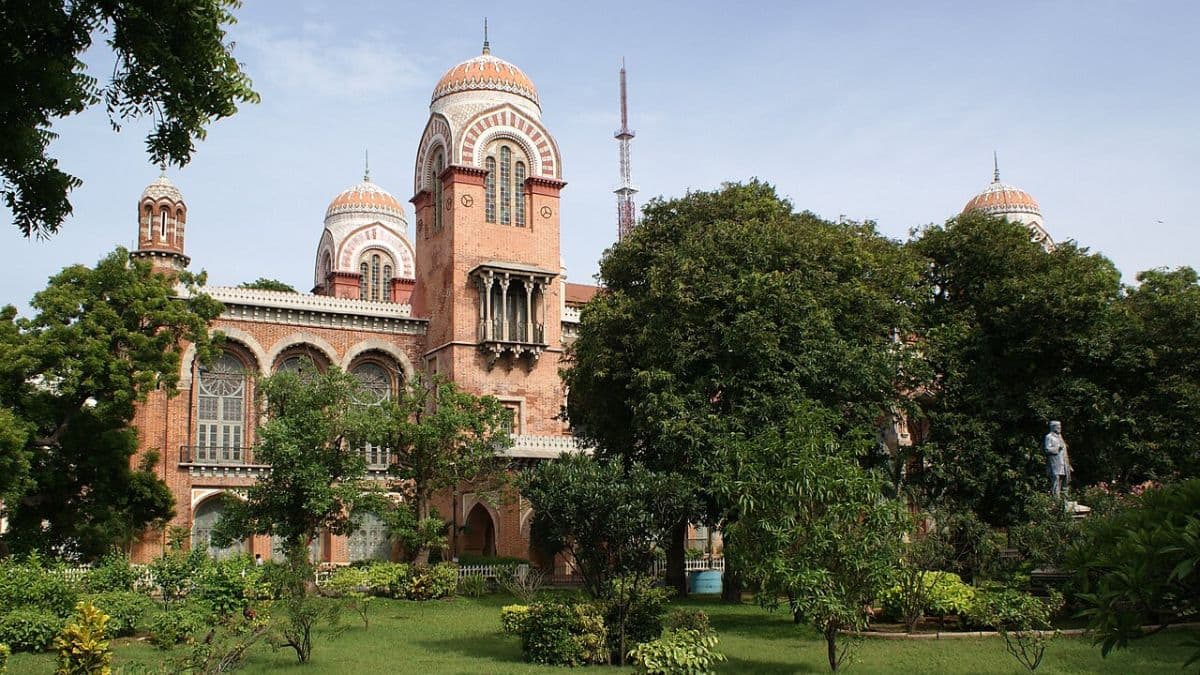
"You begin the year believing you’ll graduate on time. You end it learning that a missing signature can rewrite your life," stated Urmila Jaichandran* darkly. Madras University took nine months to issue her provisional certificate for the postgraduate programme she attended. The delay cost her two job offers.
The “missing signature” was that of the Madras University VC. Jaichandran wrote her last exams in July 2023, expecting her certificates within a few weeks. But the completion of her postgraduate degree coincided almost exactly with the slow exit of the university’s last full-term VC, S Gowri, who completed his tenure in August. With no one to sign, Jaichandra was left hanging for months.
"Every certificate needs the VC’s signature, and every acting VC keeps changing,” she recalled. “Files kept circulating because no one wanted to take final responsibility. My classmates from private colleges got their certificates in days. We were left waiting for someone at the top to be appointed."
Across several state universities in Tamil Nadu, students and faculty say similar disruptions have become routine as top posts remain vacant for years.
What begins as the absence of a signing authority, they say, soon grows into a wider breakdown in academic functioning: faculty recruitment freezes, strangled funding, unissued certificates, and campus bodies operating with little independence.
The strain is most visible at Madras University, Kamaraj University in Madurai, Bharathidasan University in Tiruchirapalli, Annamalai University and Tamil Nadu Dr Ambedkar Law University (TNDALU). Professors across these institutions say extended interim arrangements and stalled appointments have created an administrative paralysis that now reaches far beyond campus offices and affects thousands of students.
Jaichandran is just one. "You hear students being told to be patient but patience doesn’t get you your job back," she said. "It’s strange to say this out loud, but one vacant post at the top of the university changed the entire course of my life."
A senior Madras University professor said, "People outside don’t understand what it means when a university runs without a vice-chancellor for three or four years. For us, it’s not a symbolic vacancy. Every academic file that used to be cleared in a week now takes a month because someone has to physically take it to the Secretariat [state government office]. The top-most authority is the syndicate which also answers directly to the state government. Even routine decisions like revising the panel of examiners or signing degrees get stuck. You start to feel like the university is functioning on borrowed time. We have senior professors retiring without ever seeing their promotions cleared. And students wait for months for certificates because nobody is empowered to sign them. It’s not an administrative gap. It becomes a slow decay.”
TN government Vs. Governor
Tamil Nadu’s problem of vacant full-time VC posts is rooted in a political and constitutional stand-off between the state government, led by an opposition party, the DMK, and Governor RN Ravi, appointed by the BJP-led union government.
Governors are also chancellors of state universities and in several opposition-ruled states, have come into conflict with state leaders over the governance of state universities. The state assembly has attempted to amend university laws to remove the Governor’s role in VC appointments but Ravi has withheld assent to those bills, arguing that the amendments violated University Grants Commission’s 2018 regulations which have primacy in VC appointment procedures.
In April 2025, the Supreme Court used its powers under Article 142 to treat the Governor’s delayed assent as granted, allowing the Bills to become Acts. But in May 2025, a Madras High Court vacation bench stayed these new Acts, saying they appeared inconsistent with UGC regulations and could be unconstitutional.
Also read HECI Bill 2025: Higher Education Commission of India won't have UGC, AICTE's funding powers
However, the Supreme Court’s advisory opinion in late November stated that courts cannot impose specific timelines on Governors or the President for acting on bills. It prompted Tamil Nadu chief minister MK Stalin to vow that there will be no rest until the Constitution is amended to fix timelines for Governors to clear Bills.
The stand-off has left 14 out of 22 state universities currently lacking a full-time VC. Recognising the urgency of the matter, the Supreme Court issued formal notice to the Governor's office, the UGC, and the union government, setting the date for Tamil Nadu’s challenge as December 2, 2025. The entire process of appointing VCs remains paralyzed, and will continue to be so until the Supreme Court completes its hearing and delivers a definitive order on whether the High Court's stay on the State's new laws will be lifted or upheld.
Headless universities in ‘terrible limbo’
Professors describe institutions where nothing gets done and even the smallest of tasks takes weeks. Expansion or reforms – new courses, research and academic partnerships and beyond – are near-impossible.
"We are stuck in a terrible limbo,” said a physics professor at Bharathidasan University, Tiruchirappalli. “Departments have ideas for new courses, but there is simply no one empowered to sign off. Even external collaborations that could benefit students are gathering dust because there’s no authorised person to approve anything. It feels like the whole academic machinery is idling, waiting for someone to turn the key."
Tamil Nadu Universities: Recruitment on hold
The most serious impact is on faculty recruitment.
"You can see the effect of delayed VC appointments in the staffrooms,” said an exasperated faculty-member from Madurai Kamaraj University. “Alagappa University, Manonmaniam Sundaranar University, and others have had extensions or interim arrangements for years, but no real recruitment drive. Most departments are running with one permanent faculty member, sometimes none. We are borrowing guest lecturers for core courses. You walk into a lab and half the equipment is locked because there is no technical staff. It is not mismanagement at the department level. It is a system that has stopped breathing."
A Madras University teacher, whose daughter studies at the same institution, explained that the constant reliance on such “stopgap, temporary appointments…translates into unstable teaching schedules and an almost total collapse of academic mentorship" for students.
For students, ‘half-baked internal marks’
The professor’s daughter is a postgraduate student in a science department at Madras University and pointed out that the long-term dependence on temporary staff has real consequences.
“My classmate submitted a major report for a biochemistry assignment after months of effort, and it ended up being meaningless. The teacher guiding her had to leave midway because he wasn’t being paid. There’s still no replacement, so her entire project was reduced to some half-baked internal marks just to make the system look functional. It’s demoralising," she said. “People think it’s just bureaucracy, but it affects our actual work.”
The general loosening of administrative grip and monitoring has created other problems. Across multiple colleges, regular class hours are going to skills training sessions, called Naan Mudhalvan, conducted by private agencies contracted by the state. Faculty say these agencies run sessions during core timetable hours but submit attendance under the faculty’s name, raising questions about transparency and teacher autonomy.
Shriveni Kalai, a final-year engineering student in Trichy said, "Sometimes our regular class gets cancelled because a Naan Mudhalvan session is scheduled. They teach basic aptitude that we already learned in school."
Top bodies ‘endorse, don’t deliberate’
The syndicate, historically the highest academic authority within a state university, has also experienced a quiet shift. Many members say major decisions are no longer taken internally, leaving the body with little functional independence.
A senior professor TNDALU, who has served multiple terms on the syndicate, said, "Earlier, the syndicate meeting was the highest academic authority. The files came from the registrar, not from the Secretariat. Now, we sit in meetings where people are afraid to open their mouths because any note, any dissent, goes straight upwards. The role of the syndicate has shrunk to approving whatever comes from the government. Some of our most experienced members privately tell me they have stopped asking questions or pushing for academic reforms because the atmosphere feels like surveillance. This is not how a university is supposed to function."
Being at the centre of a massive political and court battle has eroded the autonomy of key academic bodies and with that, the members’ freedom to discuss and oppose policies. It is the reason why so many students and academics interviewed for this story would speak only on the condition of anonymity.
"Governance structures like the syndicate, the boards of studies, the curriculum committees — they still meet, but it’s largely ritual. Minutes are written, decisions are recorded, but the outcomes are usually pre-decided before they even reach us. Our job has become to endorse, not to deliberate,” complained another long-time syndicate member from a different state university.
Kanniappan R, a retired professor who was part of a state university syndicate agreed.
"There is a Board of Education on paper. But every decision — common syllabus, credit structure, NEP interpretation, even administrative circulars — goes through the Secretariat. Board members tell us openly that they are scared to disagree because they’ve seen what happens to officials who push back. Academic bodies can discuss, but decisions are taken elsewhere. This is not good for any government. This centralisation has led to a uniform syllabus and credit structure set at the state level, reducing academic flexibility and affecting employability when credits do not align with national norms."
The National Education Policy (NEP) 2020 was framed by the union government and implemented without a vote in parliament. Several opposition-run state governments, including TN’s, have opposed its provisions.
Even student activism has lost its force and vigour. Manohar, a student activist from Chennai added, "There is no student council culture left in most Tamil Nadu universities. If something goes wrong, like the Anna University sexual assault case, you don’t know whom to approach. People are scared because they’ve seen what happens when students protest and even forming a study circle is treated like a political activity. Universities need a voice for students. Right now we have silence."
Also read Maharashtra: 11,000 faculty posts lie vacant; Officials say governors, finance division at fault
Plus, students are worried about being able to complete their studies.
Certification delays, jobs and seats lost
One of the lesser-reported consequences of the governance vacuum is the accumulation of unissued certificates, delayed transcripts, and pending degree verifications. Alarmelu Hridayan, a science professor originally from Chennai and now working in Nagercoil, said, "Madras University went through long periods when provisional certificates and degree certificates could not be issued on time because the signing authority was vacant."
A former external controller of examinations who has worked in TNDALU and Madras University for three years added, "Madras University lost nearly four years of smooth certification. Students applying abroad were asked to defer admissions. Some just left without taking their degree. This is not a theoretical issue. When a university stops issuing certificates on time, every family in the state pays the price."
Now a post-graduate student at Madras University, Niranjani Kumar* lost her place in a German university because her certificates were delayed months.
"My offer letter from a university in Germany had a very strict document submission window,” she told Careers360. “I kept refreshing the portal every day for weeks, but my provisional certificate never came. I finally emailed the admissions office explaining the situation. They gave me extensions, then finally said they couldn’t keep the seat open. One empty chair at the top cost me a year of my life."
Another student preparing for government recruitment exams said, "Even for TNPSC and UPSC verification, you need everything in order. My consolidated mark sheet came eight months late. I had cleared two stages of a state-level exam but couldn’t submit the final documents, so my candidature was cancelled. Imagine losing a government job you actually earned because your university couldn’t function."
The Tamil Nadu and Union Public Service Commissions (TNPSC and UPSC) conduct recruitment exams for top administrative jobs in the state and centre.
Also read Assam makes state history, geography compulsory subjects; Cabinet clears new Sainik School, CoE
Research scholars have been hamstrung for as long as a whole year because of procedural delays.
Nagesh Tiru* and his batch mates in botany research at Bharathidasan University “lost an entire academic year because the doctoral committee meeting could not be convened”.
“Every professor involved — the registrar, the acting VC, the syndicate — ended up blaming someone else, and no one could take final responsibility,” he recounted. “Our projects, experiments, and publications were all delayed. It’s not just an inconvenience; it’s a loss of time, mentorship, and opportunities. For doctoral scholars, an academic year lost means wasted funding, delayed graduation, and stalled career prospects."
Also read FTII: A year on, India’s newest film school still half-built; students boycott classes
TN state universities ‘bleeding’ financially
It’s not just students who lose funding; the institution does as a whole. Budgets come with many strings attached and their utilisation is essential to keep the funds flowing. This process has been badly disrupted.
A finance section staffer at Annamalai University explained: "Grant utilisation certificates were pending because committees didn’t meet without statutory heads. Every financial decision, from purchasing lab equipment to releasing research grants, has to pass through these committees. But without an empowered head, nothing could move.”
With no one to assume ultimate responsibility, fear of punitive action pervades all decision-making, slowing it down.
“Officials fear being pulled up later for any misstep, so every file is handled with extreme caution,” explained the finance officer. “Decisions that should take days stretch into weeks, months, sometimes even a year. The university is essentially bleeding quietly — resources sit idle while expenses accumulate elsewhere. It’s frustrating because we see projects that could have transformed labs or funded student research stagnate simply due to administrative inertia."
A finance professor who also advises the Madurai Kamaraj University syndicate members on funding and allocation said the university has “lost crores because…financial approvals are stuck”. "When the VC post is vacant, no major financial decision moves,” he said. “Grant utilisation certificates are delayed. Funds lapse. Equipment that could have been bought last year is now twice the price. You feel like the university is bleeding slowly, and everyone is pretending not to see it. The crisis is not sudden. It is a long silence that turns into loss."
A chemistry faculty member from Periyar University described the frustration of trying to organise academic events amid this administrative paralysis. She said, "We were ready to host a national seminar [in 2023] after the semester exams. Speakers had confirmed, funds were allocated, and students were prepared. But the final administrative note, which required the vice-chancellor or an empowered officer’s signature and approval of course, was never cleared.”
*Names changed on request
 Add as a preferred source on google
Follow us for the latest education news on colleges and universities, admission, courses, exams, research, education policies, study abroad and more..
To get in touch, write to us at news@careers360.com.
Next Story
]Latest Education News
]Related News
]NEET PG Counselling 2026 LIVE: MCC round 1 seat allotment results out; MD, MS cutoffs, reporting begins soon
Jamia Protest: HLC appeals to students to end agitation, cooperate with JMISU drafting committee
ISRO communication and media scholar India’s sole representative from field in world top 2% scientists list


