
IIIT Hyderabad reputation on par with many IITs, no need to worry about NIRF ranking: Director
Aeshwarya Tiwari | November 26, 2025 | 01:34 PM IST | 12 mins read
IIIT Hyderabad director talks about admission via RGUKT and JNV beyond JEE, CSR scholarships, why placements match leading IITs, and more

JEE Main College Predictor (IIIT Hyderabad)
Know your chances of getting into IIIT Hyderabad as per your JEE Rank
Predict Now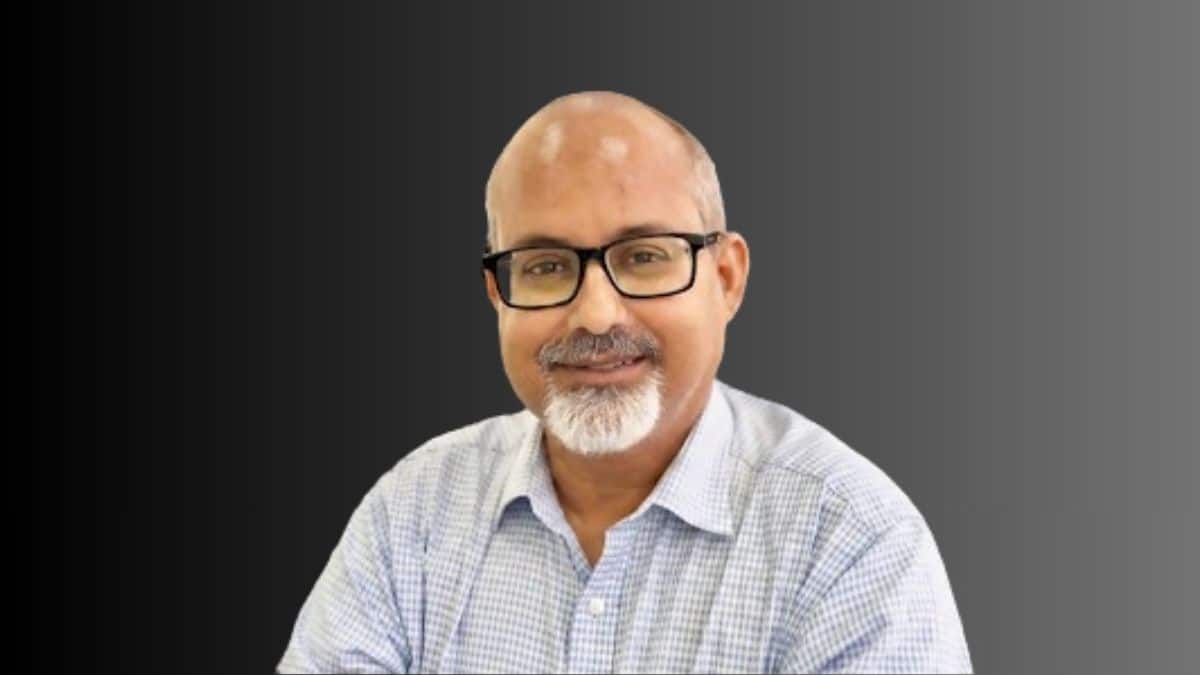
Professor Sandeep K Shukla, director of IIIT Hyderabad, in an exclusive interview with Careers360, speaks about the institute’s research-oriented vision, focus on gender and socio-economic diversity, and special admission channels designed for students from underprivileged backgrounds. He also highlighted the direct admission pathways for students from state boards, scholarships offered, how US universities excel and the lessons that can be learnt. Edited excerpts.
Latest: [See whether your JEE Rank can land you into IIIT Hyderabad or not ] - Predict Now
What is your vision for IIIT Hyderabad as the new director?
IIIT Hyderabad has already established itself as a socially conscious, research-driven institution — one that applies technology to address real societal challenges. Whether it’s through projects like Bhashini, our language technology initiatives, or work in computer vision and related areas, the institute has built a strong foundation in research that serves social causes.
I believe the next major goal for India — and for IIIT Hyderabad — is to move toward technological sovereignty. Today, we depend heavily on global corporations for almost every layer of our digital infrastructure – from cloud services and operating systems to semiconductors and enterprise applications. While that dependency has served us well in some ways, it also leaves us vulnerable.
My vision is to extend IIIT Hyderabad’s strong research orientation toward this goal of self-reliant, sovereign technology. This includes not only fundamental areas such as computing infrastructure and operating systems but also emerging domains like AI and agentic AI systems.
Another important vision is expanding the institute's reach through online education and digital outreach. I want the institute to connect with a much larger segment of Indians, not just through formal degree programmes, but also through short-term skill-building and awareness initiatives.
Our Language Technologies Research Centre (LTRC) and machine learning teams have developed advanced tools that can automatically translate educational and informational content into over 23 Indian languages — and even some indigenous languages through the Adi Vaani project. This means we can make knowledge accessible to people in their native tongues.
Hyderabad already has several prominent institutions — IIT Hyderabad, BITS Pilani Hyderabad Campus, and JNTU colleges. Why should one choose IIIT Hyderabad?
IIIT Hyderabad is quite different from other institutions in the way we approach education and student development. First, our structure itself is unique. We don’t have traditional departments. Instead, the institute is built around research centres, and students typically start engaging with these centres as early as their second year. This allows them to participate in real research projects alongside faculty and scholars. Our curriculum is research-oriented, not just course-based.
Second, something that sets IIIT Hyderabad apart is our strong emphasis on value education. We have two dedicated courses on human values — one in the first year and another later in the programme. These are taught in small, discussion-based settings and play a crucial role in shaping students as responsible, ethical individuals. In a world where automation and AI are rapidly transforming the job landscape, the question arises: what skills will remain relevant? We believe that qualities like integrity, empathy, and human values will always matter.
Also read IIT Placements 2025-2026: Many reject PPOs despite 20% rise in offers, bet on final phase
Third, IIIT Hyderabad offers a flexible academic path. Students in the four-year undergraduate programme can choose to extend it into a dual-degree programme, adding a research-based master’s degree. This model has helped many of our students secure admissions to top global universities — MIT, Oxford, Cornell, Urbana-Champaign, and others. It prepares them not just for placements, but for lifelong research careers. Our placement record is also among the best in the country, even compared to leading IITs. Our focus is on nurturing students who embody what we call the ‘Three Cs’ – Creative, Competent, Caring.
Another strength of IIIT Hyderabad is its commitment to diversity. Although we’re a self-funded institution and not bound by government reservation policies, we’ve made conscious efforts to ensure inclusivity. For instance, we maintain at least 25% women representation in every batch. We also admit students through multiple channels — not just JEE — so that talented individuals who may not have had access to intensive coaching can still join us.
Moreover, we raise funds to support students from different economic and educational backgrounds. In essence, IIIT Hyderabad offers a holistic educational experience – an environment that encourages innovation while nurturing the human side of technology.
What is the IIIT Hyderabad SPEC admission system?
The SPEC program, or Special Channel of Admission, was created to promote socioeconomic diversity within IIIT Hyderabad. Many bright students from disadvantaged backgrounds never get the opportunity to attend JEE coaching due to financial constraints. As a result, they either don’t appear for JEE or don’t score high enough to qualify, even when they have strong potential. The SPEC channel gives such students a fair chance.
The programme currently operates through two main channels. The first is through the Rajiv Gandhi University of Knowledge Technologies (RGUKT) network in Andhra Pradesh and Telangana. RGUKT identifies top-performing students after their 10th grade — typically three toppers from each mandal — and provides them free education. After completing their 12th at RGUKT, they can choose to continue their higher studies elsewhere, and IIIT Hyderabad admits some of them through the SPEC channel.
However, as RGUKT primarily serves Andhra Pradesh and Telangana. So, we partnered with the Jawahar Navodaya Vidyalaya (JNV) system, which draws students from across the country. This year, for instance, we have a student from Ladakh. We now have students from states such as Uttar Pradesh, West Bengal, Odisha, Jharkhand, and Chhattisgarh.
While our regular JEE admissions already attract a diverse pool of students academically, most of them come from relatively privileged socioeconomic backgrounds. The SPEC route, on the other hand, brings in talented students from financially constrained circumstances. If any of these students are unable to afford tuition, the institute provides financial support.
Also read India Skills Report 2026: CS, IT engineers most employable; women beat men for first time in 5 years
Anything for state boards students?
We have another alternative admission pathway where state board toppers are considered for our dual-degree programmes. These students are interviewed and selected based on merit, offering yet another opportunity for capable students who may not have pursued the JEE route. Together, these initiatives ensure that IIIT Hyderabad remains inclusive and diverse — not just in geography or gender, but also in economic and educational background.
Does IIIT Hyderabad offer any scholarship?
Yes, we do have several forms of financial support, though most are need-based, rather than purely merit-based. One important source is the alumni fund, which operates on a pay-it-forward model. Students who require financial assistance can apply, and once they graduate and begin working, they are encouraged to contribute back to the fund so that future students can benefit as well. In addition, the SPEC programme has dedicated CSR (Corporate Social Responsibility) funding.
Over the past couple of years, companies like AT&T and a few others have partnered with us to sponsor students admitted through the SPEC channel. These organizations typically commit to covering the entire four-year cost of education for each batch. For example, one company recently funded a full batch of 30 students for all four years.
IIIT Hyderabad places strong emphasis on collaboration between industry, academia, and research. Could you elaborate?
Yes, absolutely. Collaboration between industry and academia is a major part of IIIT Hyderabad’s ecosystem. Many of our faculty members are well-recognized experts in their respective fields. These collaborations typically result in joint research projects, where the industry funds specific studies or supports students working on applied research.
We also take a structured approach to industry engagement. For example, Professor Ramesh Loganathan and his team have built strong connections with both local and national industries. One of the most successful initiatives is our “Tech Forward Research Seminar” series. This is a monthly event where a leading industry expert and an IIIT faculty member jointly present on a topic of mutual interest, followed by in-depth discussions. These programmes help create meaningful dialogue between researchers and practitioners.
So, do these industries also end up absorbing your students?
Absolutely. In fact, for most industries, the primary motivation for collaborating with academic institutions is access to talented students. That’s true not just for IIIT Hyderabad but for most top institutes. When industry partners engage with our research labs, they get to work closely with students over extended periods — sometimes six months or more — rather than just meeting them briefly during placement interviews. This gives them much deeper insights into a student’s abilities, which naturally leads to more confident hiring decisions.
There are several channels of collaboration between industry and IIIT Hyderabad. Some companies fund CSR-based research initiatives, often linked to specific social or technological themes. Although CSR funding is philanthropic by nature, it’s usually tied to deliverables, such as advancing research in a particular area.
In other cases, industries establish Centers of Excellence with us. These centers become long-term partnerships where companies share their key challenges, and our researchers and students work on them collaboratively.
Faculty members also engage directly with the industry through consulting, as permitted by the institute. Like many global universities, IIIT Hyderabad allows faculty to dedicate one day a week to consulting work. A small portion of their consulting income goes to the institute as overhead, while the rest remains with the faculty member.
As for cybersecurity, we’re particularly focused on areas such as AI-driven cybersecurity, agentic AI, and cybersecurity tools for small and medium-scale enterprises. Our aim is to develop affordable, high-quality solutions — tools that are either free or available at minimal cost but still match industrial standards.
IIIT Hyderabad’s NIRF ranking has been steadily improving. But despite being such a strong research institution, it’s still not among the very top.
First of all, it’s important to understand that rankings like NIRF are not always a level playing field. Institutes such as IIT Madras or other centrally funded institutions receive massive government support and funding — automatically and consistently. That alone creates a very different context.
Second, the scale of those institutions is far larger. For example, IIT Madras might have 700–800 faculty members and around 10,000–12,000 students. IIIT Hyderabad, by contrast, has about 110–120 faculty members and 2,000 students. When institutions differ so drastically in size and funding, an “apples-to-apples” comparison doesn’t make sense.
That’s one reason I’m personally not a great believer in rankings like NIRF. These systems tend to measure absolute numbers rather than normalised metrics. For any ranking to be meaningful, it should consider the scale and resources of each institution. Otherwise, smaller but highly specialised institutions like IIIT Hyderabad, Chennai Mathematical Institute (CMI), or ISI will always appear lower, even if their quality of research and teaching is world-class.
Further, I don’t think we need to worry too much about rankings. In terms of reputation among students, IIIT Hyderabad already stands very high — often on par with or even above several IITs, especially in fields like computer science and electronics.
Rather than chasing rankings, I believe our focus should be on impact — on how our research, education, and innovation improve people’s lives. The true measure of our success lies in the difference we make, not where we stand on a chart.
Where do you think there is scope for improvement in IIIT Hyderabad’s rankings?
Well, rankings like NIRF evaluate institutions on several parameters — some of which are normalized, while others are not. For instance, in research performance, the number of publications per faculty is a normalised measure, which is fair. But there are other metrics such as total research funding, number of students, or faculty size, which naturally favour larger institutions.
If you have, say, 800 faculty members — as in the case of a large IIT — each one applying for research grants, the total funding amount can easily reach Rs 1,000 crore or more. In comparison, with about 110 faculty members, including some from non-technical disciplines like humanities, our total funding potential will obviously be lower. That difference significantly affects ranking outcomes, even if the per-capita performance of our faculty might be just as strong, if not better.
Similarly, rankings also consider factors like the number of foreign students. While IIIT Hyderabad does attract students from abroad, many of them are of Indian origin or come through exchange programmes. So they don’t count as “foreign students” under NIRF methodology.
To be honest, I haven’t studied the NIRF ranking methodology in great detail, but I do know that our Institutional Data and Statistics Cell — I believe it’s officially called Internal Quality Assurance Cell (IQAC) — continues to monitor these aspects and ensures that our data is accurately represented.
Does India really need 10 to 15 lakh engineers every year? We have more than 3,000 engineering institutions.
India does need a large number of engineers, but the real challenge is how we utilise them effectively. Right now, the country produces many engineers, but lacks the infrastructure, organisational systems, and opportunities to deploy their skills.
Engineers are essential to solve real-world problems, but many of them remain underutilised. This mismatch leads to unemployment or underemployment, and parents sometimes perceive engineering as a less viable career, which contributes to empty seats in many colleges.
Another issue is the quality of education. Many engineering colleges lack experienced faculty or adequate resources, which compounds the problem. So yes, India needs many engineers, but we also need to channel their talent effectively.
Also read H-1B visa fee hike may ‘negatively impact’ domestic placements at engineering colleges: Experts
What can we learn from the institutes abroad?
US universities excel in several areas that we can learn from. In the US, faculty have a rigorous tenure system. They are either evaluated and rooted out within a probation period (usually six years) or, if outstanding, they continue indefinitely. In India, faculty often have permanent positions once recruited. At many institutes, including some IITs, only 10-20% of faculty handle the bulk of research and fundraising, while others primarily teach without much research output. In the US, such a lack of productivity isn’t sustainable.
Students pay very high tuition in the US, sometimes USD 50,000 per year. Paying such amounts naturally motivates them to work hard. In India, many students pay little or no tuition. At IITs, for example, students are often led to believe that admission guarantees success, so many don’t engage seriously in studies. Here, the pressure isn’t mediated by coaching culture, but the financial and academic stakes are still different.
In the US, most PhD students are self-funded or on scholarships with strict performance expectations. If they don’t perform, their funding or visa is at risk. In India, PhD stipends are modest but guaranteed, and students face fewer immediate consequences. This can sometimes result in students not completing their work or making slower progress.
The key differences are systemic – rigorous accountability for faculty, higher personal stakes for students, and a culture that rewards serious engagement in research and academics. These structural elements are harder to replicate here but are instructive for improving both faculty and student productivity.
 Add as a preferred source on google
Follow us for the latest education news on colleges and universities, admission, courses, exams, research, education policies, study abroad and more..
To get in touch, write to us at news@careers360.com.
Next Story
]Latest Education News
]Related News
]NEET PG Counselling 2026 LIVE: MCC round 1 college reporting from October 26; MD, MS cutoffs
Kerala University VC says no move to ban student politics, stresses need to curb violence
NIIT University holds 16th convocation, announces 100% placements for 2026 graduates


