
IIT Madras launches 14 BS, MTech, MSc, MA courses in Robotics, Mathematics, AI, Public Policy
Sundararajan | May 14, 2026 | 01:36 PM IST | 3 mins read
IIT Madras has introduced 4 BS, 5 MTech, 4 MSc courses, and an MA in Public Policy, Robotics, Artificial intelligence, and Mathematics through hybrid and online modes
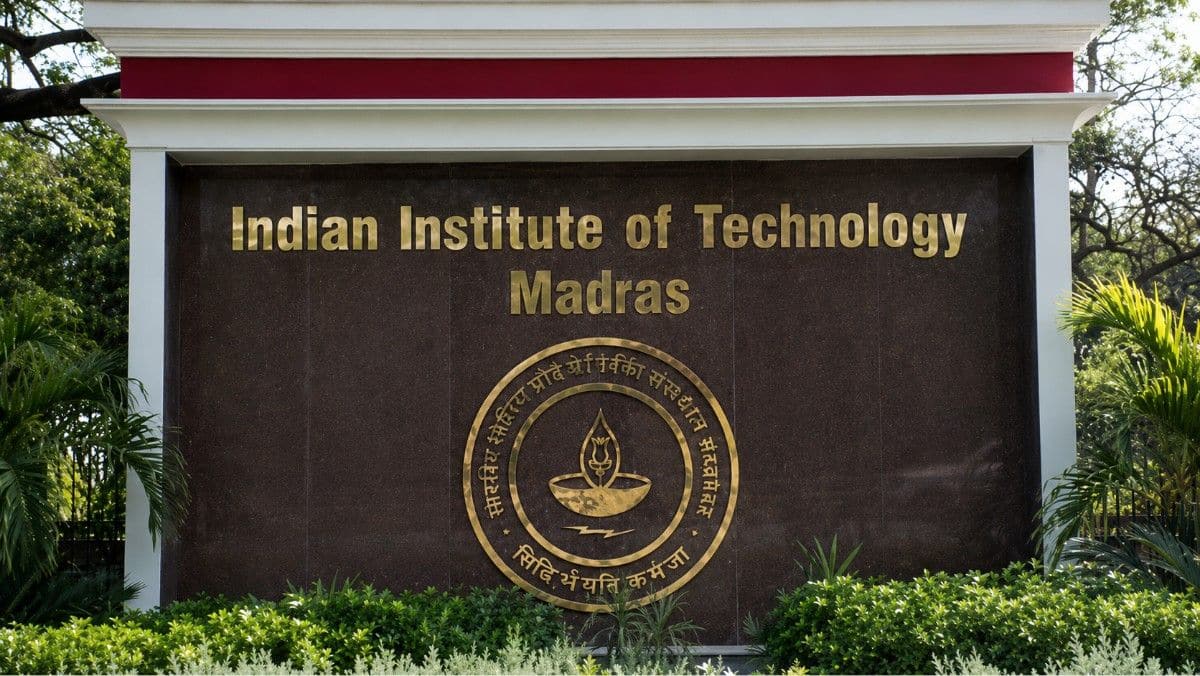
Indian Institute of Technology Madras (IIT Madras) has launched new undergraduate (UG), postgraduate (PG) and web-enabled academic programmes for the 2026-27 academic year. The courses aim to provide students with education across different subjects and industry-related skills. They focus on new and growing fields like robotics, semiconductor technology, artificial intelligence (AI), mathematics, and public policy.
Applications for several PG programmes were open till April 2026, while the last date to apply for the online and hybrid BS programmes is May 31, 2026.
The institute said the programmes are designed not only for regular IIT Madras students but also for learners across India through flexible and online learning options.
Prathap Haridoss, Dean (academic courses) at IIT Madras, said the new programmes were started to meet the changing needs of industry, research, and society.
“The new programmes launched by IIT Madras are designed to meet the changing needs of industry, research, and society. They help students build strong basic knowledge along with interdisciplinary and industry-relevant skills,” he said.
Also read ANRF PAIR Programme gives Rs 100 crore to just 7 hub-spoke networks, rest get Rs 2 crore grants
“The institute is also expanding flexible, web-based learning opportunities so that students from across the country can access quality education in emerging fields,” he added.
IIT Madras launches BS in Mathematics
One of the major courses is a four-year BS programme in Mathematics offered by the Department of Mathematics. IIT Madras said students will also have the option to study for one more year and complete a dual BS-MS degree.
The institute highlighted that the Department of Mathematics was ranked 84 globally and No 1 in India in the QS World University Rankings by Subject 2026.
According to IIT Madras, the programme will provide strong training in core mathematics while also allowing students to specialise in areas such as cryptography, computational mathematics, quantitative finance, financial engineering, actuarial science, data analytics and AI-enabled manufacturing.
Students will also be able to take humanities and free elective courses to do a minor in other subjects.
Also read IIT Jodhpur’s Hindi BTech is breaking the English-only mould, model for others to follow: Director
New MTech, MSc, MA programmes
The institute has also introduced several new PG programmes in areas linked to national priorities and emerging industries.
The newly launched MTech in Semiconductor Materials Technology will focus on semiconductor manufacturing, nanomanufacturing, and materials engineering. IIT Madras said the programme aims to prepare students for jobs such as process engineers, yield improvement specialists, and materials scientists.
The institute has also launched an MA programme in Public Policy. The programme will focus on governance, public administration and policy design in sectors including healthcare, education, transportation, environment and finance.
IIT Madras said the programme is designed for students who want to work in government, development organisations, policy consulting, and the private sector.
List of new IIT Madras programmes
The new programmes introduced for the 2026-27 academic year include:
- BS in Mathematics
- BS in Aeronautics and Space Technology
- BS in Management and Data Science
- MTech in Robotics
- MTech in Semiconductor Materials Technology
- MTech in Mechanical Engineering with specialisation in Computational Engineering for Mechanical Systems
- MTech in Electrical Engineering
- MTech in Process Safety
- MSc in Materials and Manufacturing
- MSc in Sustainable Engineering
- MSc in Offshore and Maritime Engineering
- MSc in Sports Analytics and AI
- MA in Public Policy
Also read ‘Part of culture’? IIT Ropar PhD scholars say fear keeps harassment cases buried, rarely reach ICC
IIT Madras Admission 2026: Eligibility
Below are the eligibility criteria for the newly launched courses at IIT Madras.
- BS Programmes: Class 12 pass required; admission through JEE Advanced, IAT, Olympiad or online qualifier, depending on the programme.
- MTech Programmes: BE, BTech in relevant discipline with valid GATE 2024, 2025 or 2026 score. IIT graduates with a CGPA of 8.0 or above may get a GATE exemption.
- MA in Public Policy: Admission expected through GATE XH paper and related eligibility criteria.
- MSc Programmes: Admission through the JAM score.
Some web-enabled MTech programmes are meant for working professionals and require at least two years of work experience.
 Add as a preferred source on google
Follow us for the latest education news on colleges and universities, admission, courses, exams, research, education policies, study abroad and more..
To get in touch, write to us at news@careers360.com.
Next Story
]IIT Bombay: Dharmendra Pradhan inaugurates India’s first CCUS field lab under Bharat Innovates 2026
IIT Bombay has launched India’s first integrated CCUS field laboratory under Bharat Innovates 2026. The initiative focuses on carbon capture, utilisation and underground storage technologies
Aatif AmmadLatest Education News
]Related News
]Jamia School, IIT Madras collaborate to launch online certificate courses for Classes 9 to 12
IIT Madras study reveals air pollution could help improve rainfall, urban floods forecasting
IIT Madras opens PhD, MS Research admissions for January 2027 session; apply by Oct 30


