
BS-MS to BTech, AI, data science: Why India’s top IISERs are going beyond traditional degrees
Sheena Sachdeva | May 25, 2026 | 11:06 AM IST | 8 mins read
IISER Bhopal’s BS-MS course gets BTech-MTech tag; Kolkata, Berhampur restructure major-minor model; Thiruvananthapuram adds AI and data science to meet NEP mandates, industry demands
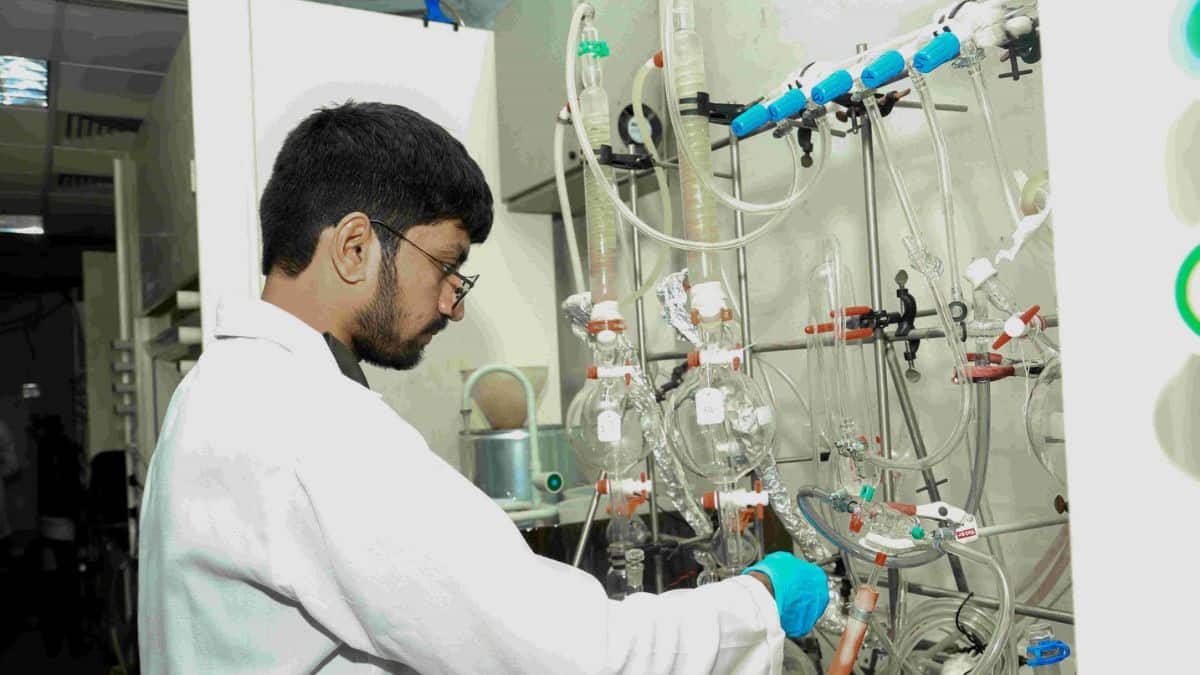
Indian Institute of Science Education and Research: Students who cleared every round of a company’s hiring process were turned away at document verification – because their degrees said BS-MS, and not BTech. Such persistent episodes, recounted by Professor Sanjit Konar of IISER Bhopal, prompted the institute to go ahead with one of the most striking moves in IISER history – renaming an engineering science degree entirely.
Indian Institutes of Science Education and Research (IISERs) have offered BS-MS degrees since 2008-09. However, with the introduction of National Education Policy (NEP) 2020 and new industry requirements, many institutes have changed their curriculum – added early exit options – aligning with industry and student requirements.
“IISERs are expanding beyond traditional sciences in their BS-MS courses – but still within the umbrella of science,” said Joy Mitra, professor, IISER Thiruvananthapuram.
IISERs are now integrating newer fields without diluting core science. Mitra stated, “Areas like data science are now being applied to disciplines such as astrophysics and biology. With rapid advancements in data collection, storage and computing, the nature of scientific research is also evolving. As a result, students today are expected to develop not only strong foundational knowledge in their core subjects, but also skills in programming and data analysis.”
Adding to this, Ayan Banerjee, professor at IISER Kolkata, pointed out that at IISERs, nearly 90% of BS-MS students opt for PhDs. At the same time, the BS-MS structure has become more flexible under NEP, allowing students to exit at multiple stages. After the first year, a student can exit with a certificate, the second year with a diploma, the third with a bachelor’s degree, and the fourth with an advanced bachelor’s degree (with research), before completing the full five-year BS-MS programme.
However, addressing the industry requirements and addressing the student placements, IISER Bhopal, as an outlier, has last year renamed its BS-MS degree in engineering sciences to BTech-MTech to address the placement issues of students.
BS, MS Courses: Curriculum revamp
Mitra explained that at IISER Thiruvananthapuram, programming and artificial intelligence (AI) have now become compulsory in foundation courses. “IISER Thiruvananthapuram is reworking their curriculum – adding programming and AI from 2021 and 2022 – to stay relevant. The institute has also introduced humanities and science communication, in line with the NEP,” stated Mitra.
However, despite the shift, IISERs BS-MS degree at the structural level, continue to differ from traditional universities in how students specialise. “You do not have a major or honours immediately like in traditional universities – students choose their specialisation in the second year and later move toward choosing a pre-major,” Banerjee explained.
With curriculum shift from core to interdisciplinary, Mitra stated that courses like communication and other electives are added making the curriculum “less rigid”. He pointed out that IISER Thiruvananthapuram has embedded interdisciplinary tools within core sciences – for instance, a course on Data Science Techniques in Physical Sciences, introduced in 2024, applies data science across domains such as bioinformatics, chemoinformatics, and astrophysical data analysis.
Further elaborating on the shift, Bodhisatta Nandy, associate professor at IISER Berhampur, said their institute is moving away from the earlier 2+2+1 model (two years of core, two years of major, one year of research) to a more flexible 1+1+2+1 structure, implemented from the 2025 batch onwards.
“We have started with foundation in the first year to second year of pre-majors to bring in more depth in the subject of specialisation, and this structure allows that from the second year itself,” Nandy said. Also, the other reason for adding this structure was to align with NEP through multiple exit options, allowing students to leave after each year with a certificate, diploma, or degree, he added.
Also read ANRF PAIR Programme gives Rs 100 crore to just 7 hub-spoke networks, rest get Rs 2 crore grants
Nandy stated that the changes were made after receiving student feedback. “Students gave feedback that two years of studying all subjects was rigorous and difficult for some, especially those without prior background or interest in certain subjects,” he said.
Under the revised system, students study a broad range of disciplines – including biology, computer science, earth and environmental sciences – in the first year; select three subjects in the second year; and then choose a major in the third, with an optional minor. “If a student wants to pursue interdisciplinary areas like biophysics or biochemistry, they can combine a biology major with a physics or chemistry minor,” Nandy explained.
While the number of subjects differ in each IISER in the revised curriculum, the BS-MS programme ultimately leads to an integrated Bachelor’s and Master’s degree in Science, with a major in a specific subject — similar to the earlier concept of honours, said Banerjee.
Also read IIT Jodhpur’s Hindi BTech is breaking the English-only mould, model for others to follow: Director
At IISER Kolkata, students begin with five subjects in the first year, narrow down to three in the second year (pre-major stage), and finally choose one major along with two minors in the third year, where they pursue intensive coursework. “This structure has been formalised from 2025,”said Banerjee.
Computer science, data science: IISERs diversifying
Across IISERs, newer departments and thematic programmes are being introduced, reflecting a shift toward emerging and interdisciplinary areas of science.
At IISER Berhampur, newer disciplines like computer science, earth and environmental sciences have been gradually expanded over the past few years. Nandy said, “Beginning from 2022, the earth and environmental sciences (EES) major was introduced. Computer science, which was initially offered only through courses, became a full-fledged department from 2024 and is currently available as a minor, with plans to expand it into a major.” The institute is also looking to introduce areas such as atmospheric sciences and strengthen environmental sciences.
A similar expansion is visible at IISER Bhopal, where new departments such as advanced materials science and sustainability have been introduced. The institute has also introduced an interdisciplinary programme, BS-MS in data science, from 2025.
Mitra said that over the last five years, IISER Thiruvananthapuram has actively diversified into areas like data science and earth, environmental and sustainability sciences. “From May 2020, we started a new programme called i² Sciences focusing on interdisciplinary courses,” he said. Under this initiative, new streams such as data science, started in 2021, and earth, environmental and sustainability sciences in 2022 have been introduced. While traditional BS-MS programmes were structured around core disciplines, the i² Sciences framework is built around specific thematic areas within broader fields, he added.
For instance, in earth and environmental sciences, atmospheric science is a key thematic area, while in biology, areas like bioimaging are emphasised. In mathematics, the focus includes mathematical modelling and scientific computing, and in physical sciences, themes such as materials, devices, energy and modelling are being developed as part of i² Sciences programme.
IISER Bhopal: The BS-MS to BTech shift
IISER Bhopal has also restructured some of its engineering programmes by converting select engineering sciences’ BS-MS degree into BTech, driven largely by industry requirements and student concerns around employability.
Gobardhan Das, director of IISER Bhopal, said the institute’s earlier BS-MS in engineering sciences was designed with a strong focus on fundamentals. “A majority of our students have done well globally because of their strong basics,” he said. However, he acknowledged that many industries do not explicitly recognise BS-MS engineering degrees.
Konar noted that this shift has been limited to three engineering-focused departments – chemical, electrical engineering and computer science and data science and engineering, where employer recognition of the degree title was a concern. “In job advertisements, companies typically mention BTech or MTech. Since BS-MS in engineering science is not commonly listed, students often become ineligible to apply,” Das explained.
To address this gap, IISER Bhopal redesigned the programme in consultation with academic experts and industry stakeholders. “The aim was to retain IISER’s strength in fundamentals while improving industry alignment,” Das said.
Under the revised structure, the programme now offers a four-year BTech degree, with an option to continue for an additional year focused on research and thesis work, leading to an MTech. This model, Das said, ensures that students not only acquire technical skills but also develop research capabilities and innovation-oriented thinking, maintaining IISER’s emphasis on scientific depth while enhancing employability.
Also read Live Updates | JEE Advanced 2026: IIT Roorkee publishes provisional answer key
IISERs’ road ahead
The mandate for all IISERs is to further refine their academic structure, with a greater emphasis on flexibility and interdisciplinary learning. Nandy said, “In the next few years, the BS-MS programmes are likely to become more modular, with several departments planning to introduce additional minor options. Some departments are also exploring the possibility of launching specialised master’s programmes – for instance, biology and emerging interdisciplinary areas”.
Mitra noted that unlike the traditional BS-MS structure, which followed a classical approach to science education, these newer thematic programmes are more applied in nature and better aligned with industry and evolving research needs. However, the core BS-MS structure is expected to remain stable. “We have just revamped our curriculum and the design is balanced, flexible and diverse,” Nandy said, adding that no major structural changes are anticipated over the next five years.
Also read Live Updates | AP EAMCET 2026: Provisional answer key, response sheets
At the same time, expansion into newer areas has brought its own challenges. Mitra pointed out that faculty recruitment remains a key constraint, particularly in high-demand fields like data science. He said institutes have had to bring in experts from diverse backgrounds such as statistics, mathematics and related disciplines to build these programmes. Mitra added that departments like data science and earth sciences have seen rapid growth in a short span, reflecting both student demand and the changing landscape of scientific research.
 Add as a preferred source on google
Follow us for the latest education news on colleges and universities, admission, courses, exams, research, education policies, study abroad and more..
To get in touch, write to us at news@careers360.com.
Next Story
]‘Part of culture’? IIT Ropar PhD scholars say fear keeps harassment cases buried, rarely reach ICC
Sexual harassment allegations against IIT Ropar teacher has led to more claims of ‘suppressed’ complaints, punishment for speaking up. IIT RPR says it takes sexual harassment complaints ‘seriously’ and acts as per law
Sheena SachdevaLatest Education News
]Related News
]University of Manchester plans new education, research centre in Bengaluru
IIT Bombay Guidelines: IITB asks students not to discuss JEE, GATE ranks, birth or admission category
Presidency University: Left student groups condemn defacement of Vivekananda poster, demand probe


