
Student Protests: Odisha’s ‘model code of conduct’ for colleges, universities drawing flak from all quarters
Azib Ahmed | April 24, 2026 | 04:03 PM IST | 4 mins read
The code requires prior permission for campus protests, threatens police action. With no union elections in 7 years, Odisha students say this erodes their rights
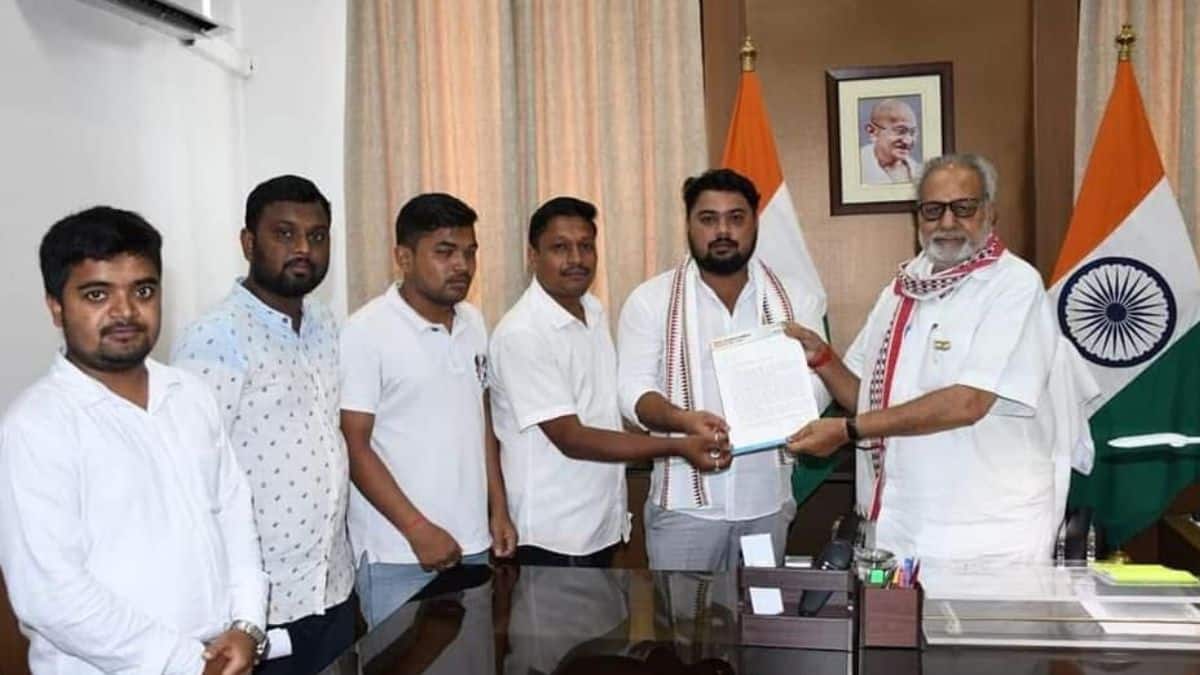
A model code of conduct issued by the Odisha Higher Education Department, mandating prior permission for protests on campus and warning of disciplinary action for violations, has triggered concern among students, who say it could restrict dissent and further shrink spaces for student representation.
Issued in Odia earlier this month and circulated to all higher education institutions in the state, the “Adarsha Acharan Bidhi” (Model Code of Conduct) lays down rules on student behaviour, discipline, academic responsibilities, and campus activities.
According to the guideline, “Students must obtain prior permission from the head of the institution before organising any protest, demonstration, or gathering on campus,” adding that “any protest or demonstration held without prior permission shall be treated as a violation of institutional rules”.
The document further states that students must ensure that academic activities are not disrupted and that “violation of these provisions may invite disciplinary action as per institutional rules.” It also specifies that organising or participating in any protest, strike, or gathering without prior approval is strictly prohibited, and that if a student’s involvement in any violent activity is proven, police must be informed and legal action initiated.
Also read Tamil Nadu Election 2026: Jobs, quality education,scholarships on the minds of voters, young and old
The notice also lays down broader provisions on discipline, anti-ragging measures, academic responsibilities, proper behaviour, and maintaining attendance records, making institutions responsible for enforcing them.
Odisha: VC permission for protests
Student groups from different organisations have raised concerns over the practicality of enforcing such a rule.
Bibhuti Mohapatra, associated with the Congress-linked National Students’ Union of India (NSUI), strongly opposed the move, asking who would grant permission if students wished to protest against the functioning of the principal or vice-chancellor. “If we have to protest against the principal, vice-chancellor or the administration, who will give permission for that? Has this ever happened that authorities give permission to protest against themselves?” he said.
He added, “If the higher education department makes a mistake, will people go to the same department and ask for permission to protest? That defeats the whole purpose.”
Also read AMU detains most of BA LLB batch for low attendance; no records or time given, allege students
He also warned that the NSUI would intensify its agitation against the higher education department if the decision is not withdrawn.
‘Will allow ABVP, suppress us’: BJD student wing
Ipsita Sahu, president of the Biju Chhatra Janata Dal (BCJD), called the guideline “impractical and undemocratic”. Criticising the Odisha government’s move, she said, “In the name of the model code of conduct, the state government is taking away students’ constitutional rights.”
She linked the issue to the absence of student representation. “It’s been seven years since Odisha has seen campus elections. There were promises that elections would restart, but that has not happened,” she said.
The last student union elections in Odisha’s universities and colleges were held in 2017.
Also read NIT Kurukshetra students demand elected council, quick re-exams, counselling for teachers
She also alleged political motives behind the notice and expects partisanship in its implementation.
“The government is not conducting student union elections because it fears that its student wing, the BJP and RSS-linked Akhil Bharatiya Vidyarthi Parishad (ABVP), will lose. ABVP does not have a strong presence in universities and colleges. Through this model code of conduct, the government is trying to suppress BCJD and other student organisations, while allowing ABVP to operate freely on campuses,” she said, adding, “They will allow them to protest and carry out activities, but suppress us.”
She also raised concerns about its impact on student politics. “Students learn leadership and politics in colleges. If they are not allowed to protest freely, how will they raise issues or understand democratic processes?” she said, adding that the absence of student union elections has already weakened representation.
ABVP opposes
Diptimayee Pratihari, state secretary of the Akhil Bharatiya Vidyarthi Parishad (ABVP), said the rule needs reconsideration. “This time it has been issued in Odia, so more people have taken note,” she said.
While supporting discipline on campuses, she raised concerns about its implementation. “There should be discipline in campuses, and for routine matters students do take permission. But when it comes to protests, this needs to be reconsidered,” she said, adding that requiring prior approval could make it difficult for students to raise issues against authorities.
Another ABVP member, Nitesh, expressed a more nuanced view. “If the rule is meant to prevent damage to government property during protests, we are okay with that. But if it is about restricting students from protesting altogether, then we are not in favour of it,” he said.
He added that the organisation may take up the matter with the government. “We are planning to submit a memorandum to the higher education minister,” he said
 Add as a preferred source on google
Follow us for the latest education news on colleges and universities, admission, courses, exams, research, education policies, study abroad and more..
To get in touch, write to us at news@careers360.com.
Next Story
]JNU, TISS Mumbai, BHU: Student unions vanish from universities with elections scrapped, councils taking over
JNU disciplinary action, TISS Mumbai council model, and long gaps in elections at BHU, Jamia Millia Islamia, Calcutta University, Rajasthan University; nomination system at MGAHV deny higher education’s most important stakeholders a voice
Team Careers360Latest Education News
]Related News
]NEET PG Counselling 2026 LIVE: MCC round 1 college reporting from October 26; MD, MS cutoffs
Kerala University VC says no move to ban student politics, stresses need to curb violence
NIIT University holds 16th convocation, announces 100% placements for 2026 graduates


