
Strengthen nursing courses, set up allied healthcare school at AIIMS Delhi: Panel to health ministry
Musab Qazi | March 30, 2026 | 08:25 PM IST | 4 mins read
Panel also suggests giving MBBS students 6 attempts at clearing the first year of MBBS. It bats for expansion of short-term nursing courses, more robust AHP training

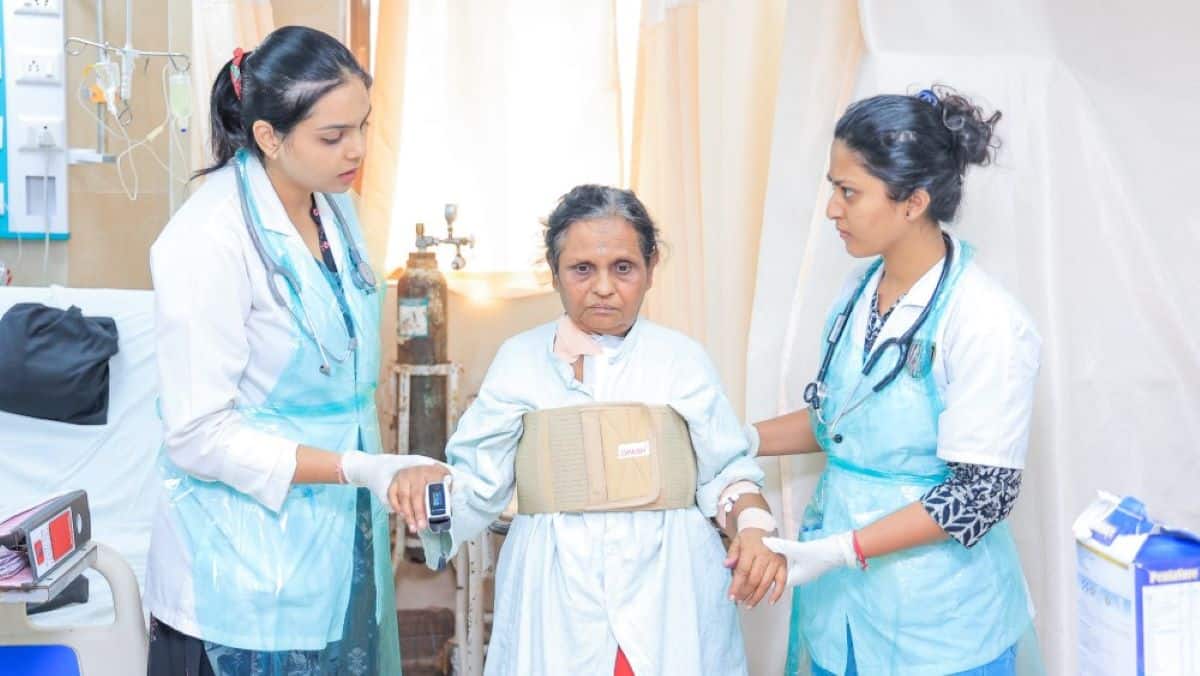
In a bid to expand allied and healthcare (paramedical) training at the All India Institute of Medical Sciences (AIIMS), a parliamentary committee has urged the premier institute to expedite the establishment of a school dedicated to the field. The panel has also recommended introducing specialised certificate courses in nursing as well as setting up of clinical nursing training laboratories to strengthen nursing education at AIIMS Delhi.
Recommended : Use NEET College Predictor to check your expected NEET rank & admission chances in Govt/Private MBBS/BDS/AYUSH Colleges Check Now
In another report, the committee has asked the union ministry of health and family welfare (MoHFW) to expand the short-term nursing courses. It has also pushed for nursing courses to be made more affordable and inclusive through scholarships, reservation for economically weaker sections and new colleges in rural and tribal areas.
The panel has also suggested increasing the number of maximum attempts for clearing the First Professional Exam of MBBS from four to six.
The reports were recently presented in the parliament by the standing committee on health and family welfare, which is headed by Samajwadi Party leader and Rajya Sabha member Ram Gopal Yadav. The documents review the working of various institutes and schemes of MoHFW and Ministry of AYUSH.
AIIMS Delhi: School for allied health sciences
The parliamentary panel, based on an interaction with the Officers Association of AIIMS, points out that despite the growing demand for trained allied health professionals and the establishment of a new regulatory authority – the National Commission for Allied and Healthcare Profession (NCAHP) – AIIMS Delhi is yet to set up a dedicated academic centre for allied and healthcare education.
“Given that several newer AIIMS have already implemented similar structures following the enactment of the NCAHP Act, 2021, the committee is of the view that AIIMS New Delhi should not lag behind. Establishing this school at the country’s premier medical institute will not only enhance the quality of patient care but also significantly contribute to workforce development and capacity-building in critical areas of healthcare delivery,” reads the report.
While the prestigious institute is yet to have an independent allied and healthcare school, it does offer various paramedical courses, including ones in medical radiology and imaging technology, dental operating room assistant, dental hygiene and operation theatre technology.
AIIMS nursing expansion
The committee’s discussions with the AIIMS Nurses Union led it to recommend adding new short-term certification programmes in nursing while creating additional infrastructure, such as clinical nursing training laboratories and modern conference halls to help upskill the nurses at the institute.
“The committee is of the firm view that the introduction of certification courses in specialised branches of clinical nursing, tailored to the diverse centers and blocks of AIIMS, would ensure that the nursing workforce remains highly skilled, updated and aligned with contemporary healthcare demands. The Committee recognizes that measures so envisaged are essential not only for enhancing nursing competencies but also foster continuous professional growth amongst nursing staff for directly improving the quality of patient care, which remains central to the mission of the Institute,” reads the report.
The committee has also made several recommendations aimed at improving nursing and allied and healthcare professions’ (AHP) education around the country. These include scaling up the short-term training courses in nursing and promotion of nursing services. While lauding the centre for enacting the National Nursing and Midwifery Commission Act, 2023, rationalisation of infrastructure requirements, and expansion of government nursing institutions, it expressed concerns over rising costs of education and regional disparities.
Also read Allied health sciences, paramedical courses plagued by fake ‘councils’ running across states
“[The Health and Family Welfare] Department should adopt a targeted affordability and inclusion strategy, which may include provision of scholarships and financial aid for disadvantaged groups, incentivising private institutions to reserve seats for economically weaker sections, and prioritising establishment of nursing colleges in underserved rural, tribal, and hilly areas,” the report says.
Appreciating the Rs 1,000 crore allocation for the centre’s new plan to upgrade and set up new AHP institutes in the 2026-27 budget, the panel sought a phased plan to implement the scheme and fully utilise the funds. The centre informed the committee that it’s currently doing a “gap analysis” to understand where the existing AHP institutes are falling short of NCAHP norms. The funds will initially be provided to a few states based on the proposals from the states, said the government.
6 attempts to clear MBBS 1st year
As part of its review of medical courses and institutes, the committee recommended allowing six attempts to undergraduate students to clear their first-year tests, with fixing the maximum permissible period to complete MBBS course to ten years.
“The Committee has been apprised that under the present regulations of the National Medical Commission, MBBS students are currently permitted a maximum of four attempts to clear the First Professional Examination. Considering the academic intensity of foundational subjects such as anatomy, physiology, and biochemistry, this restriction can be overly stringent for many students adjusting to the demanding nature of medical education,” says the report.
 Add as a preferred source on google
Follow us for the latest education news on colleges and universities, admission, courses, exams, research, education policies, study abroad and more..
To get in touch, write to us at news@careers360.com.
Next Story
]Lamp-lit home to London lab: IIT Hyderabad PhD from Bengal village wins Marie Curie postdoc fellowship
Md Soif Ahmed started out in a home without electricity and at a school without a building. From 2026, he will lead his own research project at Imperial College London, on the Marie Curie Postdoctoral Fellowship
Pritha Roy ChoudhuryLatest Education News
]Related News
]NEET PG Counselling 2026 LIVE: MCC round 1 college reporting from October 26; MD, MS cutoffs
Kerala University VC says no move to ban student politics, stresses need to curb violence
NIIT University holds 16th convocation, announces 100% placements for 2026 graduates


